
Travel With Me: A Toddler-Friendly Trip to Ireland in January (Dublin & Belfast)
I turned 30 this year, and it had always been my dream to go to New Zealand for the big three-oh. However, sometimes you have to be realistic about finances, and between eight years of underpaid graduate school work ($1000 a month is totally livable, right?), having a newly 2-year-old toddler (which means having to buy her a ticket instead of flying with a lap-infant), moving to a new city/state with a COL increase, and trying to rent out our house in KY to no avail (and thus paying a mortgage PLUS rent), it just wasn’t in the cards this year. But that was when Aer Lingus decided to bless us with sub-$400 tickets to Ireland.
If you’ve been a long-time follower of the blog (or know me personally), you might remember that I last visited Ireland in 2017 as a new college graduate on a whirlwind backpacking trip with one of my oldest friends. On that trip, not only was I a fresh-faced, sprightly new college grad, but I was on an incredibly tight budget and visiting in the summer. This time, I approached my visit to Ireland as an exhausted toddler-mom with a slightly larger budget and less flexibility, and we also had to navigate the various difficulties of Irish winter weather.
Come along with us for this toddler-friendly, seven-day trip to Ireland (both the Republic and Northern Ireland)!
Day 1: Travel
We flew Aer Lingus from JFK to DUB, and I do see why it was the cheapest flight they offered because the flight times were just brutal. We left around 5 pm and arrived around 4 am. The flight was just short enough that our daughter fell asleep with only about 1.5-2 hrs left in the flight, which meant all of us got that amount of sleep or less. I would recommend taking a flight that leaves later, closer to bedtime, to maximize sleeping time. This flight might have worked when I was 20, but at 30, it meant we had to eat a zombie breakfast at McDonald’s, then pay an extra $35 to check in at our hotel at 8 am to take a nap. I’d like to call myself a veteran traveler, so I know better than to nap after a European flight—it’s all about pushing through to an early bedtime that first day. But my daughter needed it, and so did we. The trade-off was that we ended up sleeping in later than usual the rest of the trip and weren’t as efficient with our time.
Day 2: The National Gallery & Trinity College
Hotel: MAldron Hotel Parnell SQuare, Dublin
The hotel we stayed in was in North Dublin. The hotel itself was affordable, clean, quiet, and had a decent restaurant. The pros on the location: this is a less touristy area, so we experienced less noise (Temple Bar, where we stayed last time I was here, was NOISY) and got to try some local spots for breakfast (places where we were the only tourists in the restaurant, like Declan & Donal’s for breakfast rolls). The cons: we were a pretty good walk from the places we actually wanted to visit, which were all on the other side of the river, as well as the restaurants we saw recommended.
Transportation: Sixt Car Rental (Dublin Airport)
Breaking from our usual practice of relying entirely on trains, tour buses, and public transportation, we decided to rent a car for this trip. This is because several of our stops (Newgrange, Glendalough, Giant’s Causeway, etc.) are most easily accessed via car or tour bus vs. public transportation, it would have cost us A LOT of money (like $50 extra per tour) to pay for our toddler’s seat on a private tour (and these tours advertised 12 hr days that would not be suitable for a toddler), and the daylight in January is ridiculously short (~8:30 am sunrise, 4:30 pm sunset). We needed speed, flexibility, and low cost. For our entire trip, the rental car only cost us $115. And we were able to travel with our toddler in her car seat on the plane (just make sure your car seat is FAA certified and around 20 inches wide), which was another great choice, as we didn’t have to rent a car seat and she understands (mostly) the concept of being buckled in while in a moving vehicle. Driving on the wrong side of the road was nerve-wracking, but we did survive.
Phoenix Park (Free)
While waiting for our hotel to allow us to check-in, we visited Phoenix Park. I hadn’t realized beforehand that Ireland’s sunrise wasn’t until after 8 am in the winter, so this was a mis-planning on my account. We did, however, get to see (via our headlights) the herd of 400-450 fallow deer that have called the park home for over 350 years. Even in the dark, Flora was delighted to see the deer!
National Gallery of Ireland (Free)
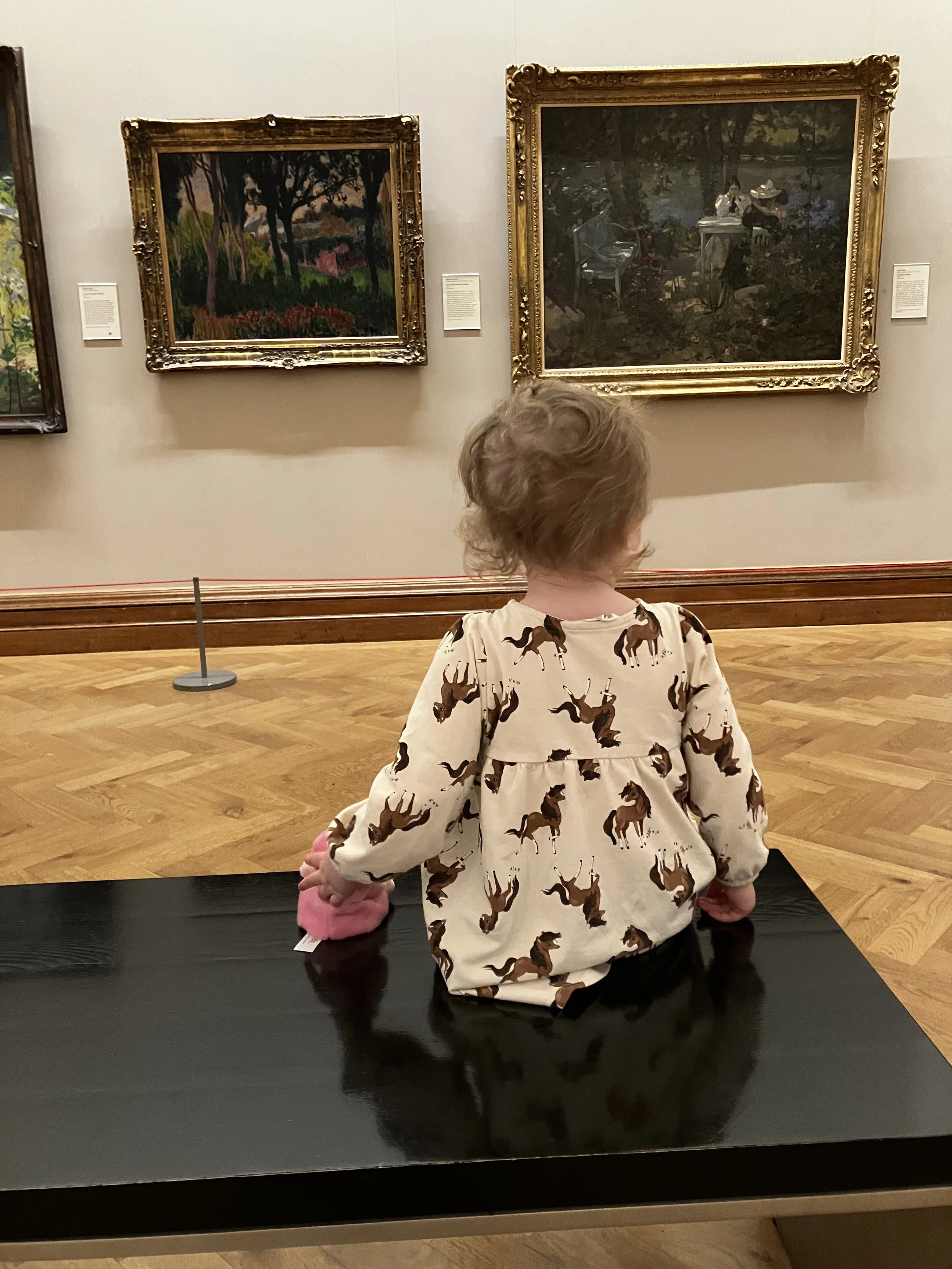
After our nap, we stopped by the National Gallery to get lunch at the cafe (pro-tip: we have always have great luck with the food at cafes at museums, National Trust sites, and national parks, and it makes that toddler transition from eating to planned activity much easier). Then, we perused the art, letting our toddler lead us and comment on all of the animals she saw. They had a wonderful little art station set up by the cloakroom where she could color with crayons, and we all had fun drawing as a family.
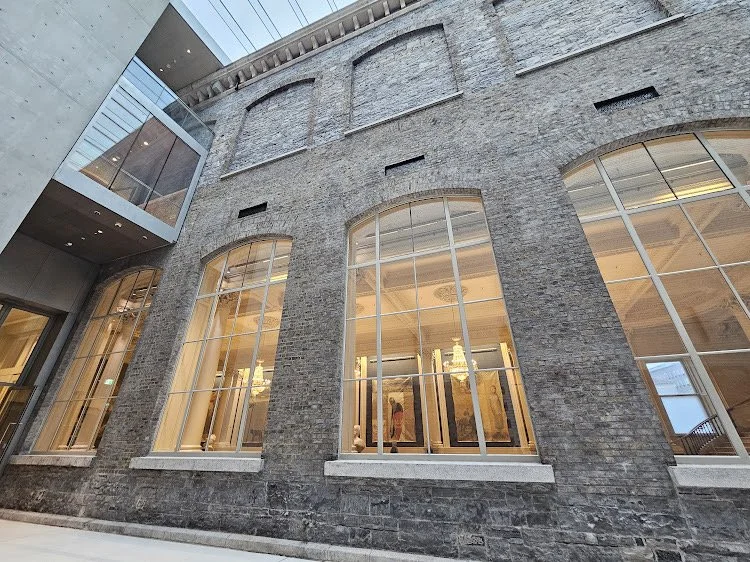
Trinity College, Dublin (Trinity Trails & Book of Kells Experience, $39 per ADULT, children under 12 free)
I can’t say I recommend this tour for every toddler—it’s 45 minutes of walking and listening to the history of Trinity, followed by a self-guided tour through the Book of Kells. We really lucked out because Flora fell asleep in the carrier at the very beginning of the tour, and if she falls asleep on the go, she’ll stay asleep. She woke up during the Book of Kells experience, which had some interesting projections/videos that kept her entertained.
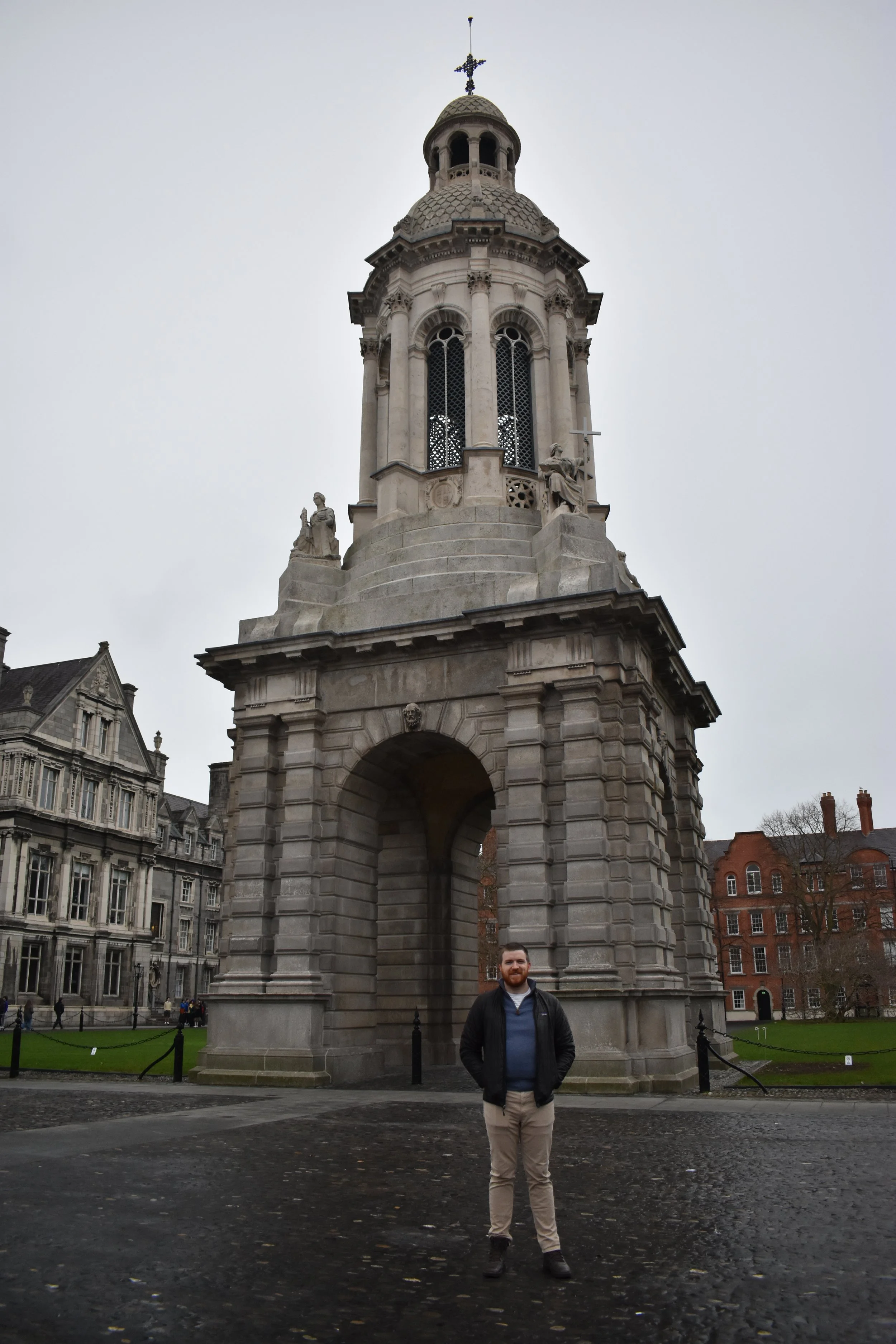
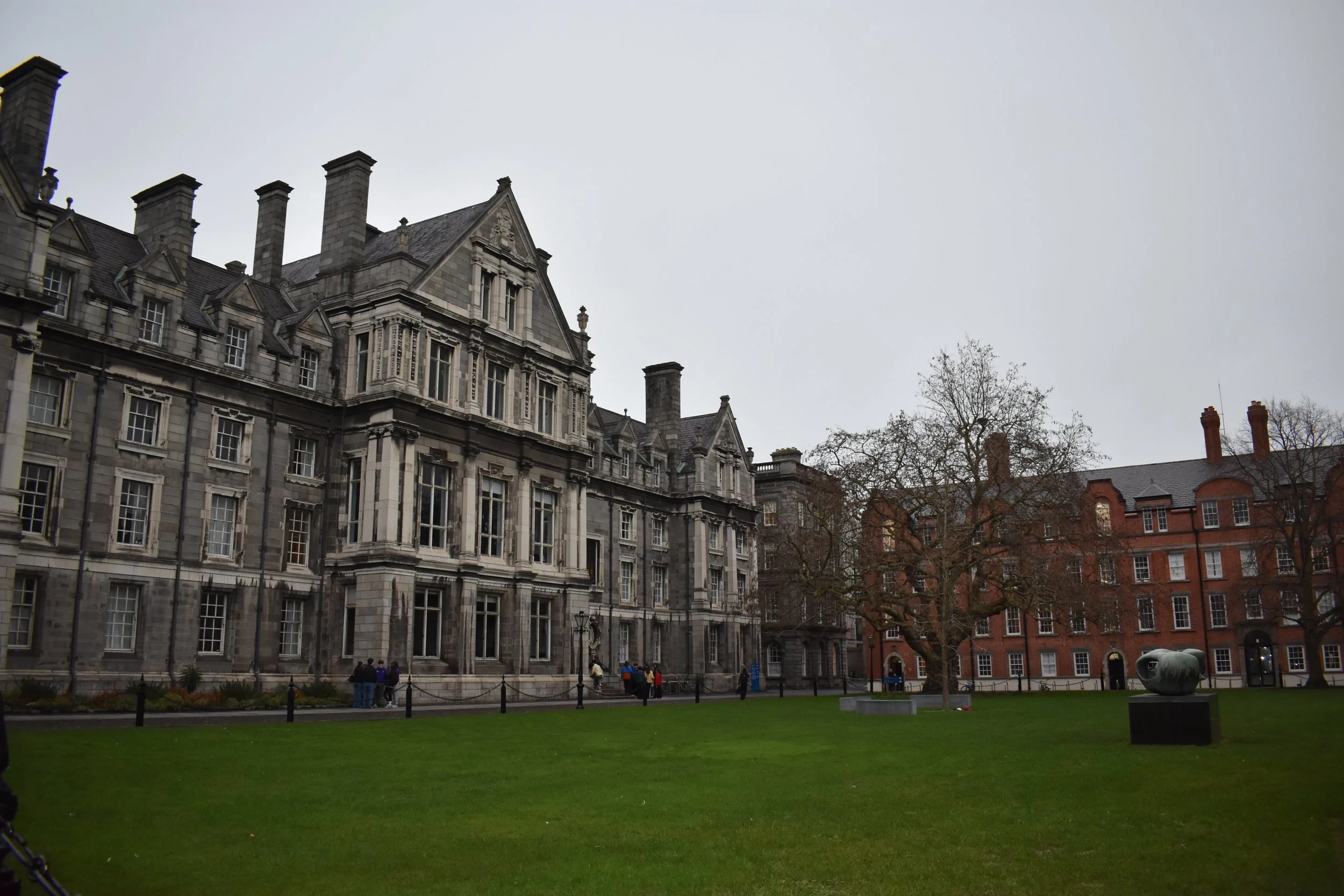
Founded in 1592, Trinity is Ireland’s oldest university in continuous operation, and it was initially founded to consolidate the Protestant ascendancy established through the British colonization of Ireland (official restrictions existed for Catholic students, professors, and fellows until the 1870s). Famous literary figures such as Oscar Wilde, Samuel Beckett, Jonathan Swift, and Bram Stoker are alumni, and as our tour guide (a student there) noted, the college serves as an interesting lens through which to learn about religion, architecture, geology, and culture throughout Irish history. After having a stronger grasp of the history of British colonization in Ireland through my study and teaching of postcolonial literature, I can say I definitely appreciated this tour more than I did a decade ago.
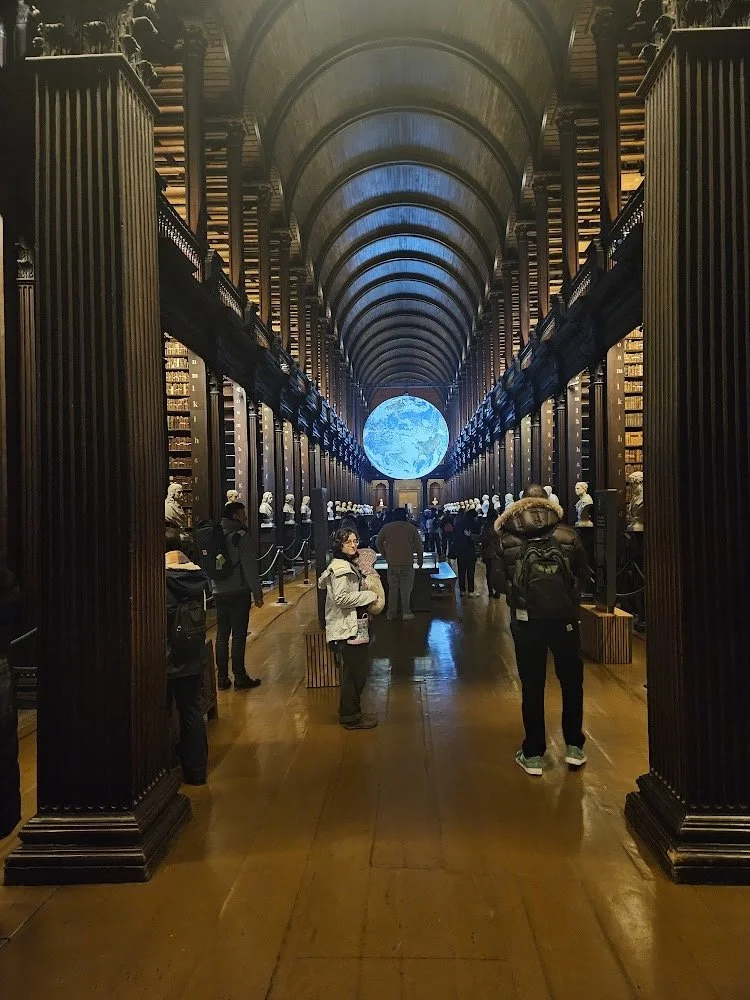
Built in the 18th century, the college’s Old Library is the largest in Ireland, and it holds a copy of all Irish publishers’ works. Additionally, it has held the Brian Boru harp, a national symbol for Ireland, since 1782, and a copy of the Proclamation of the Irish Republic since 1916. This document was read at the beginning of the historic 1916 Easter Rising, a rebellion against British colonization that would grow into Ireland’s nationalist movement. On our visit, the iconic books of the Old Library had largely been removed for preservation and cleaning (a fascinating process in itself!). I’ve included a photo I took in 2017 for comparison.
The most well-known item in Trinity’s collection is the Book of Kells, an illustrated manuscript of the four Gospels in Latin created circa 800 AD. The manuscript is remarkable for having survived Viking raids and its extravagantly decorated pages. Only one or two pages of the manuscript are on display at any time, rotating through the year. The entire manuscript has been digitized.
Day 3: Malahide Castle & Pantomime at the Gaiety
Malahide Castle and Gardens ($20 per adult, Children under 4 free)
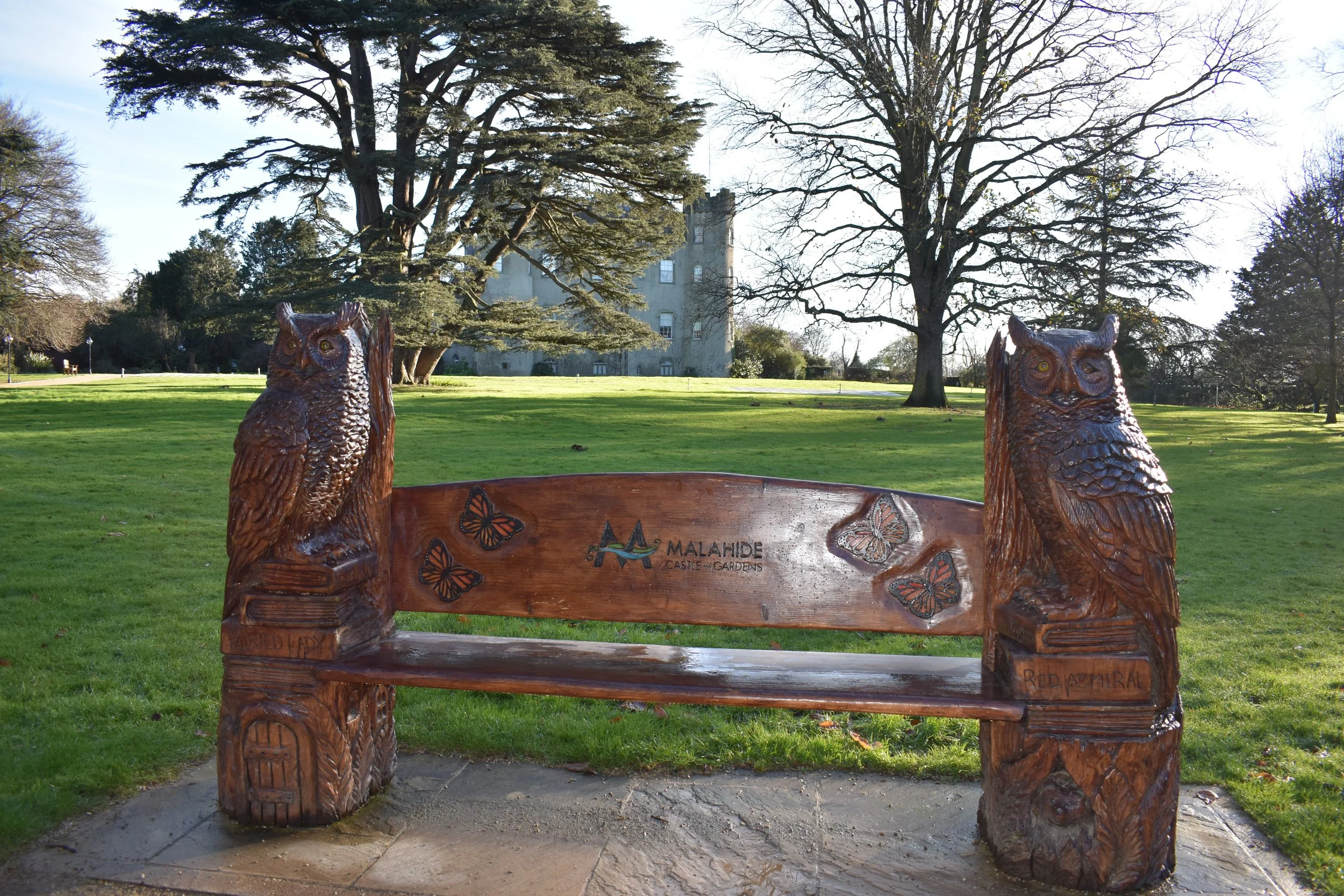
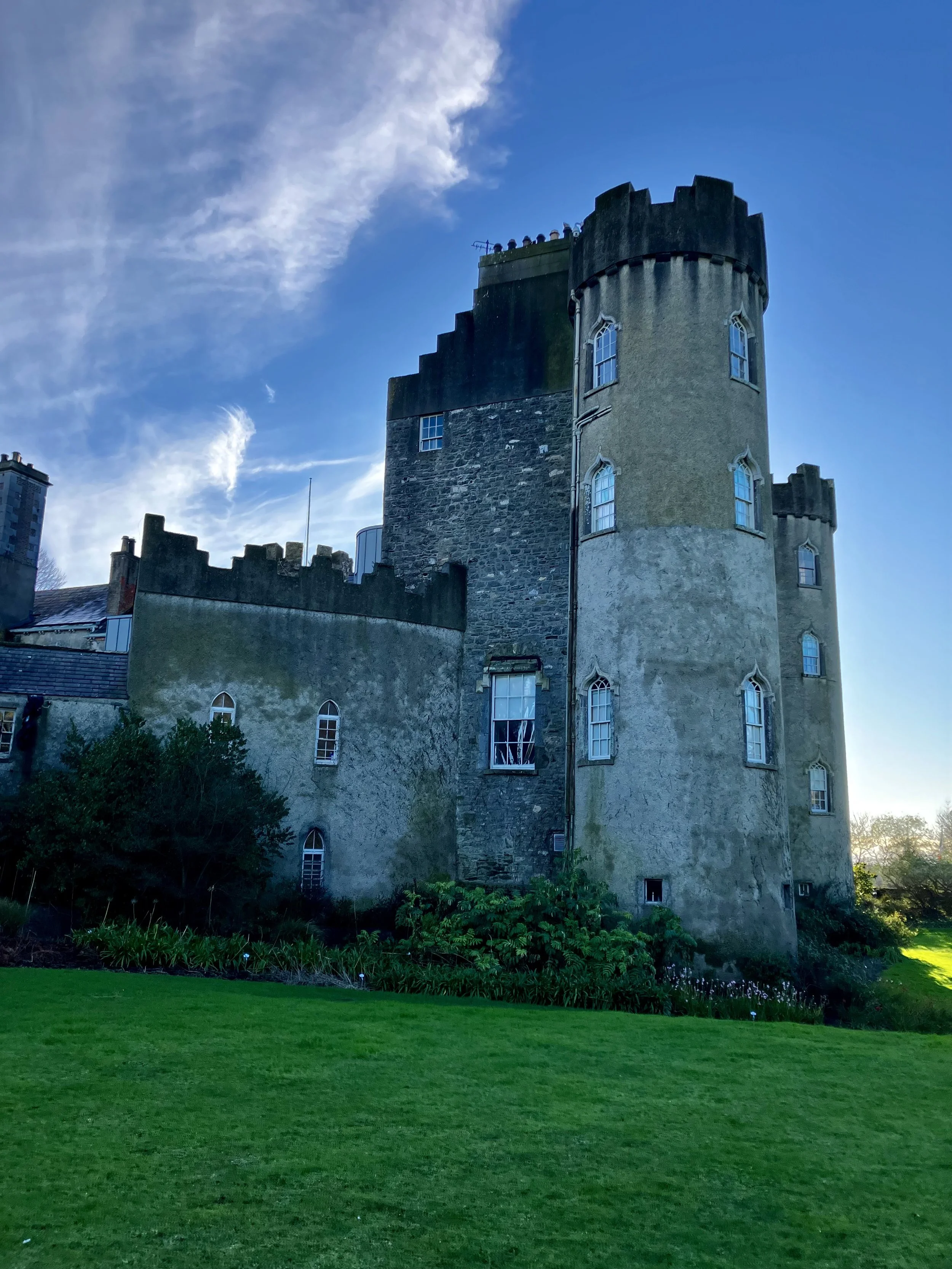
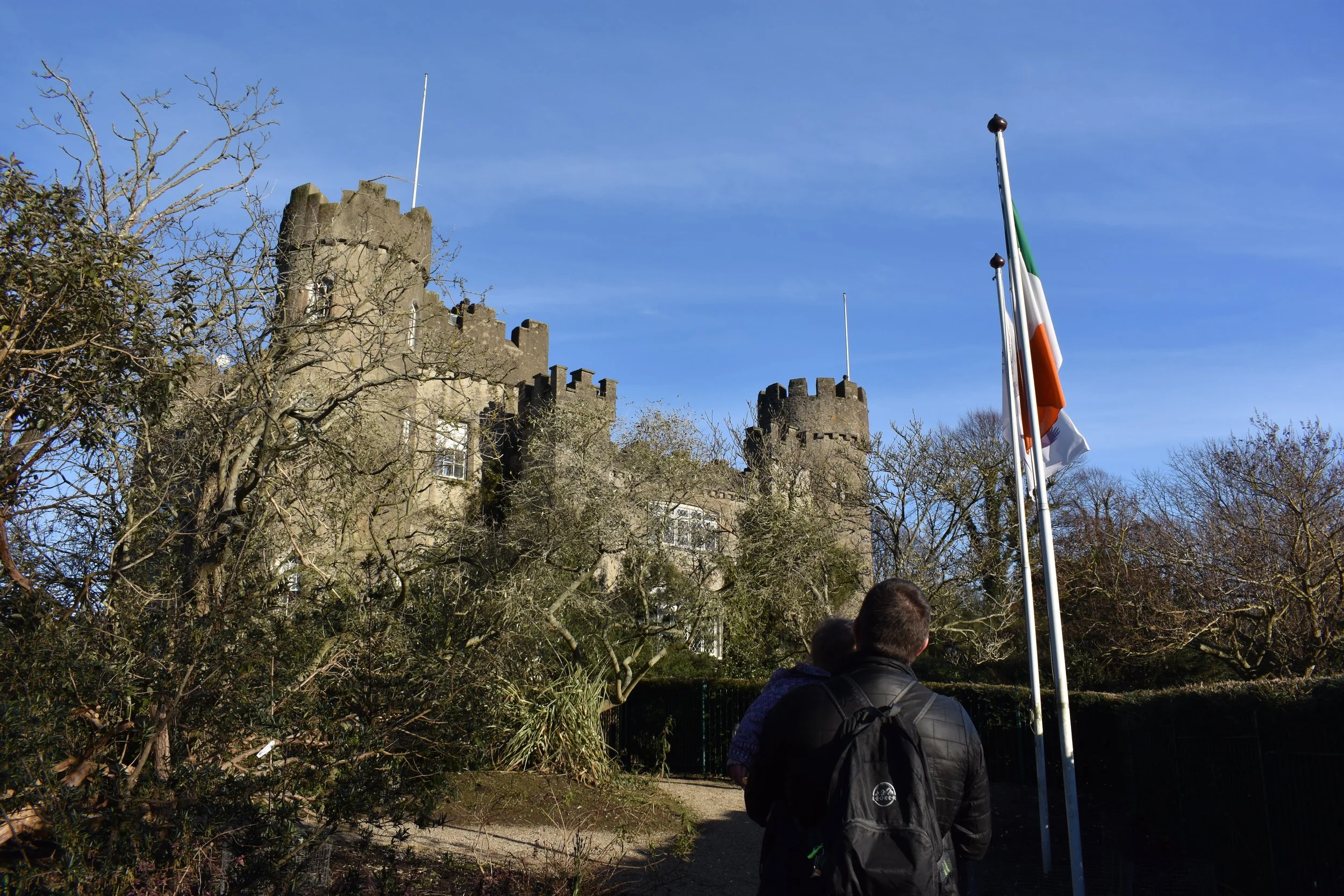
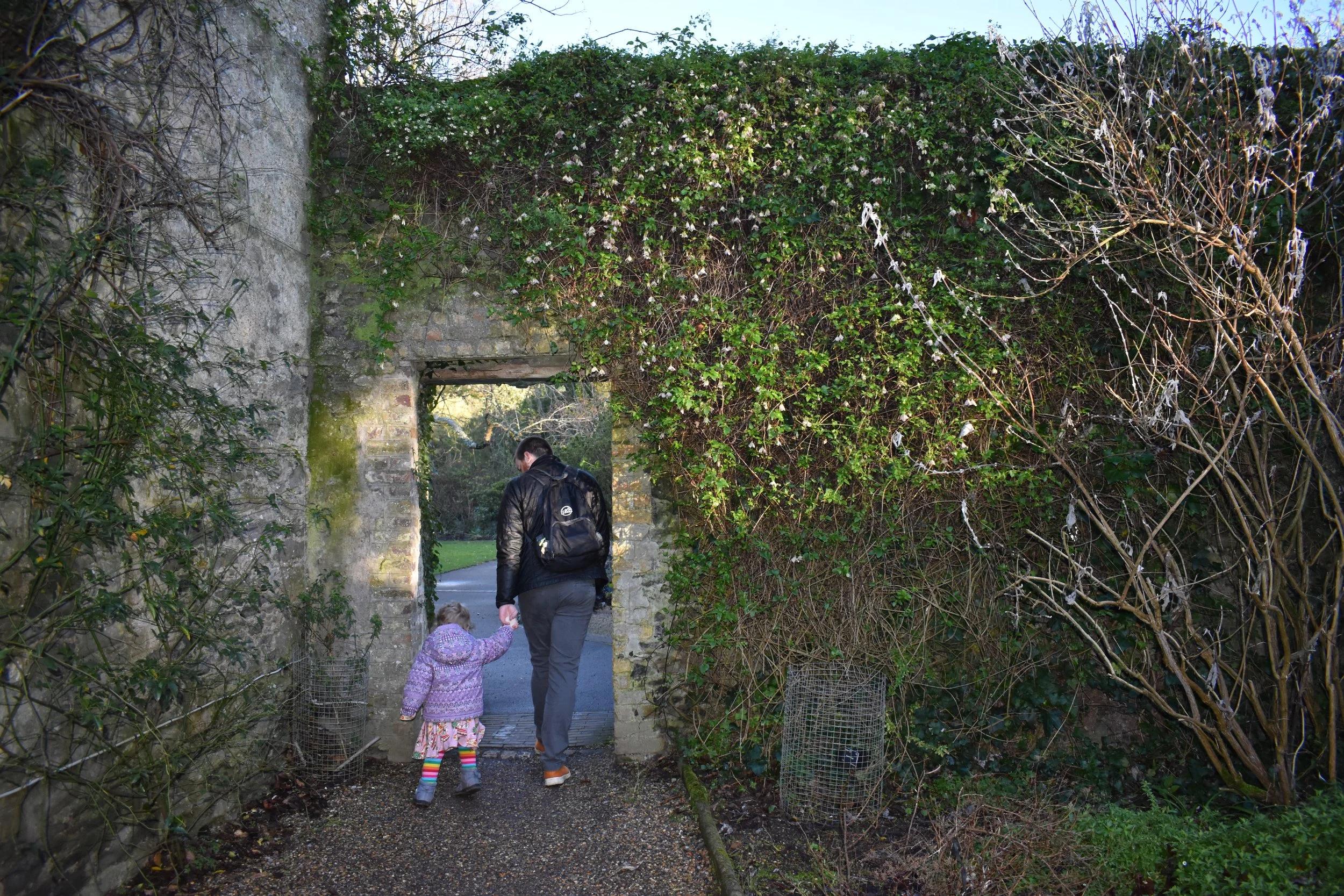
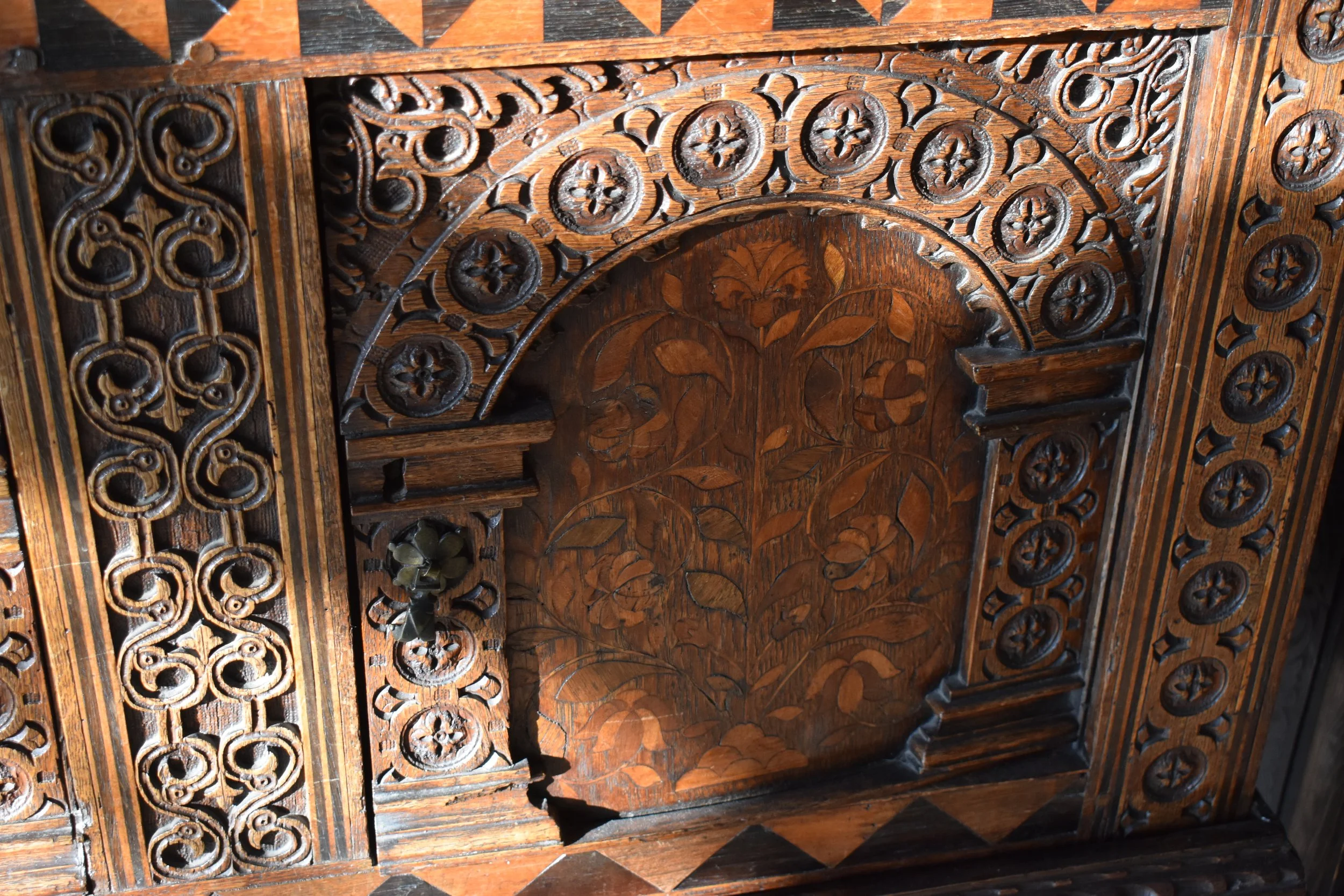
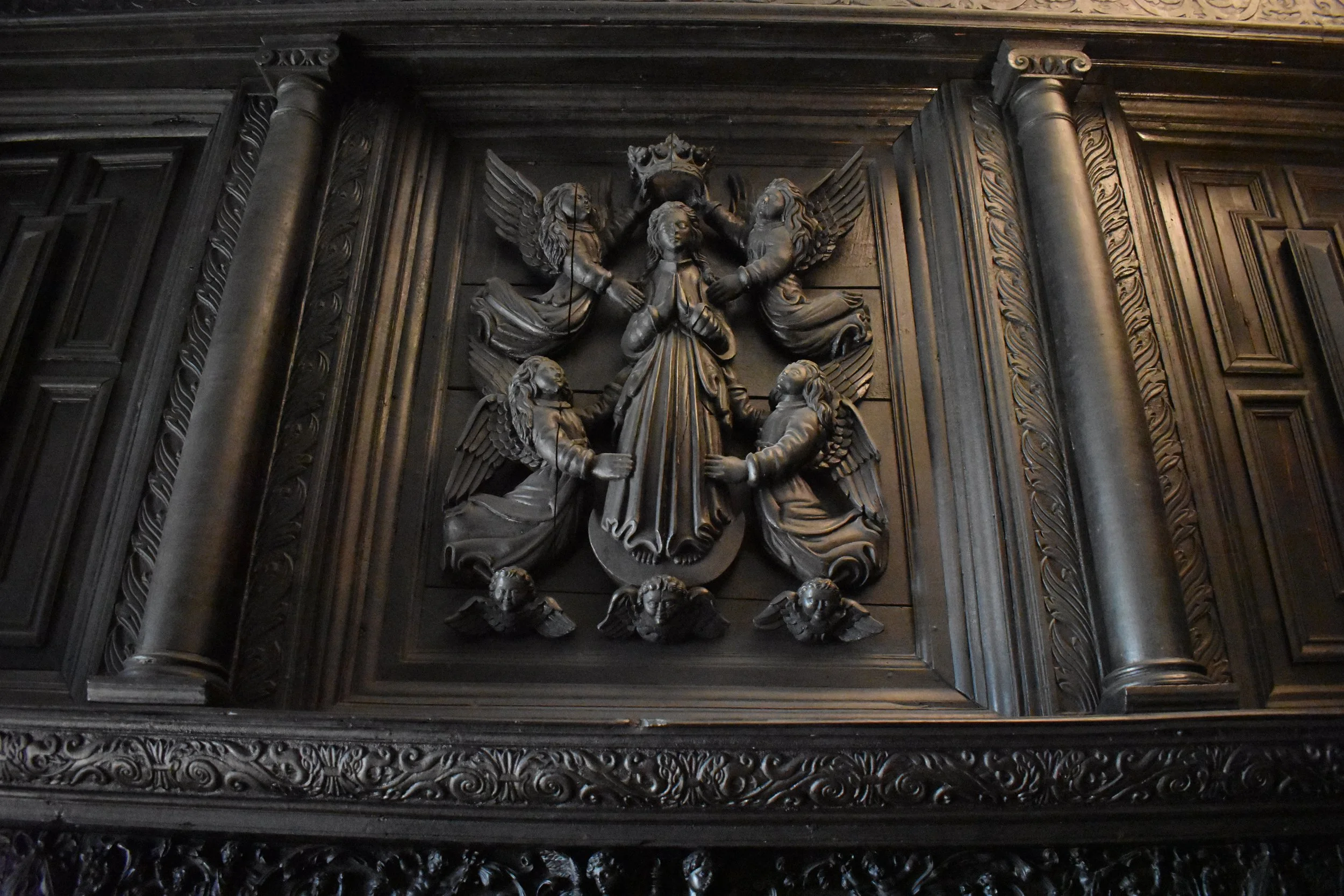
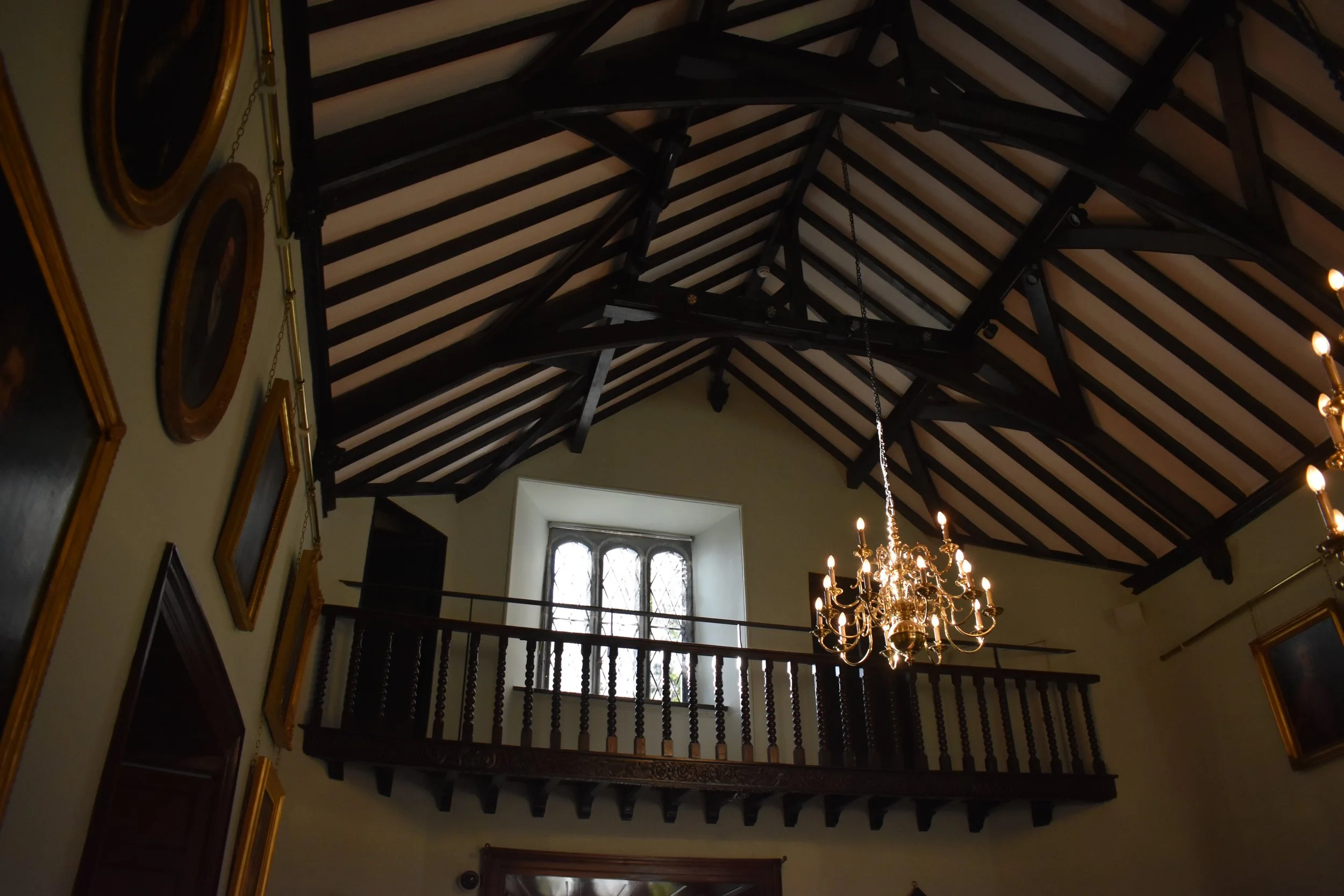
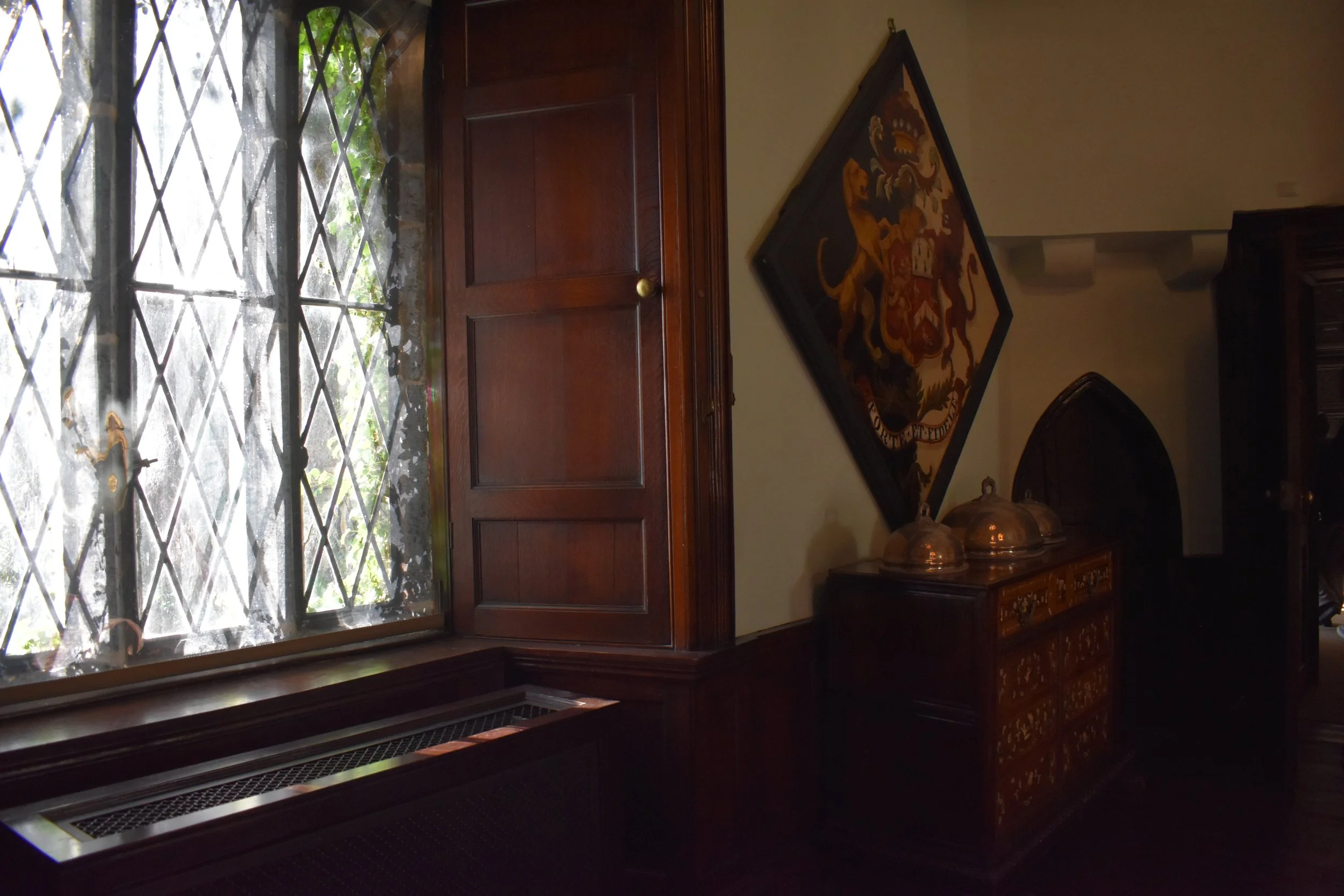
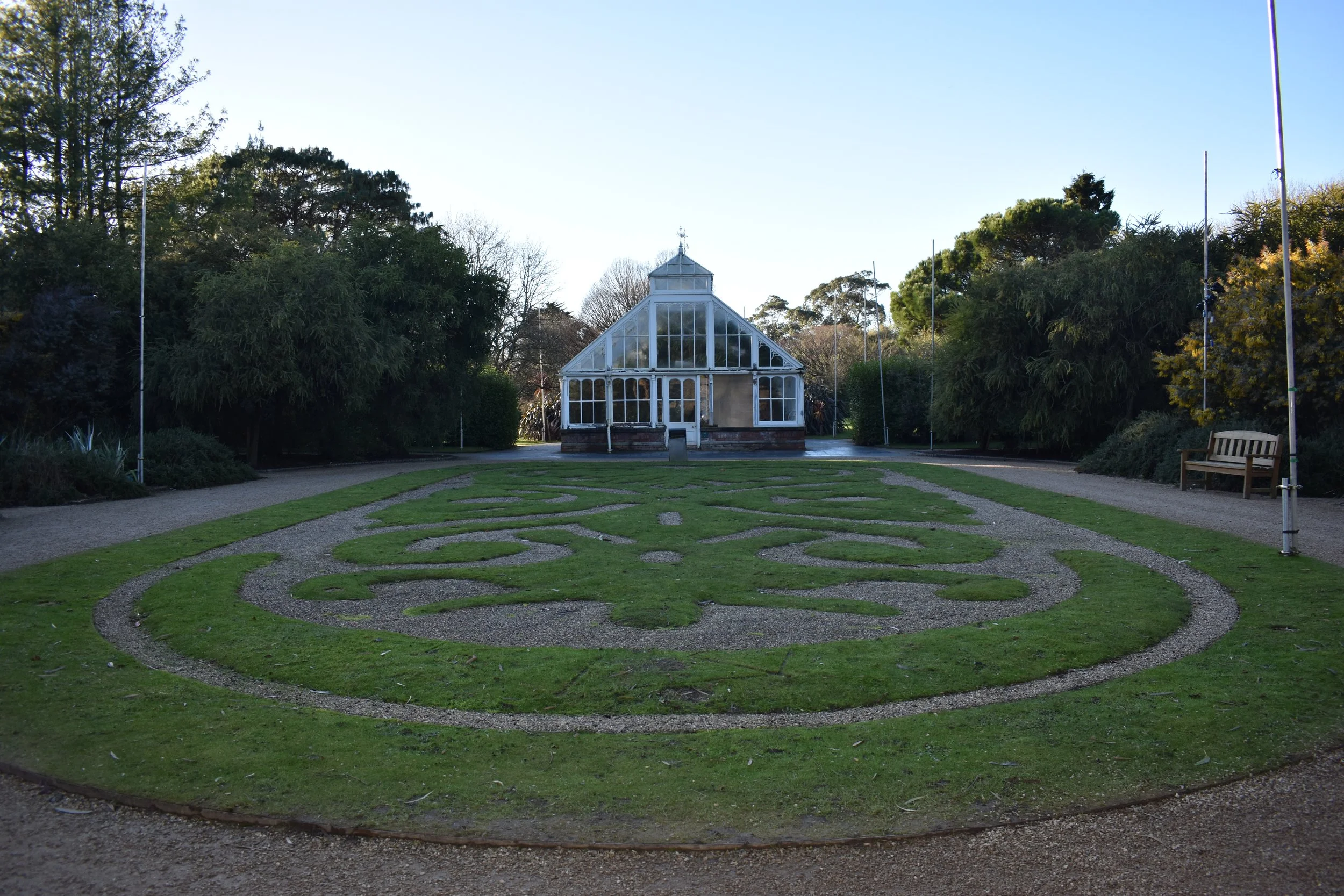
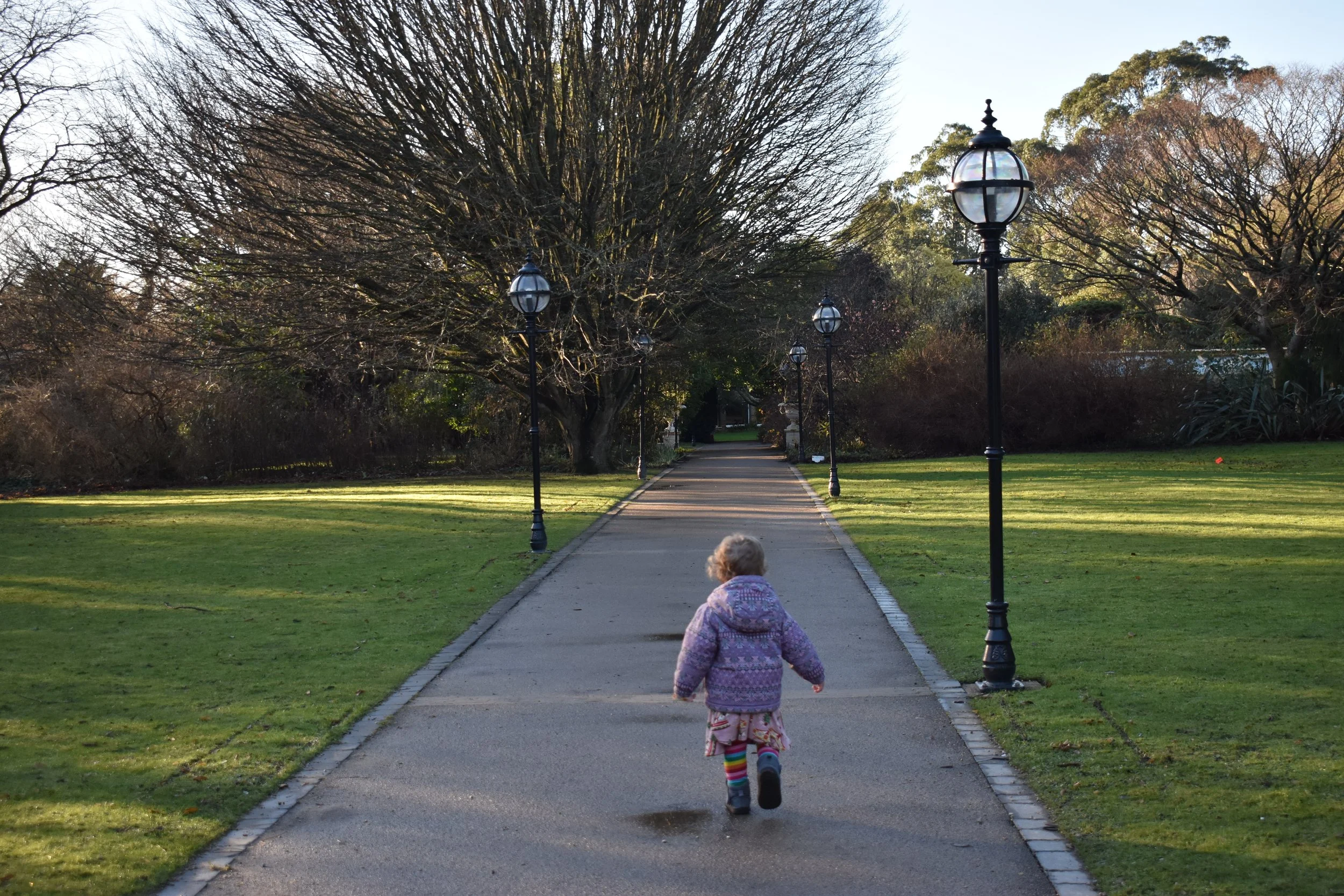
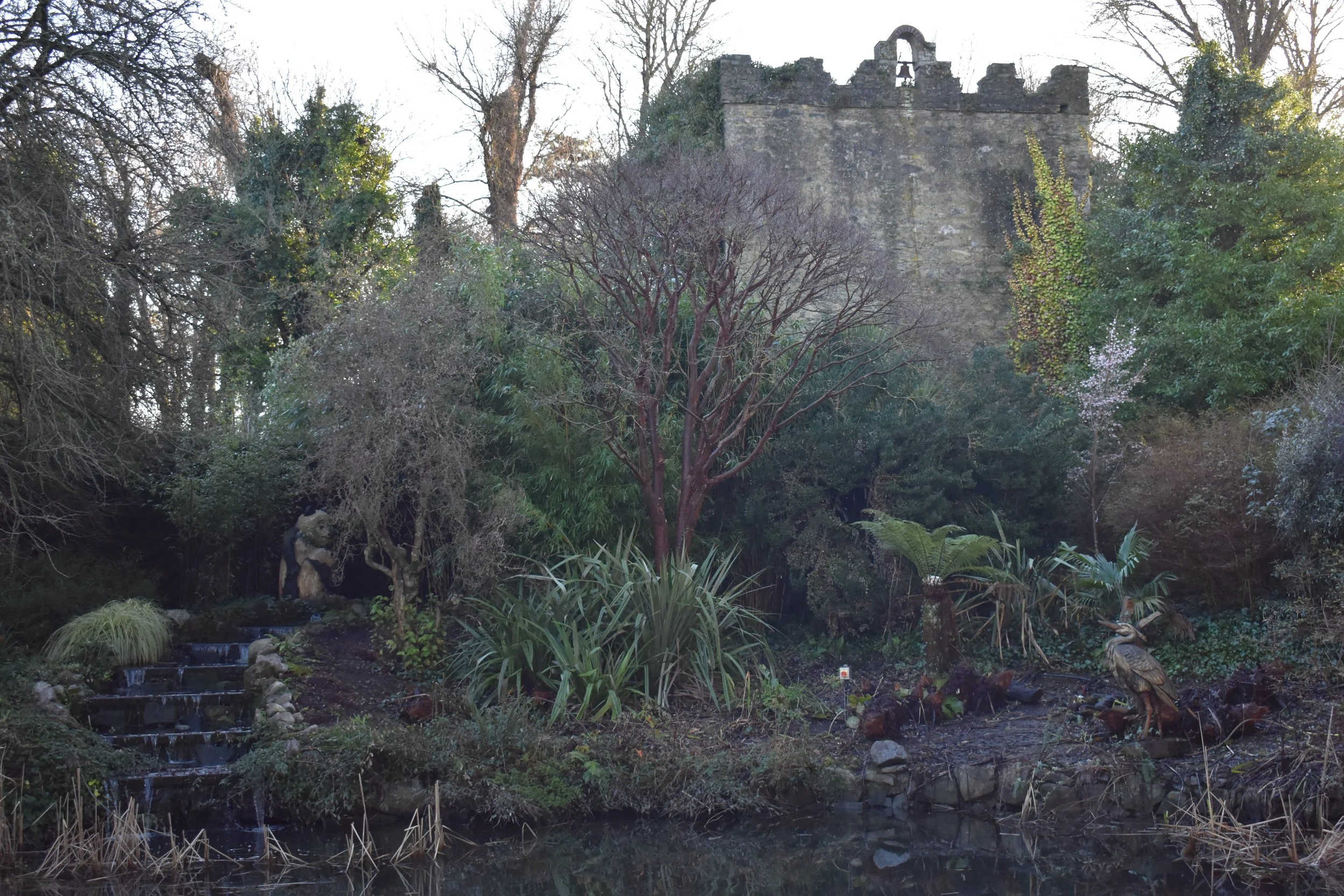
I actually toured Malahide Castle the last time I was in Dublin (and the photos from that trip show the gardens in all their summer glory). But a decade and scholarly insight into Irish history made this repeat visit equally enjoyable. Importantly, this was a great day-trip for a toddler, combining history, a fairy garden trail, and butterflies.
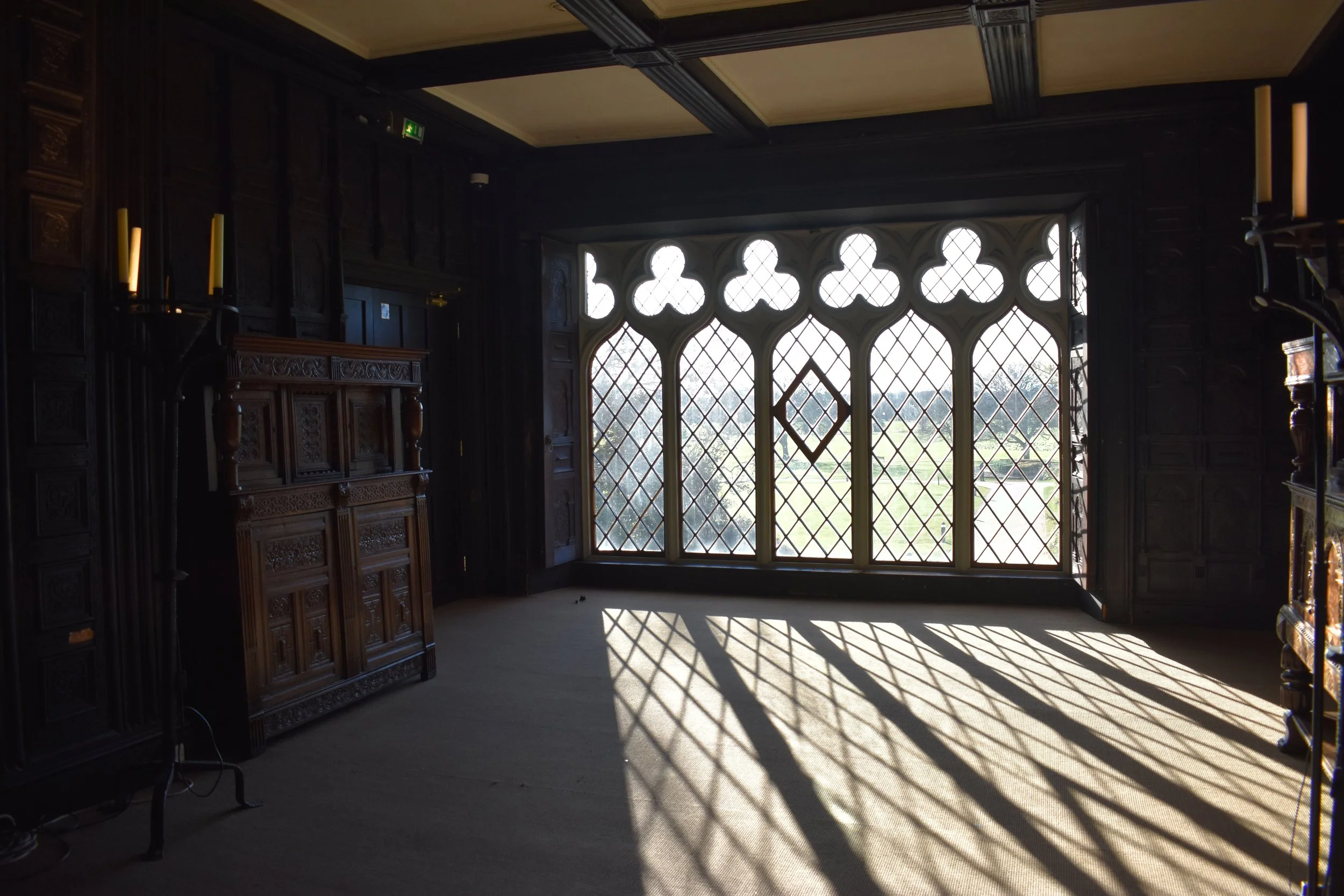
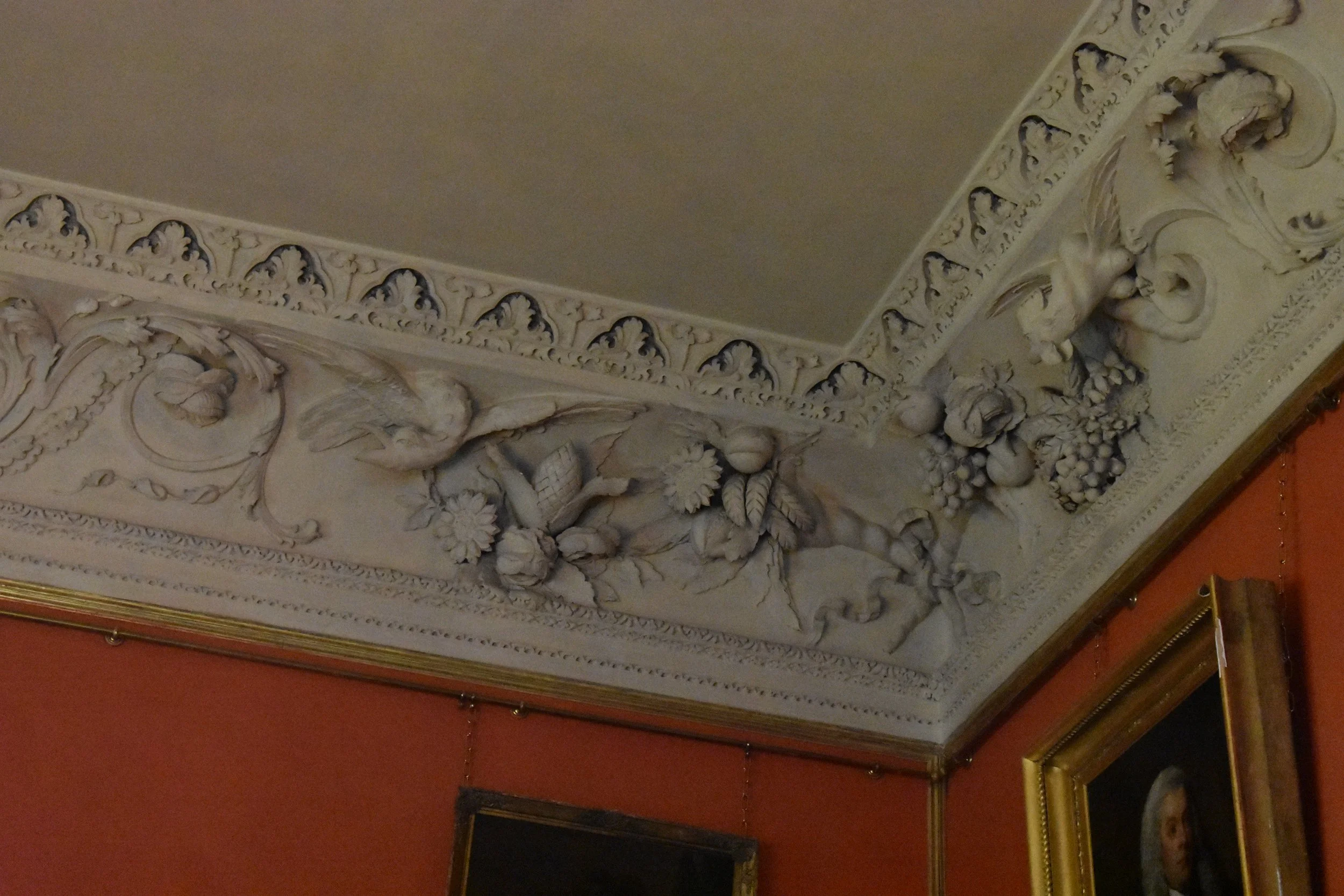
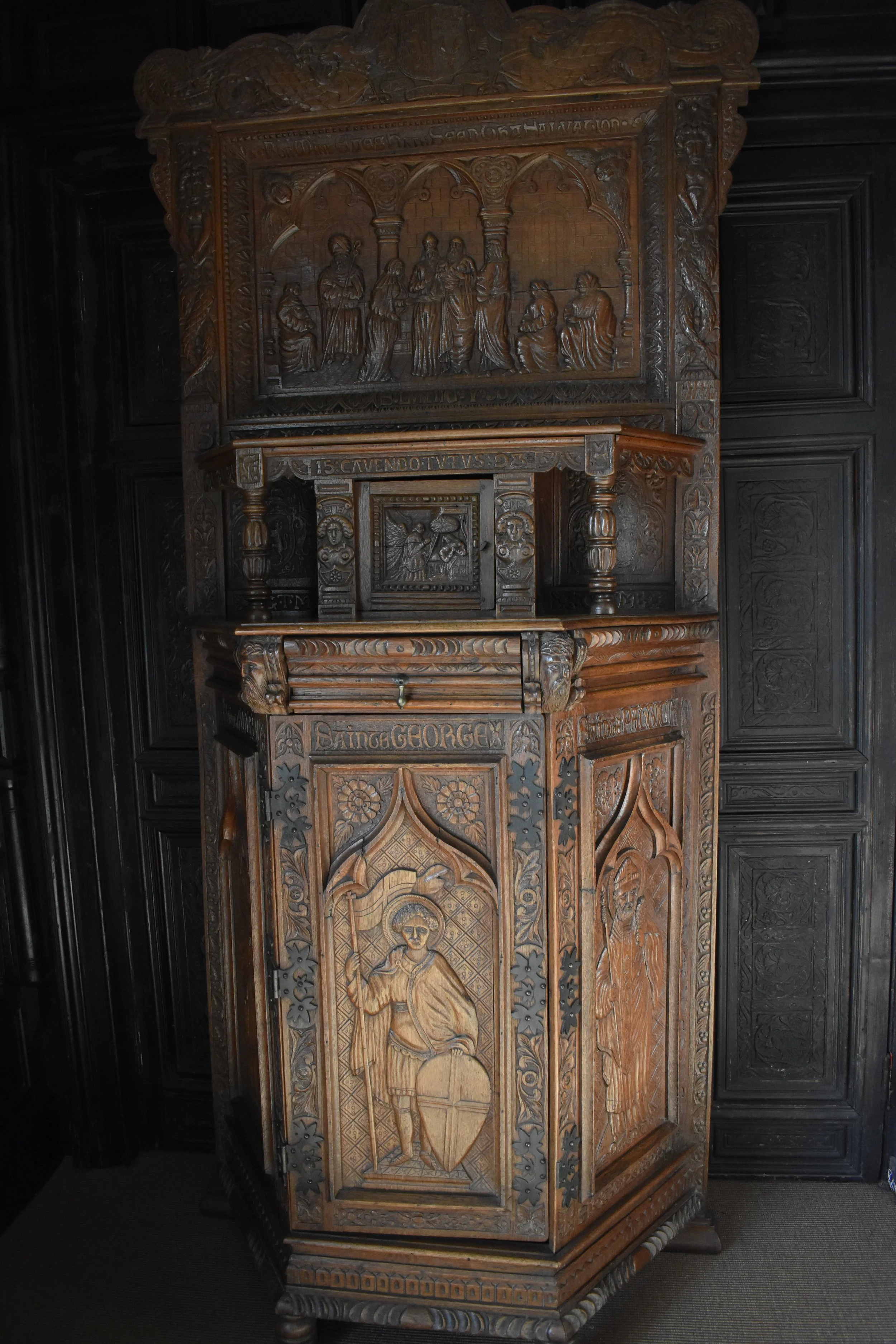
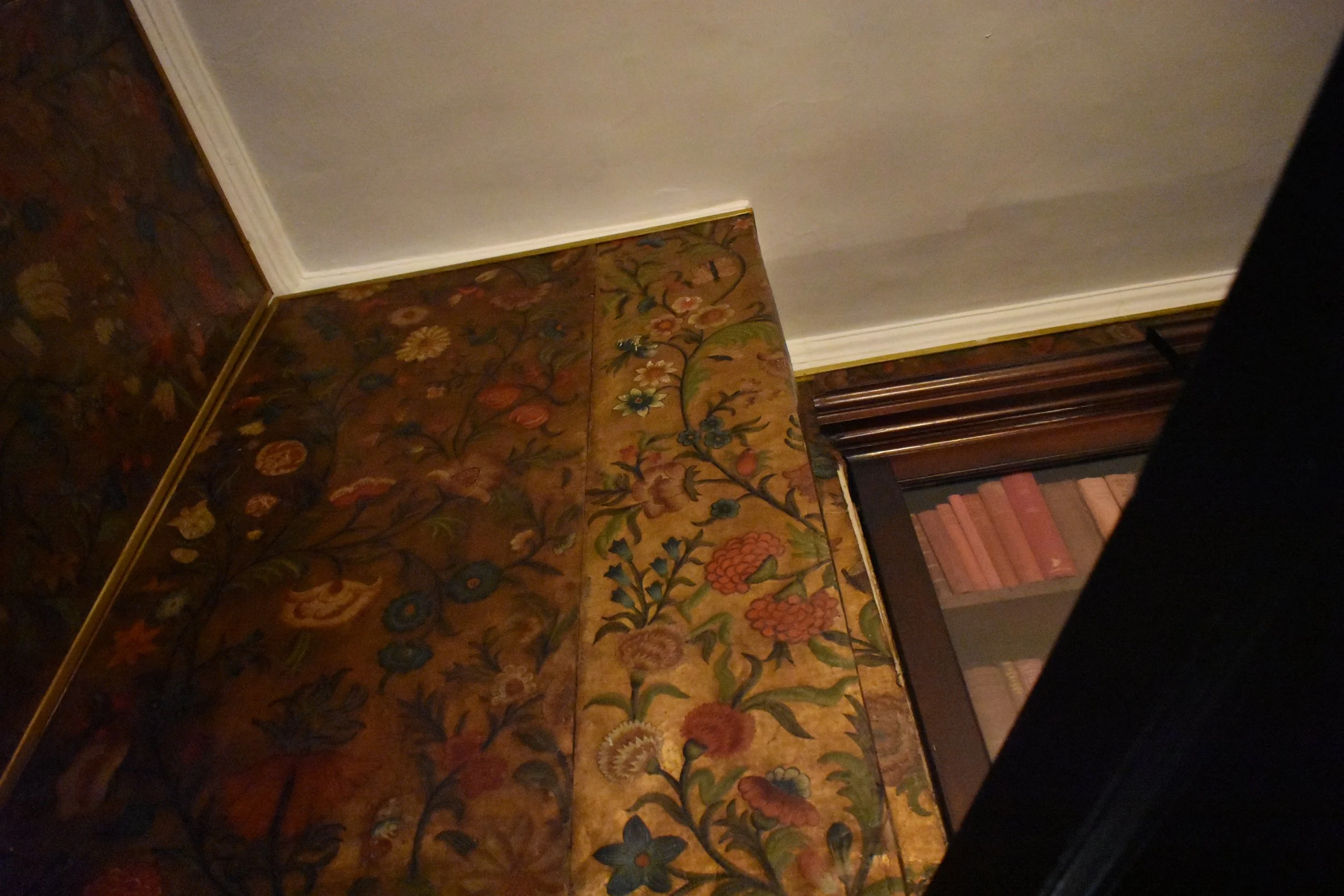
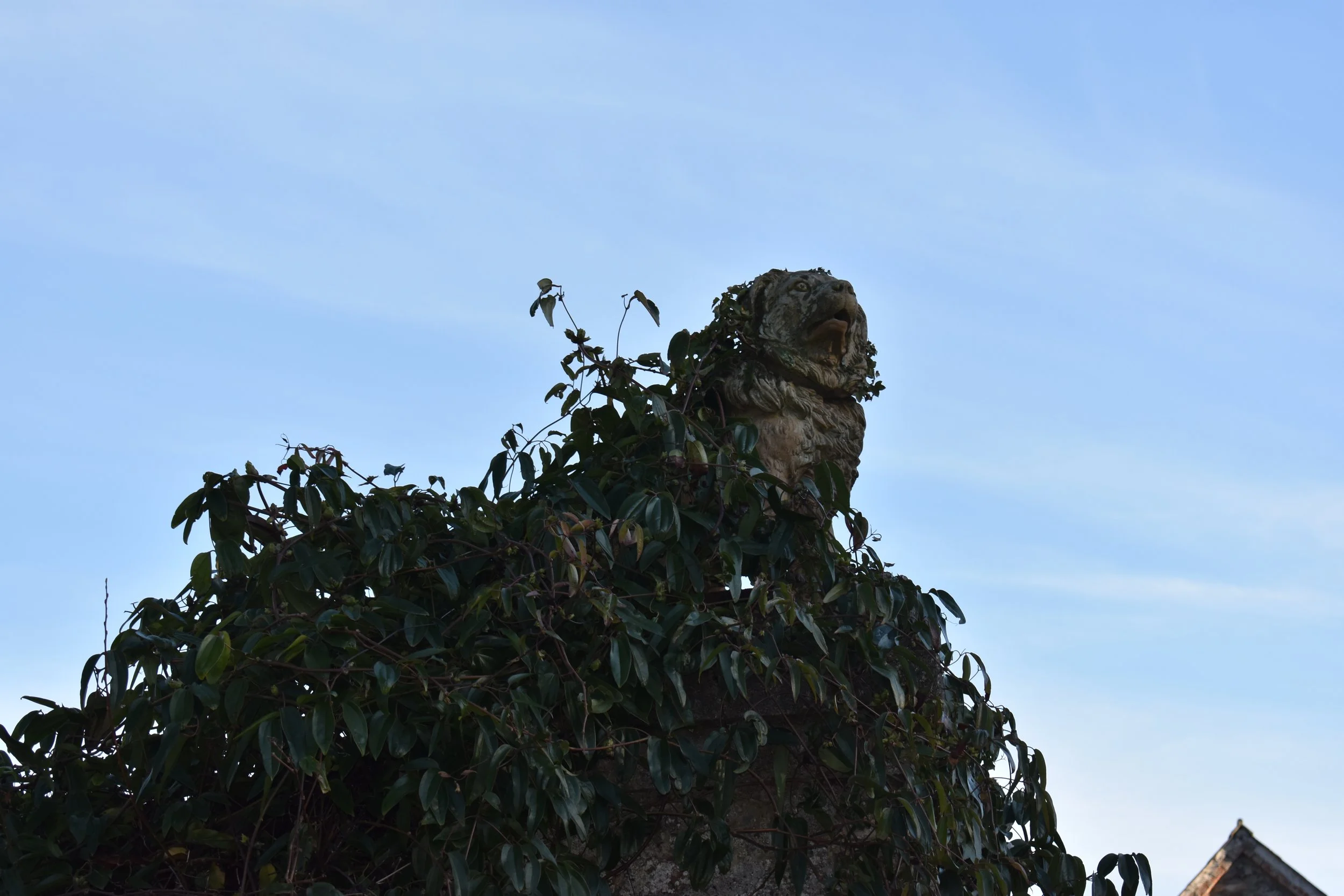
Malahide Castle dates to 1185, when Richard Talbot, a knight who accompanied Henry II to Ireland in 1174, was granted the “lands and harbour of Malahide.” It was then home to the Talbot family for the next 791 years, until 1975. As a result, you can see examples of architecture, culture, and history from the medieval to the modern as you tour the castle. One medieval wall boasts a secret passageway where the Talbots’ Catholic priest could escape, illustrating how some Irish families were forced to outwardly convert to Protestantism under a Protestant English ruler to retain their land and rights even while secretly maintaining their Catholic practices. In another room, we learned that the phrase “get plastered” to mean “get drunk” comes from mixing plaster with alcohol to create molding, which caused the workers to get drunk from the fumes. Another room boasts a Venetian fireplace procured on a European tour, where we picked up another bit of etymological trivia: “saving face” comes from placing screens between women and fireplaces to prevent their wax makeup from melting. The medieval banquet hall features a minstrel’s walk and a ghost story about Puck, a lady’s man who was allegedly in unrequited love with one of the Talbot daughters.
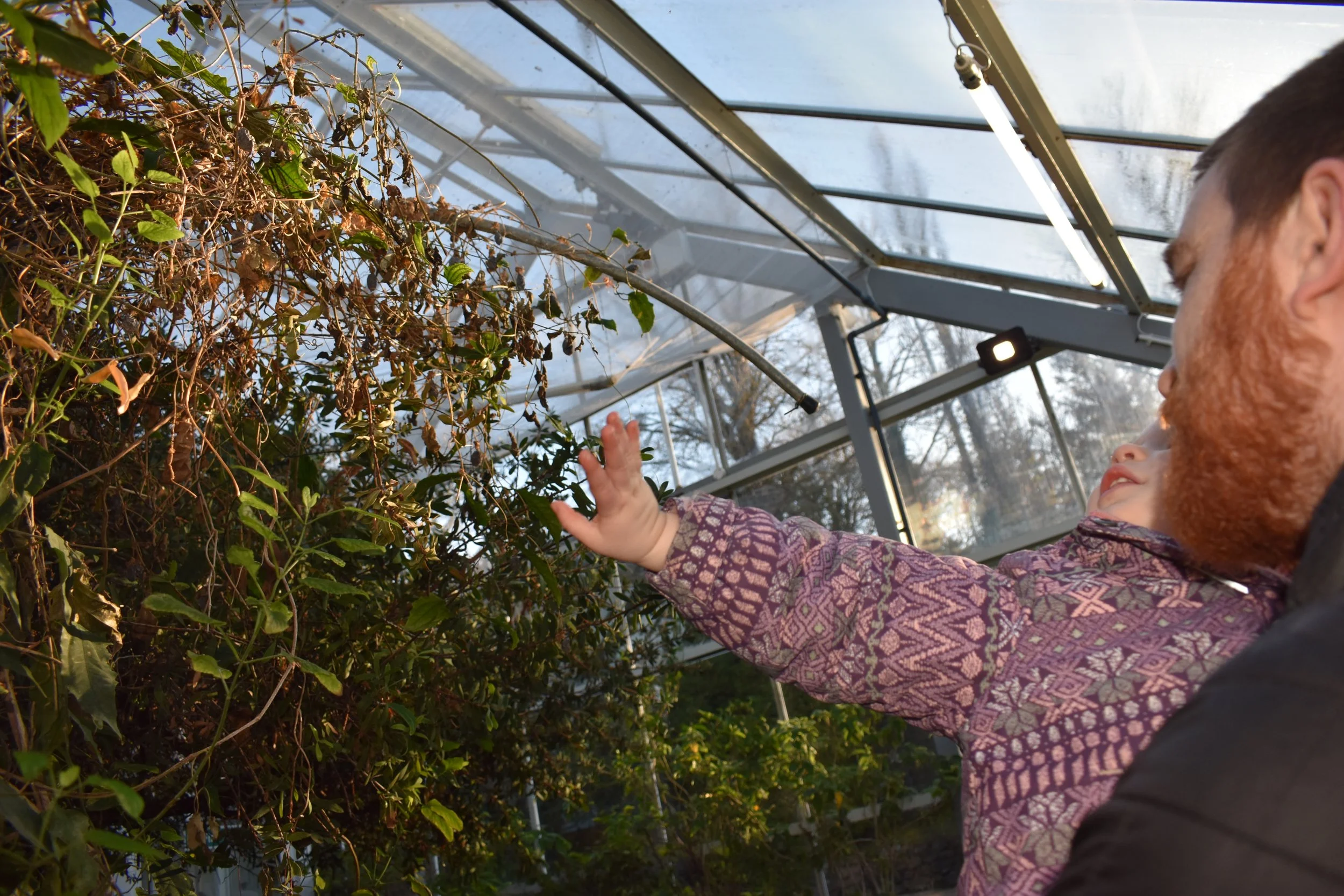
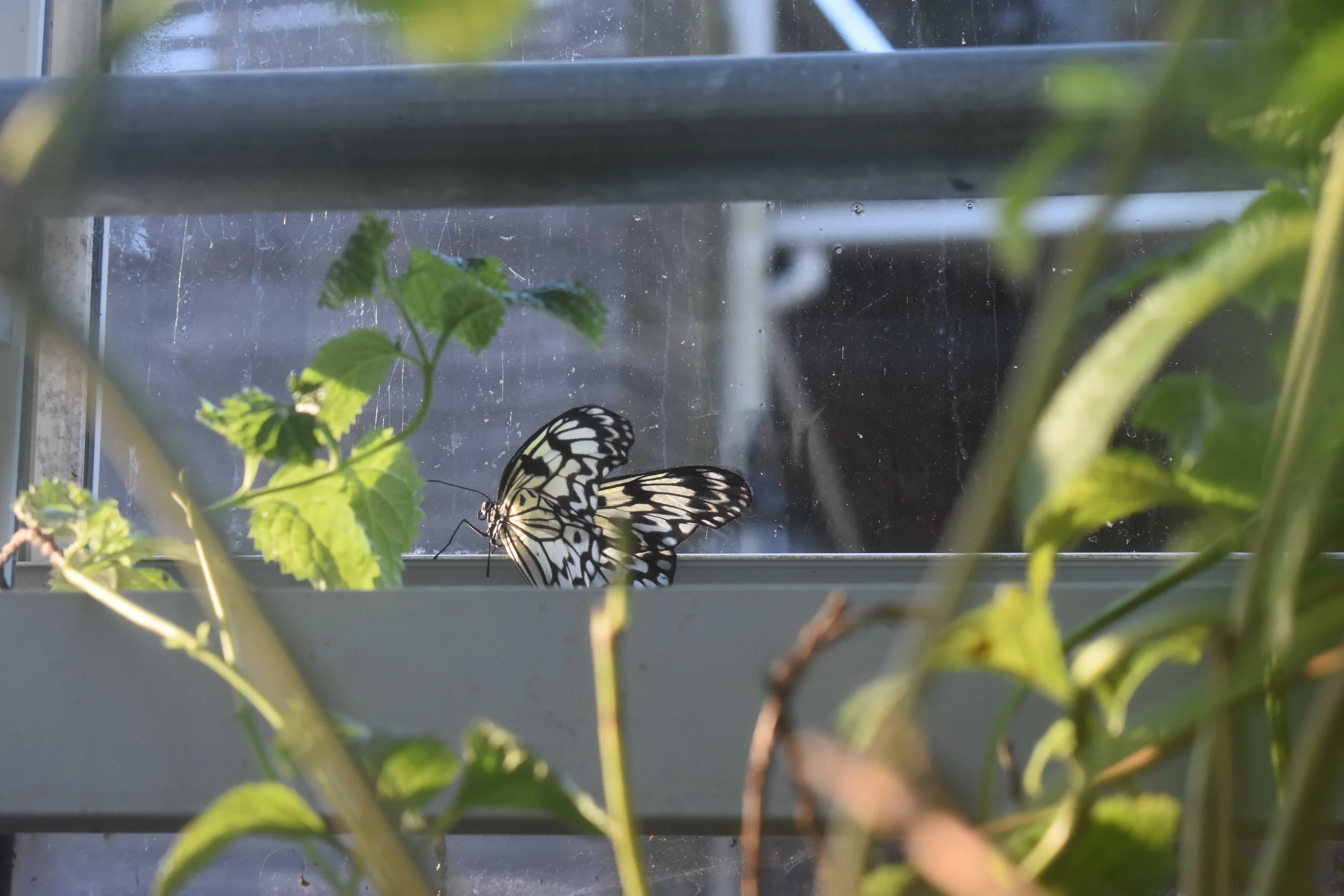
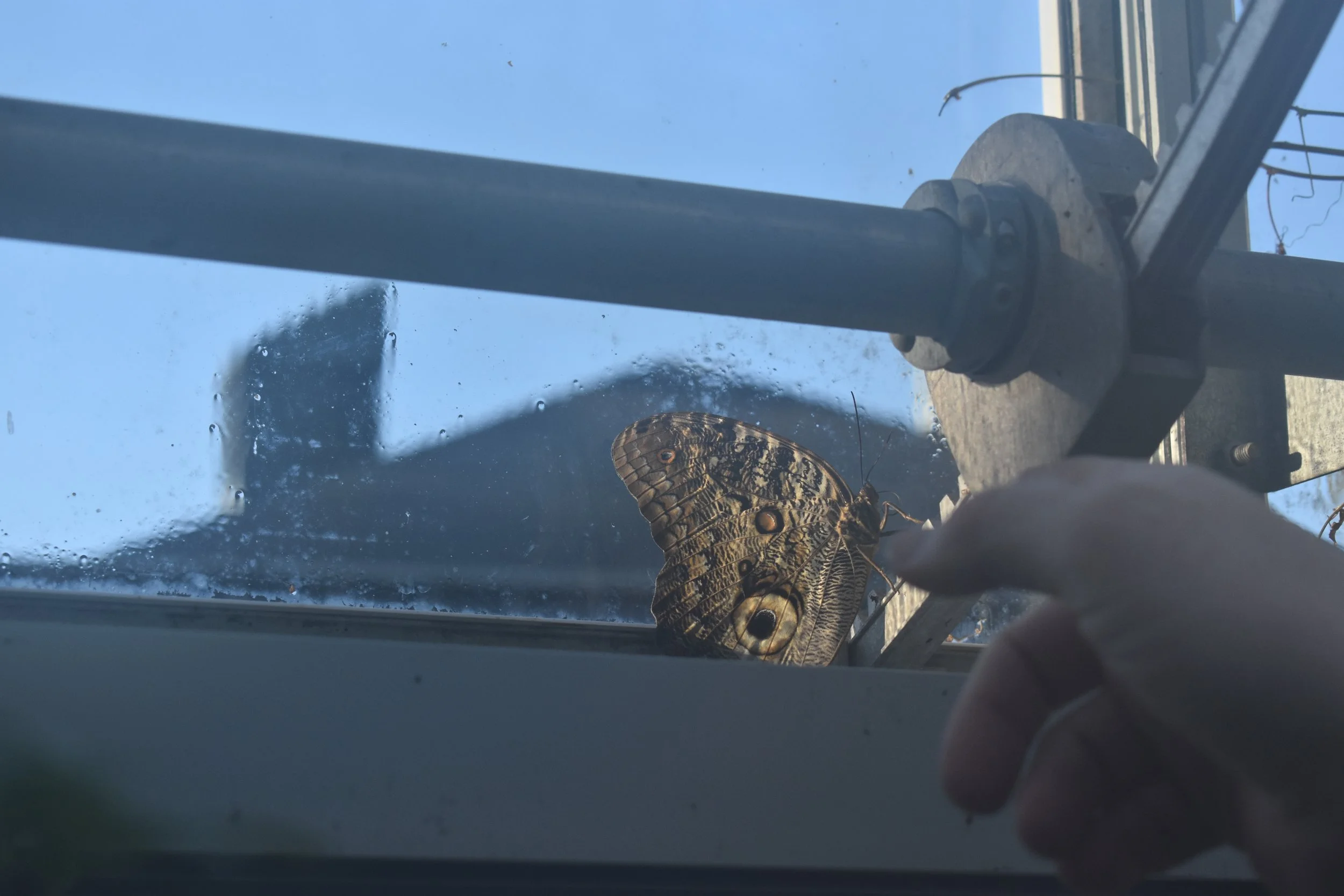
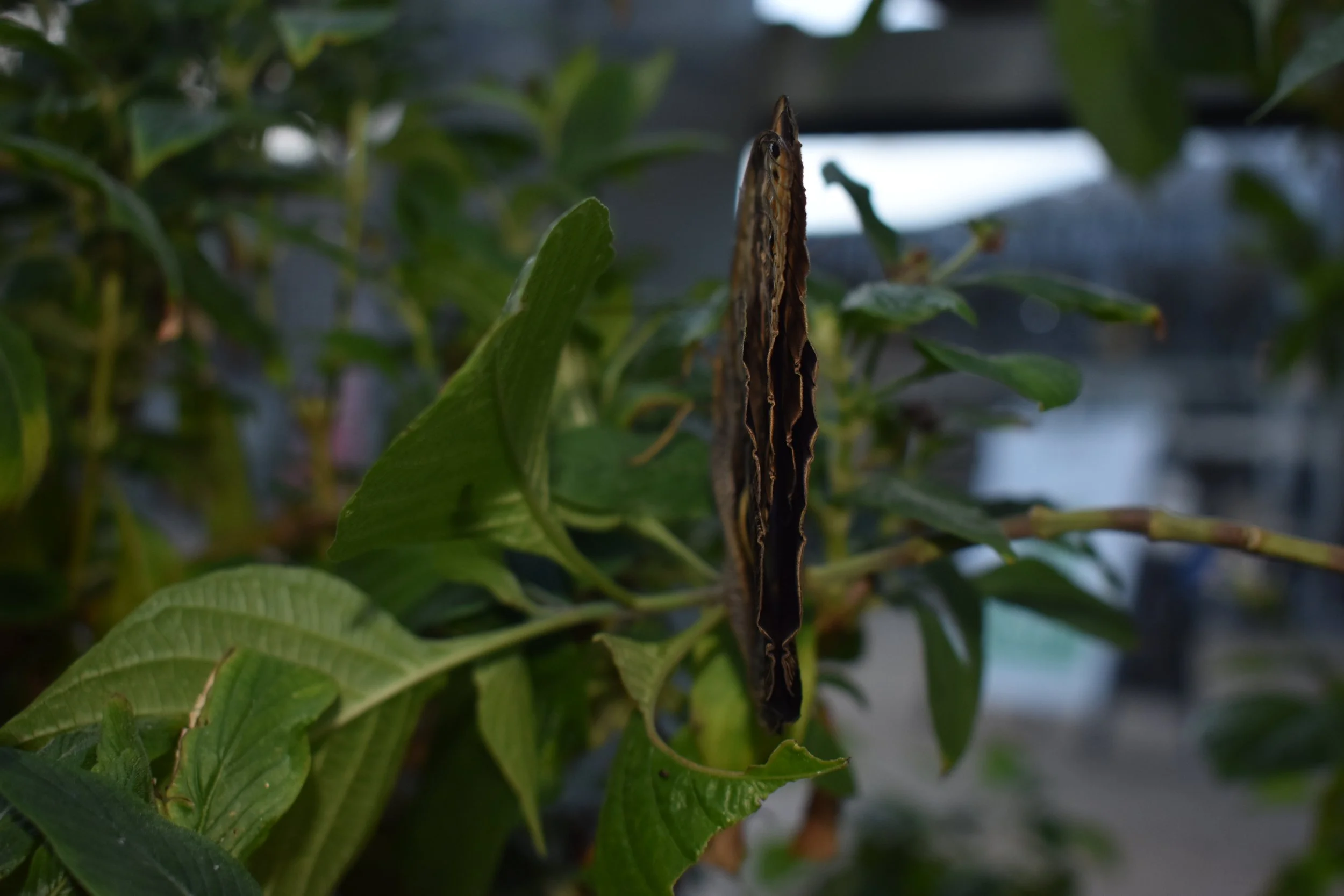
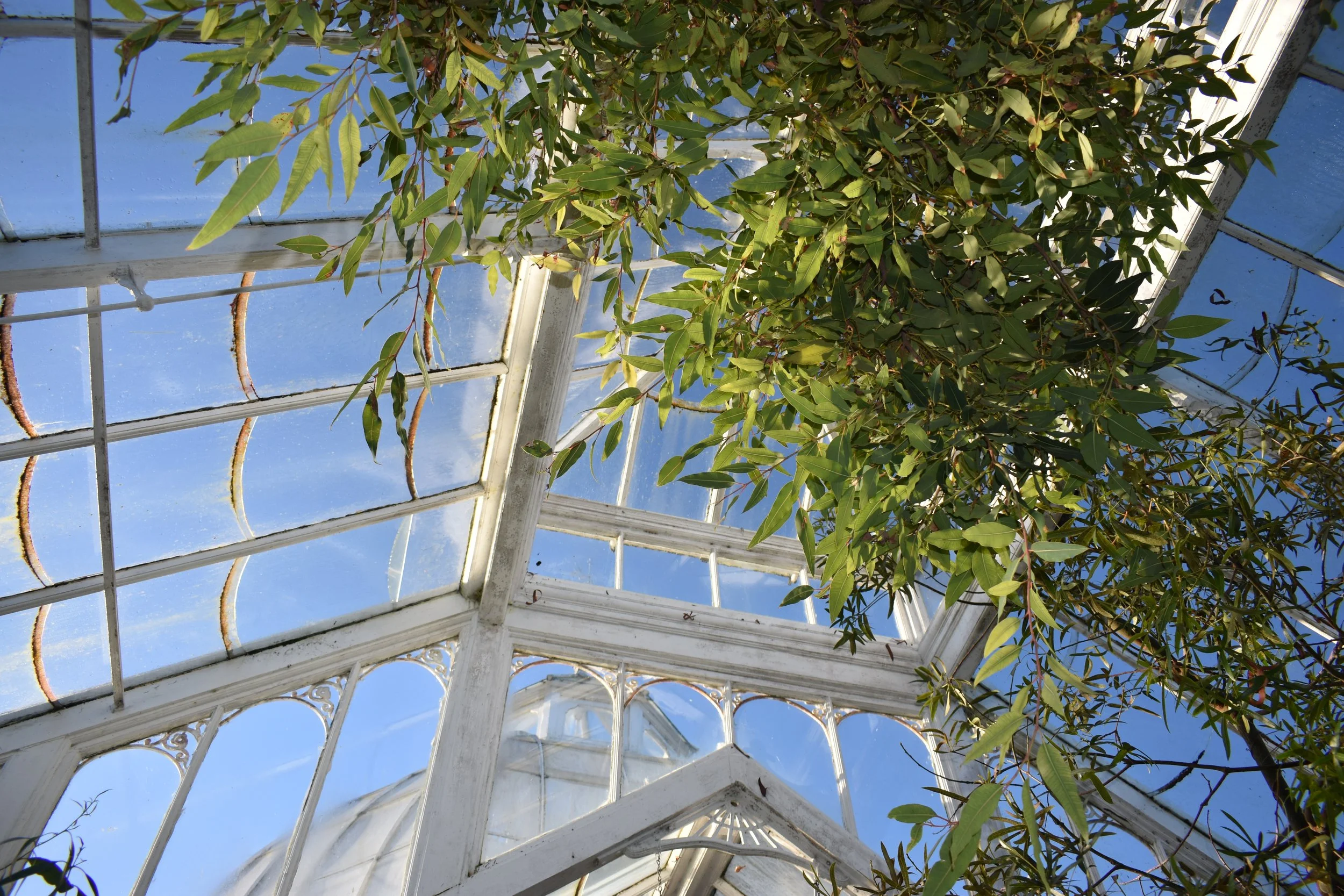
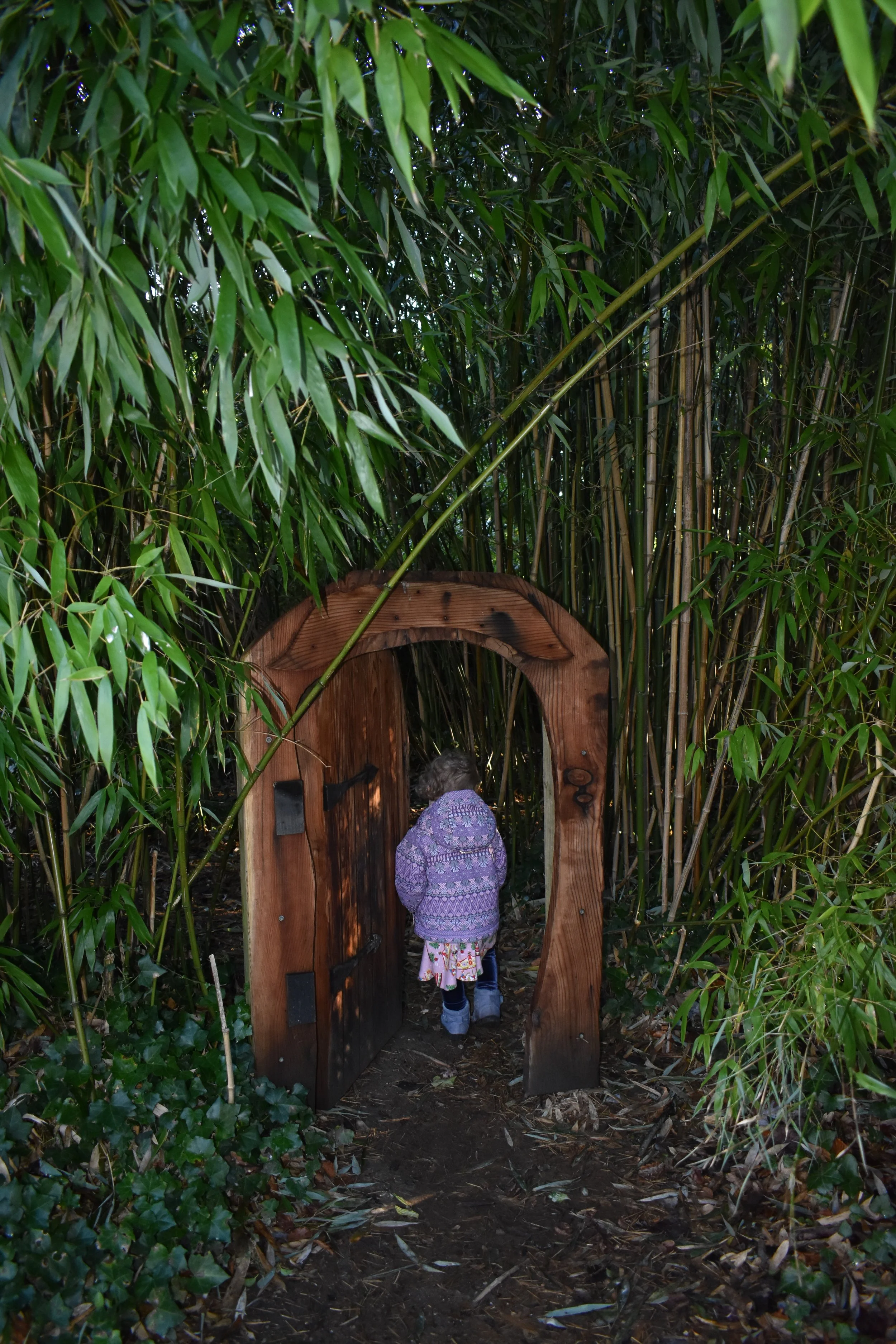
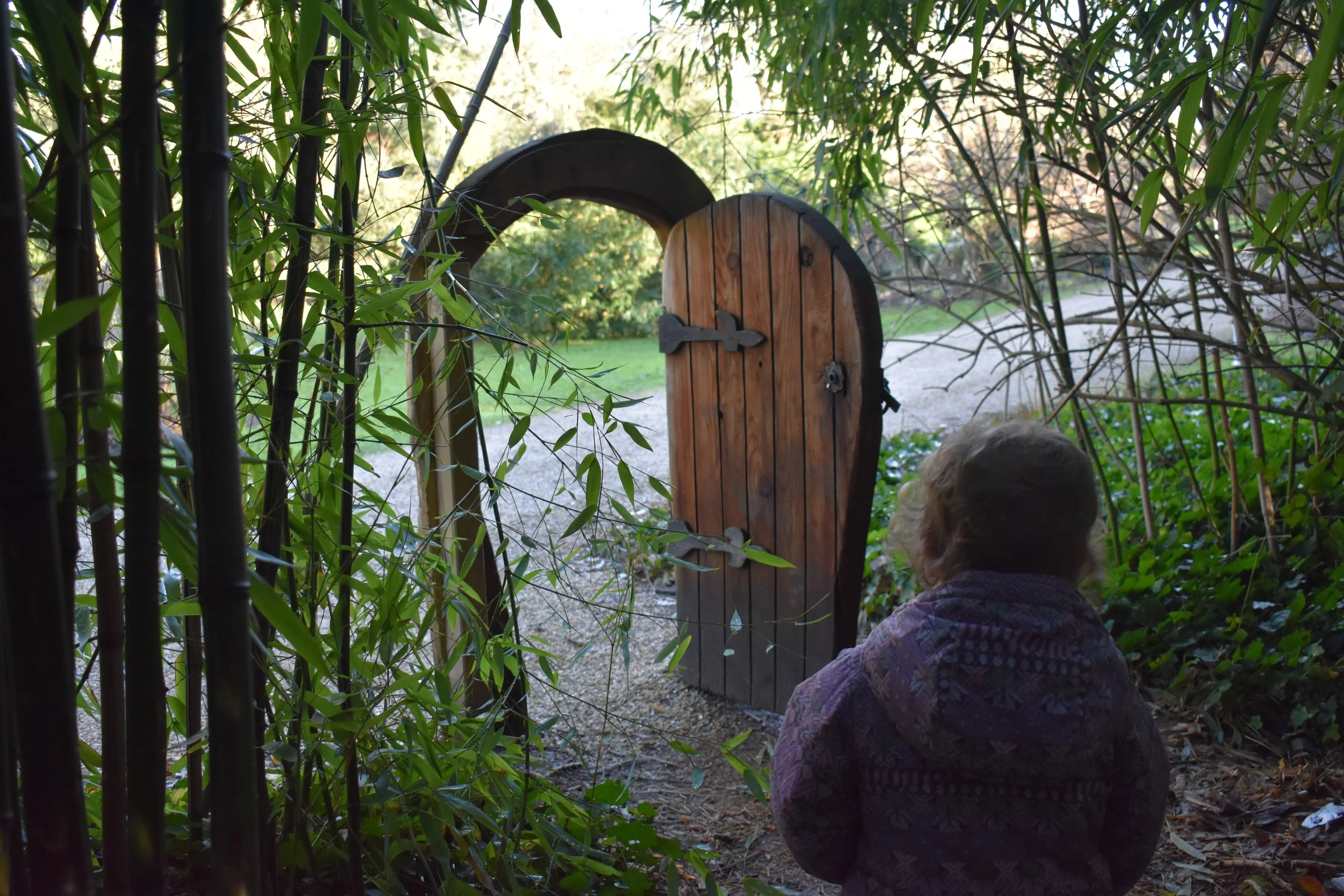
The fairy trail was a big hit with Flora, who enjoyed running around the grounds, finding the fairy circles, dragons, bamboo forest, and fairy houses. The butterfly house was less active than I remember it being in the summer, with only two varieties of butterflies out and about. Nevertheless, it was warm in the conservatory, and Flora enjoyed finding all the butterflies. The cafe (both the takeaway side, which features a large selection of breads, sandwiches, and pastries, and the sit-down side) was a delicious choice for a light lunch.
National Museum of Ireland (Free)
Back in Dublin, we managed to sneak in a visit to the National Museum of Ireland, a treasure trove of Irish history and culture. Located in a beautiful Palladian style building, the museum is most well-known for its Bronze and Iron Age “bog bodies.” These are exceptionally well-preserved bodies of men killed in what are theorized to be ritual sacrifices. The Bog Bodies Research Project, which employed CT and MRI scanning, palaeodietary analysis, fingerprinting, histological, and pathological analysis, has revealed many facts about these bodies, including what they ate for the months before their deaths. The bodies are quite gruesome in my opinion (all are partial, one with a twisted neck stump where he was beheaded), and the stories of their deaths are pretty grisly. My daughter (2.5 years old) had no idea what she was looking at, and she wasn’t scared when I explained these were individuals who died a long time ago, likely because she has no idea what death is. I can imagine older toddlers might have some trouble with this exhibit, but the bodies are within circular pods, so they’re easy to avoid if necessary. Additionally, the museum holds a huge exhibition of prehistoric Irish gold and an early medieval book of psalms called the Faddan More Psalter, written about 800 CE and found preserved in a bog in 2006. It is notable for being one of the few medieval books that has survived with its original bookbindings intact.
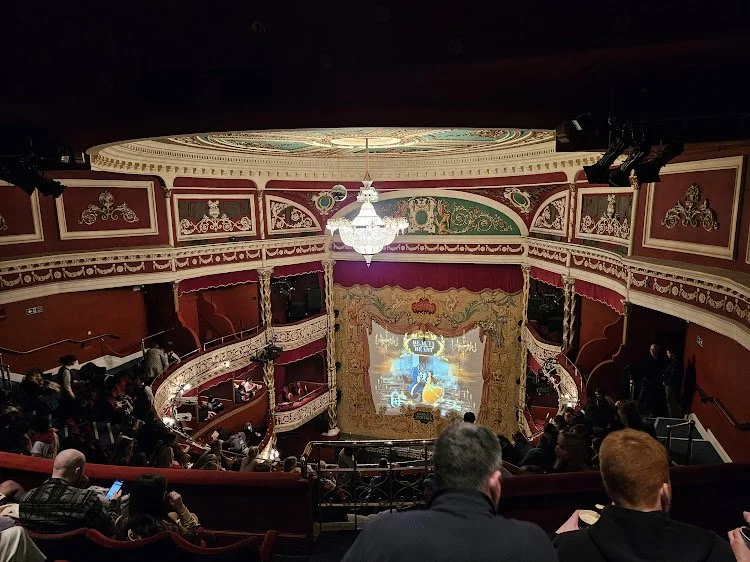
Beauty and the Beast Pantomime at the Gaiety Theatre (~$45 per adult for balcony tickets, Children under 3 free but must sit on lap)
I don’t know what I was expecting with my first panto, as I went into this experience completely blind. In the US (as far as I’m aware), Christmas pantomimes are not a thing. But this was a suggestion on Reddit for things to do in December/January in Ireland, and that was enough for me, as there were so few child-friendly winter activities for that space between dinner and bedtime.
Pantomimes are musical comedy performances of popular stage shows—most family friendly, and many based on fairy tales. They include cross-dressed characters and pop culture references, almost a parody of the original. Apparently panto was developed in the 18th century in England as a form of participatory theatre where the audience is expected to engage with the characters. In our show, Gaston often directly addressed the audience, asking for support for his shenanigans and mocking us when we all shouted, “Oh, no it isn’t!” or what have you. The pantomime dame, played by a man in drag, is another conventional character; ours was Mrs. Potts, and it was actually the end of his 14-year run as the dame at the theatre.
Flora had never seen a theatre performance before, nor has she ever watched a tv show or movie. So we had very low expectations for her as a 2.5 year old with no experience sitting still and focused for 2 hours. However, she was locked in the whole time, riveted by the songs, dancing, and, at several points, fireworks. Ryan and I also immensely enjoyed ourselves, as the “parody” songs, self-conscious jokes about the Irish accents and drag, and the plot changes transformed this from the Beauty and the Beast film or stage show we’re overly familiar with. I particularly enjoyed the number of K-pop Demon Hunters songs they adapted for the Beast.
Day 4: Glendalough Monastic Site, Wicklow Mountains National Park
Hiking at GLendalough (Free)
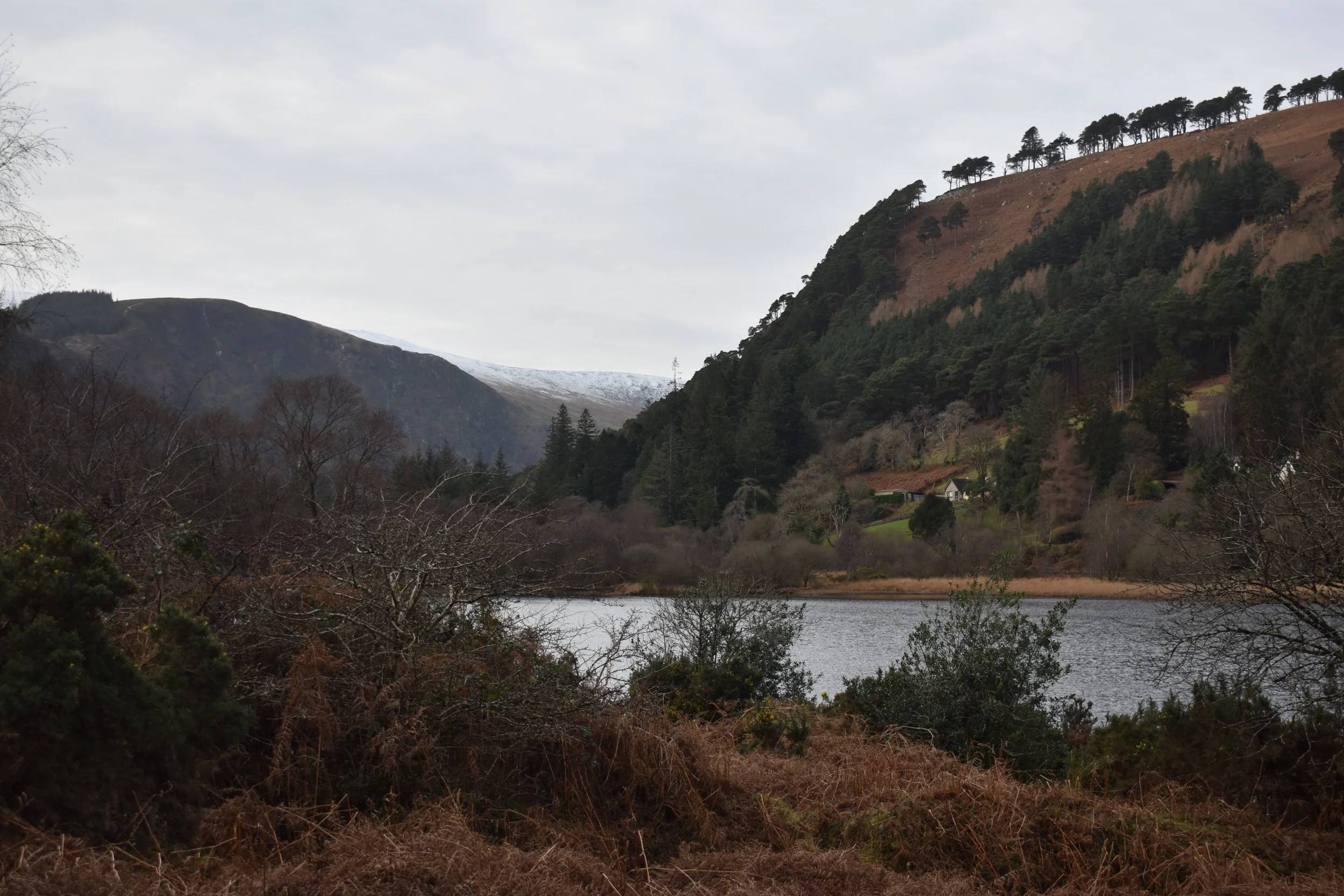
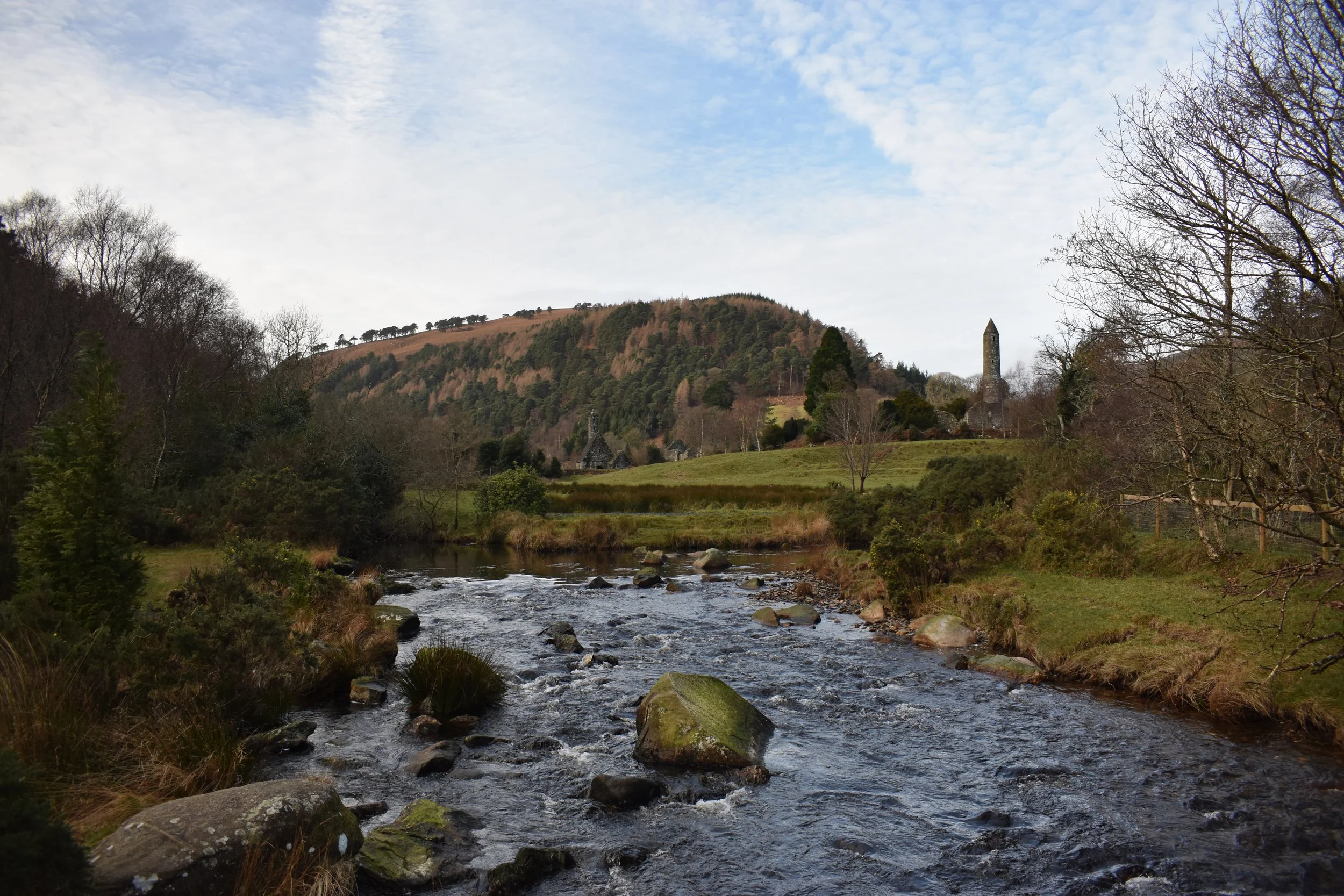
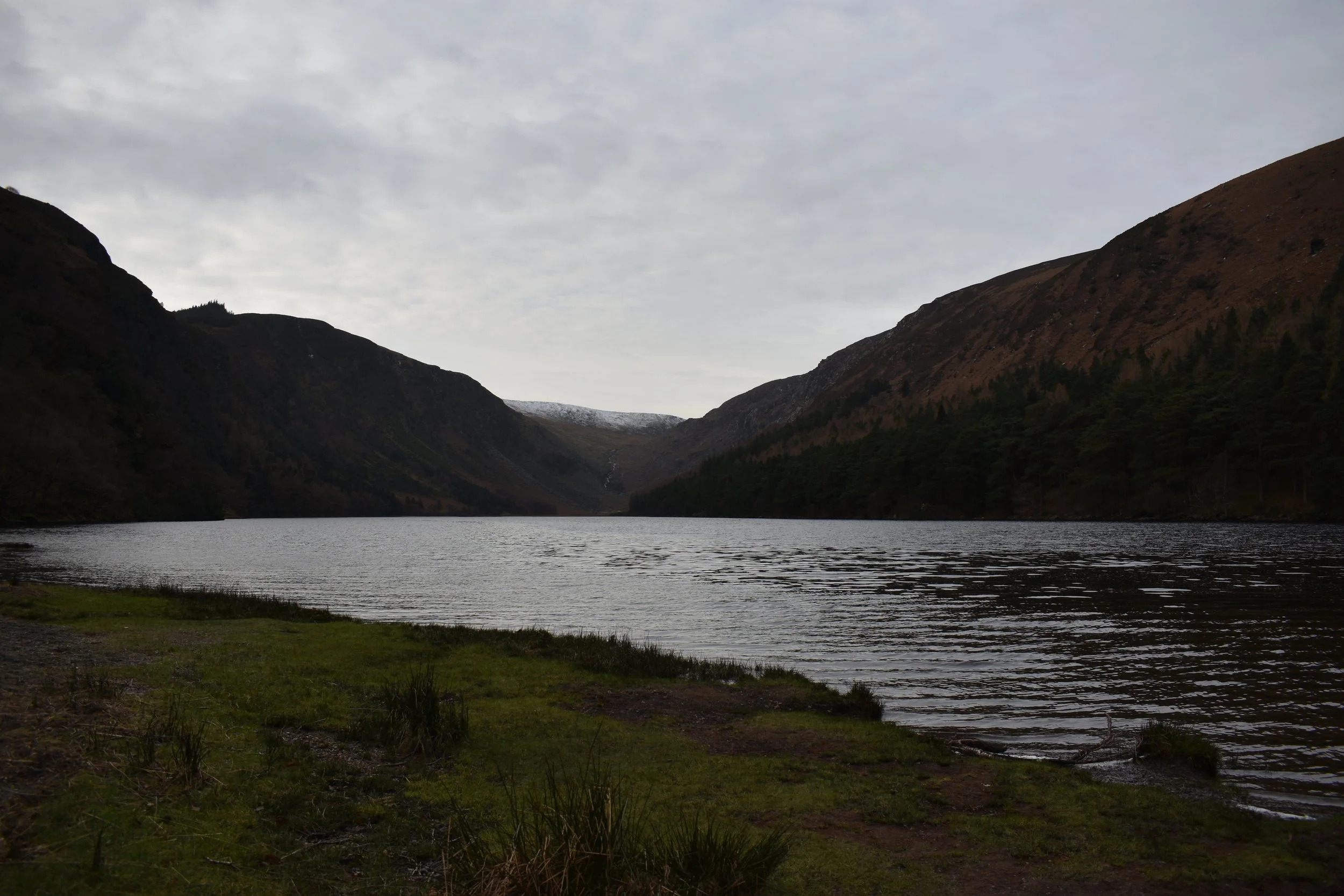
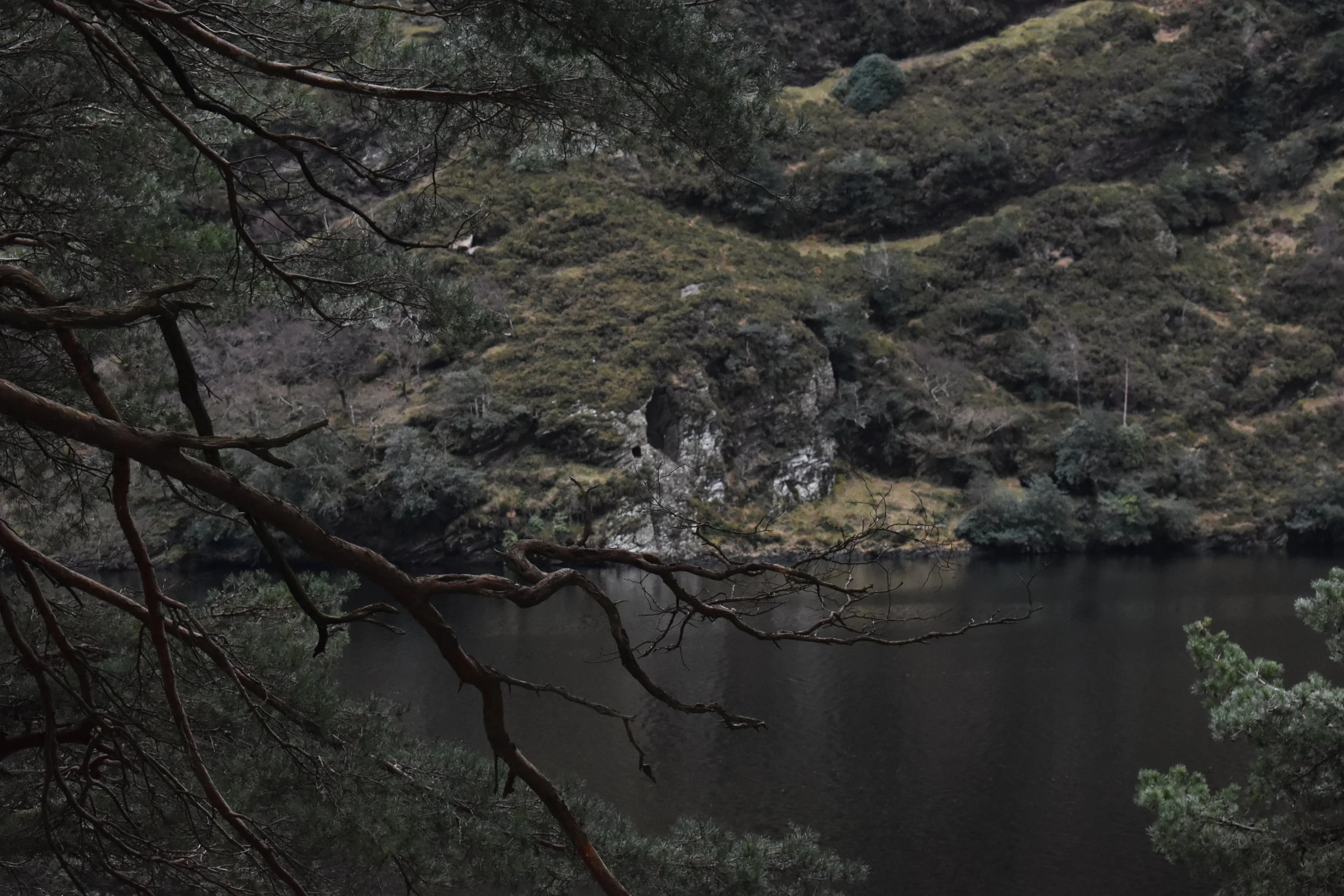
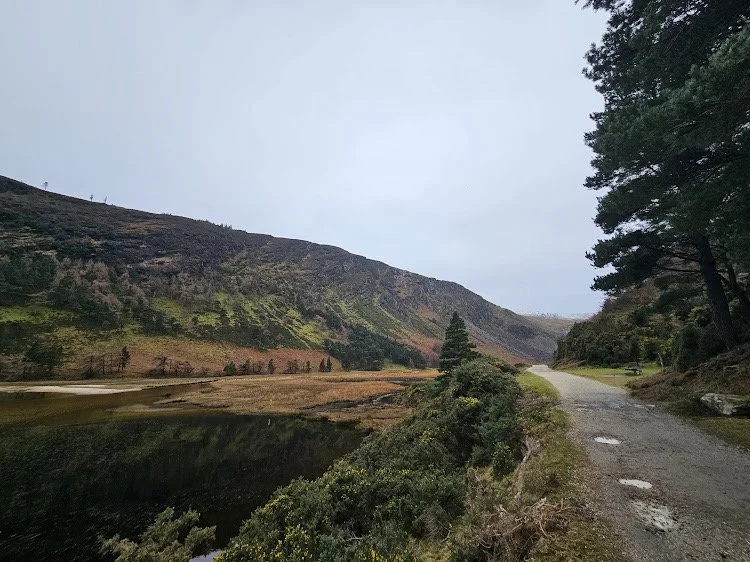
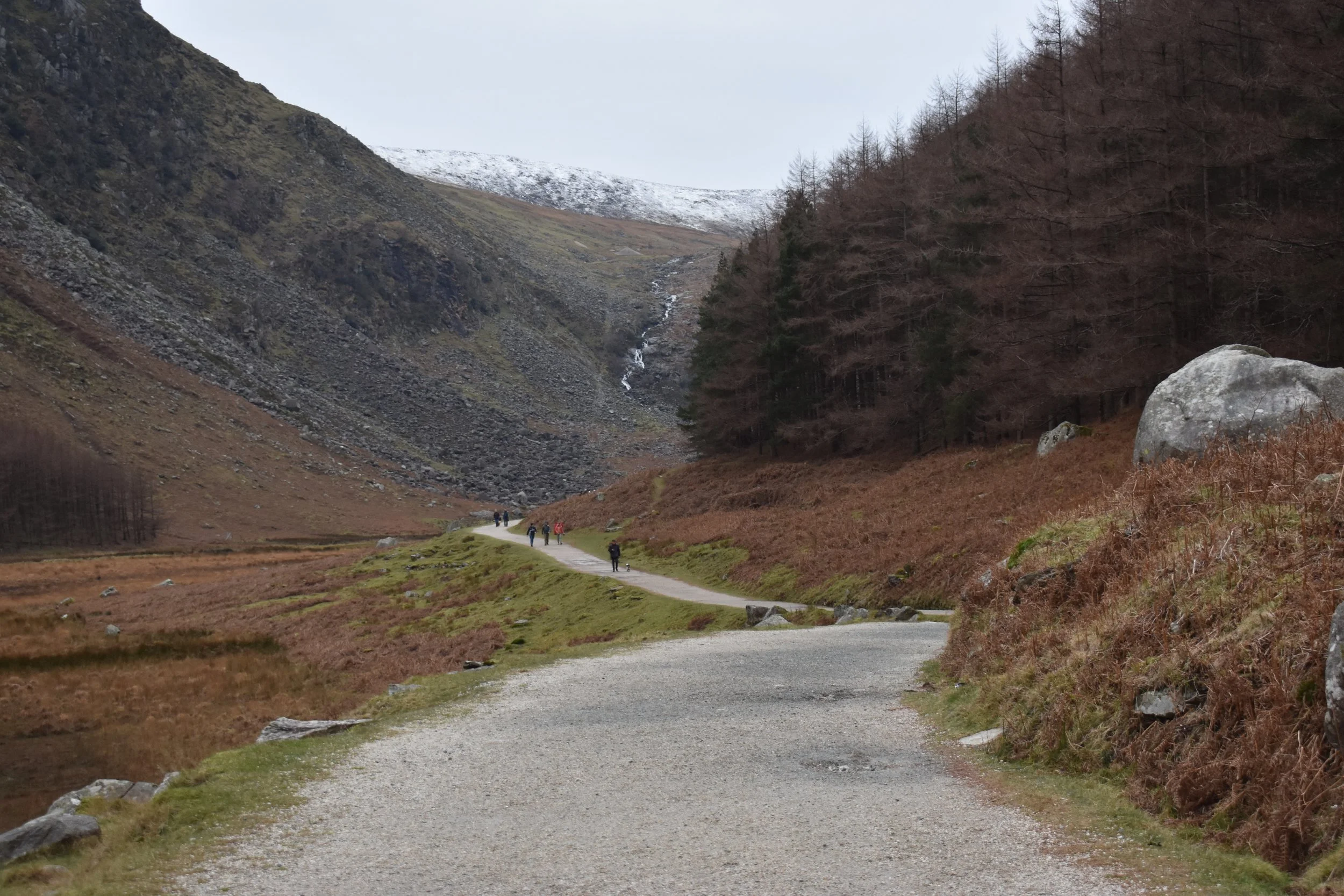
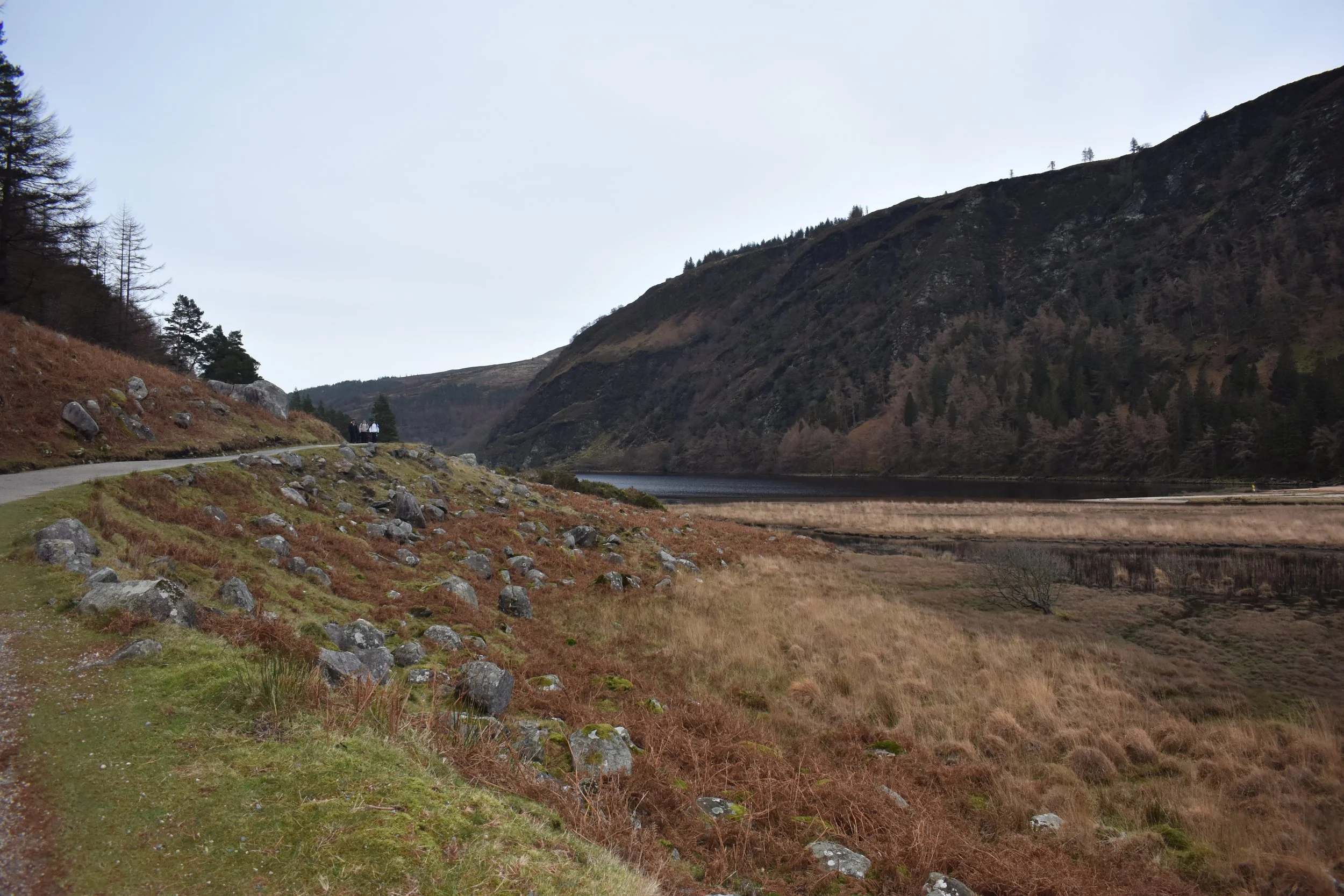
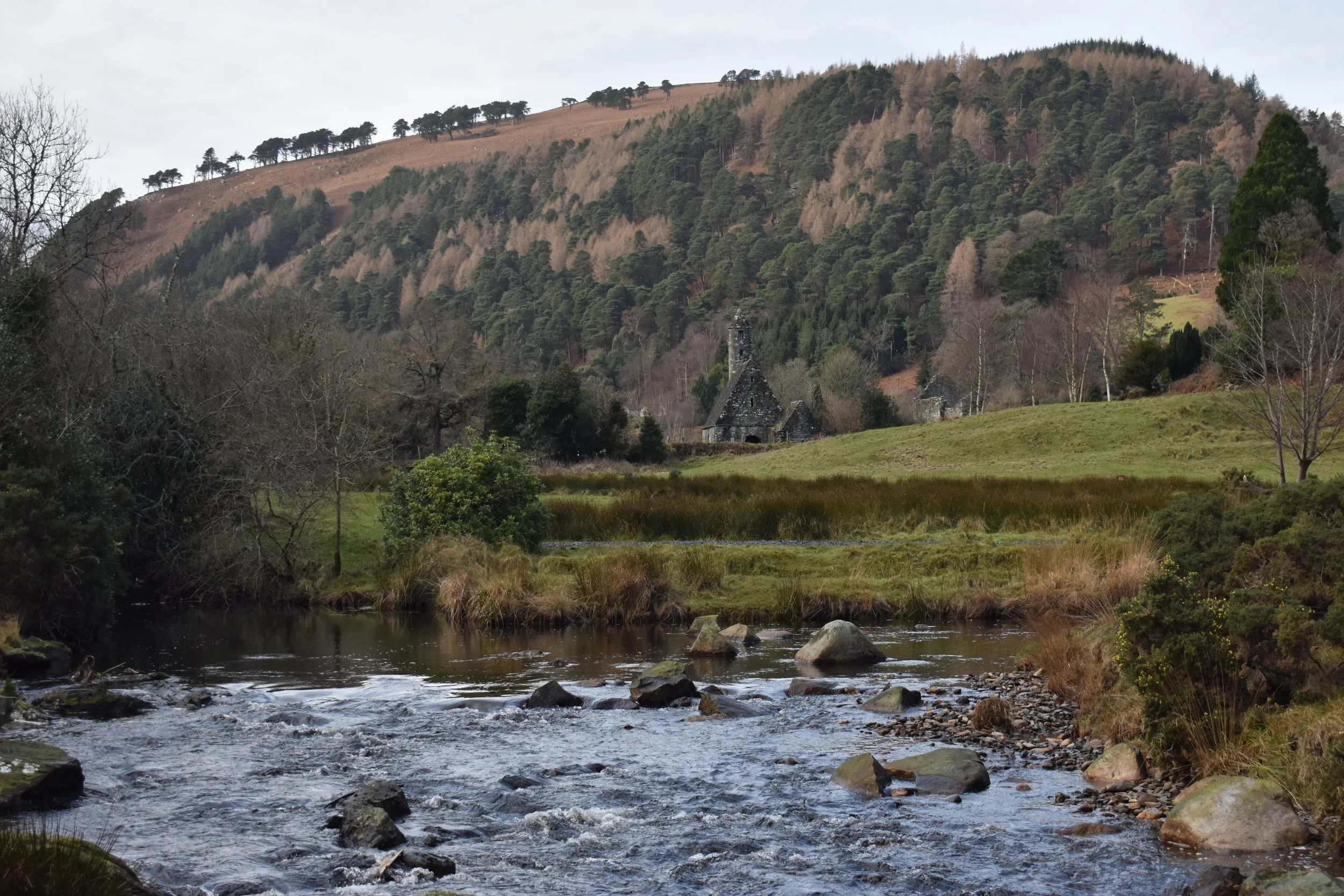
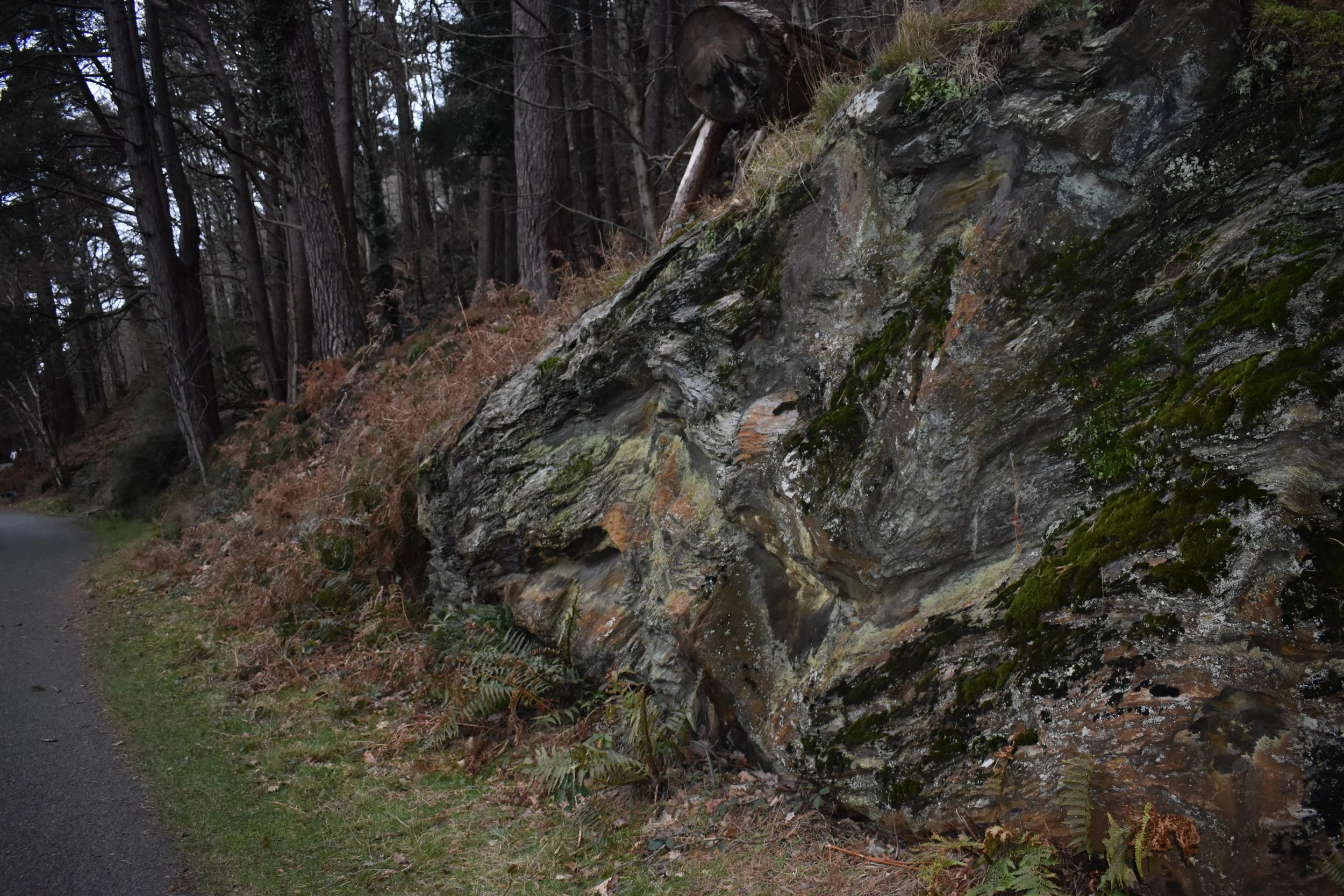
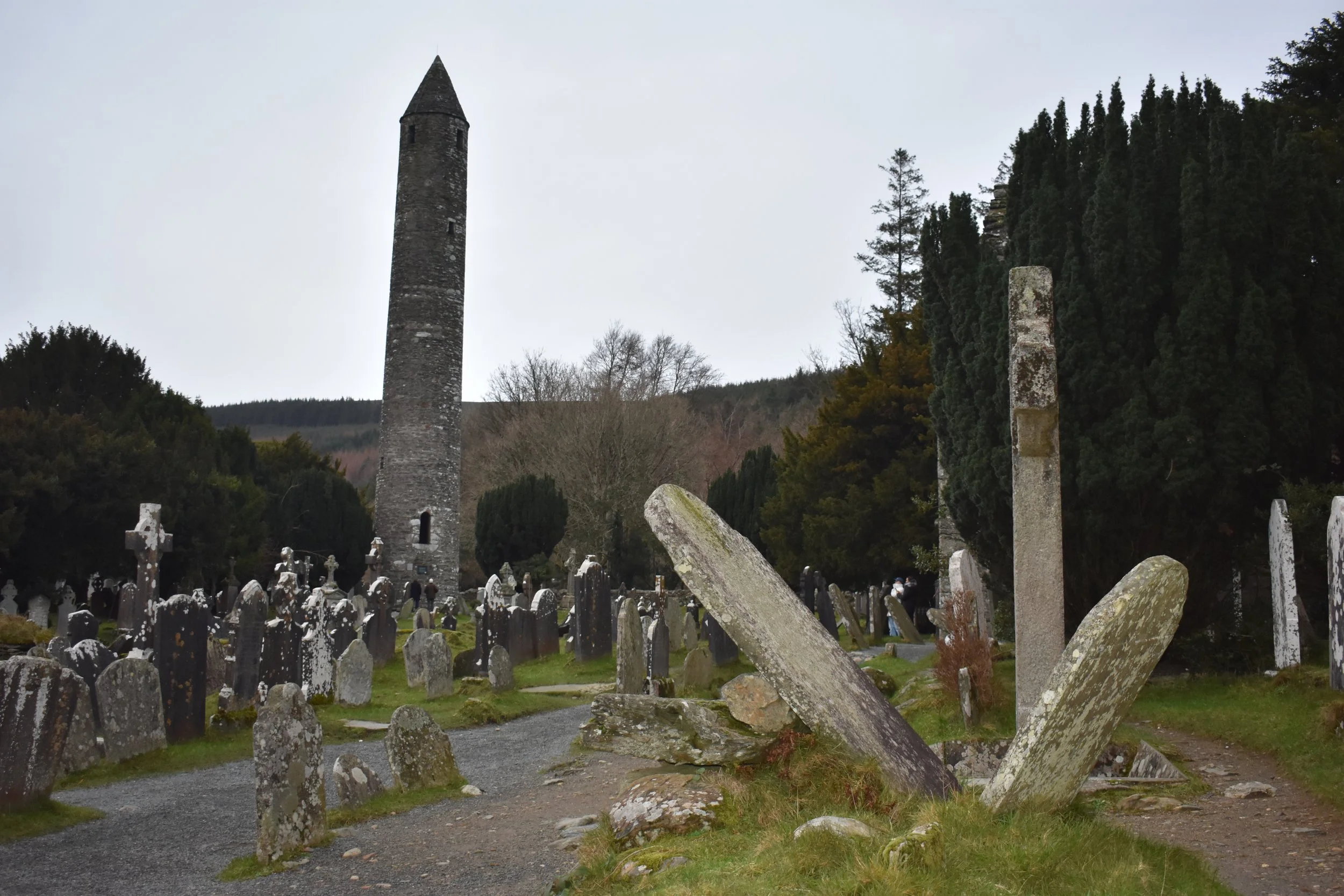
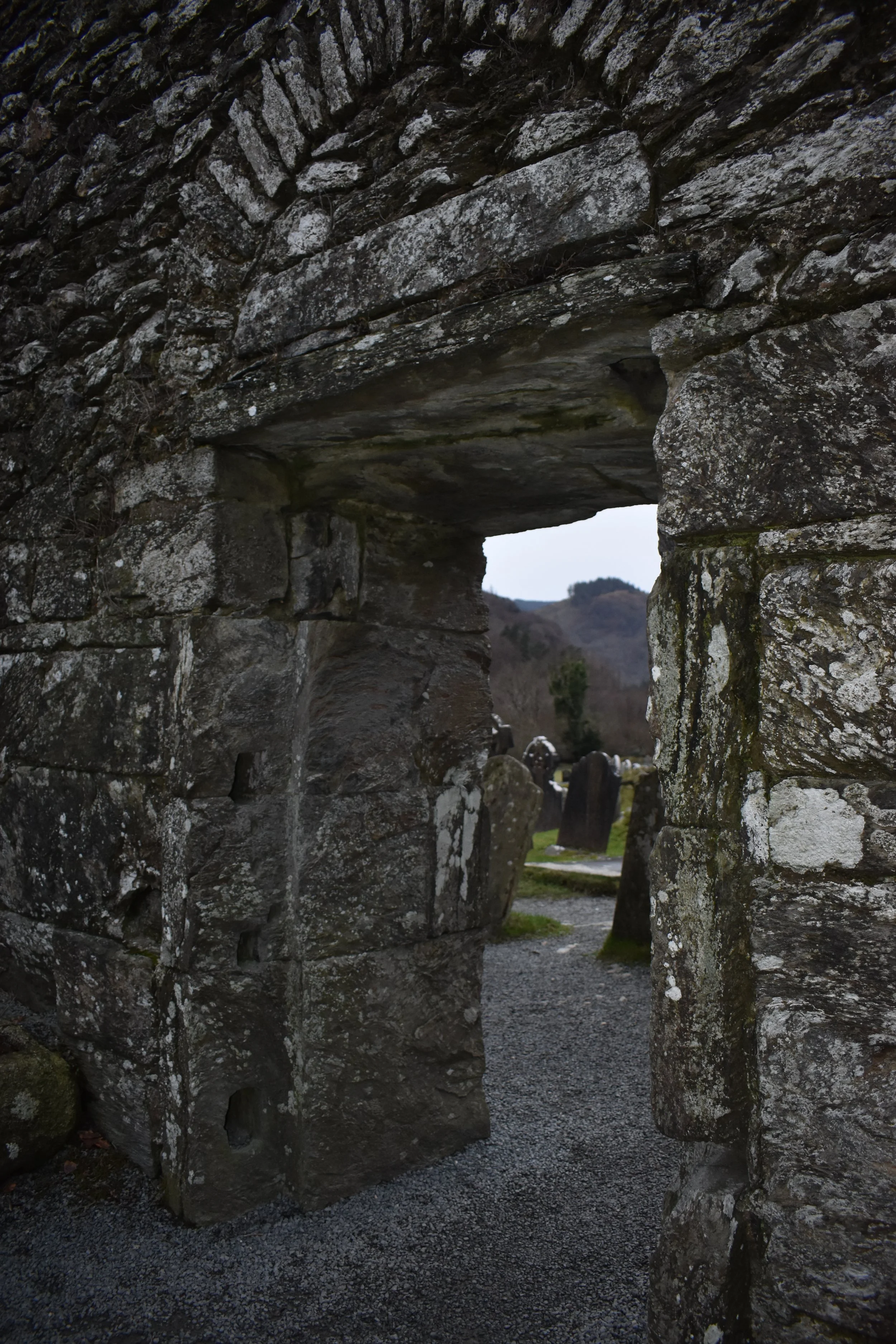
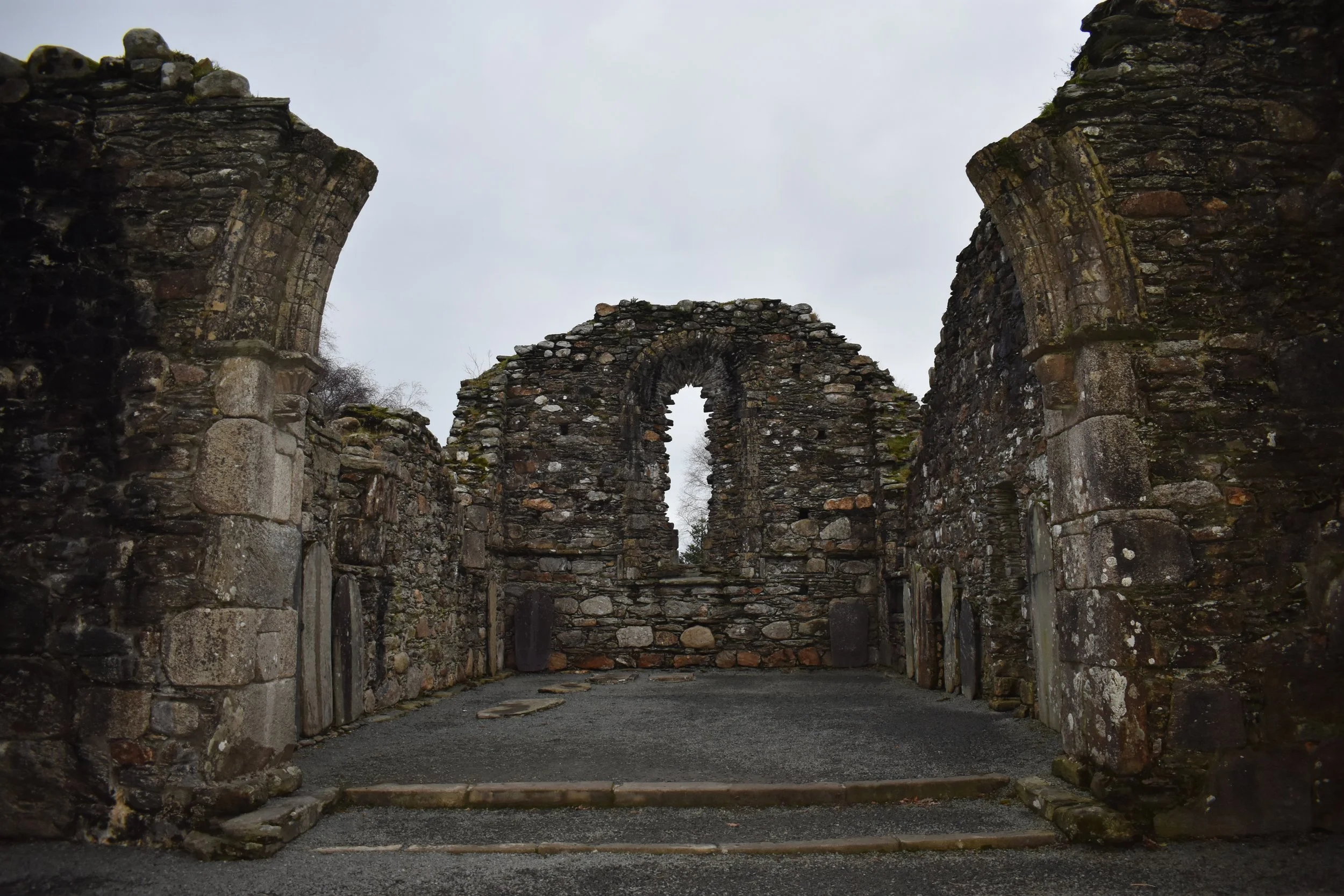
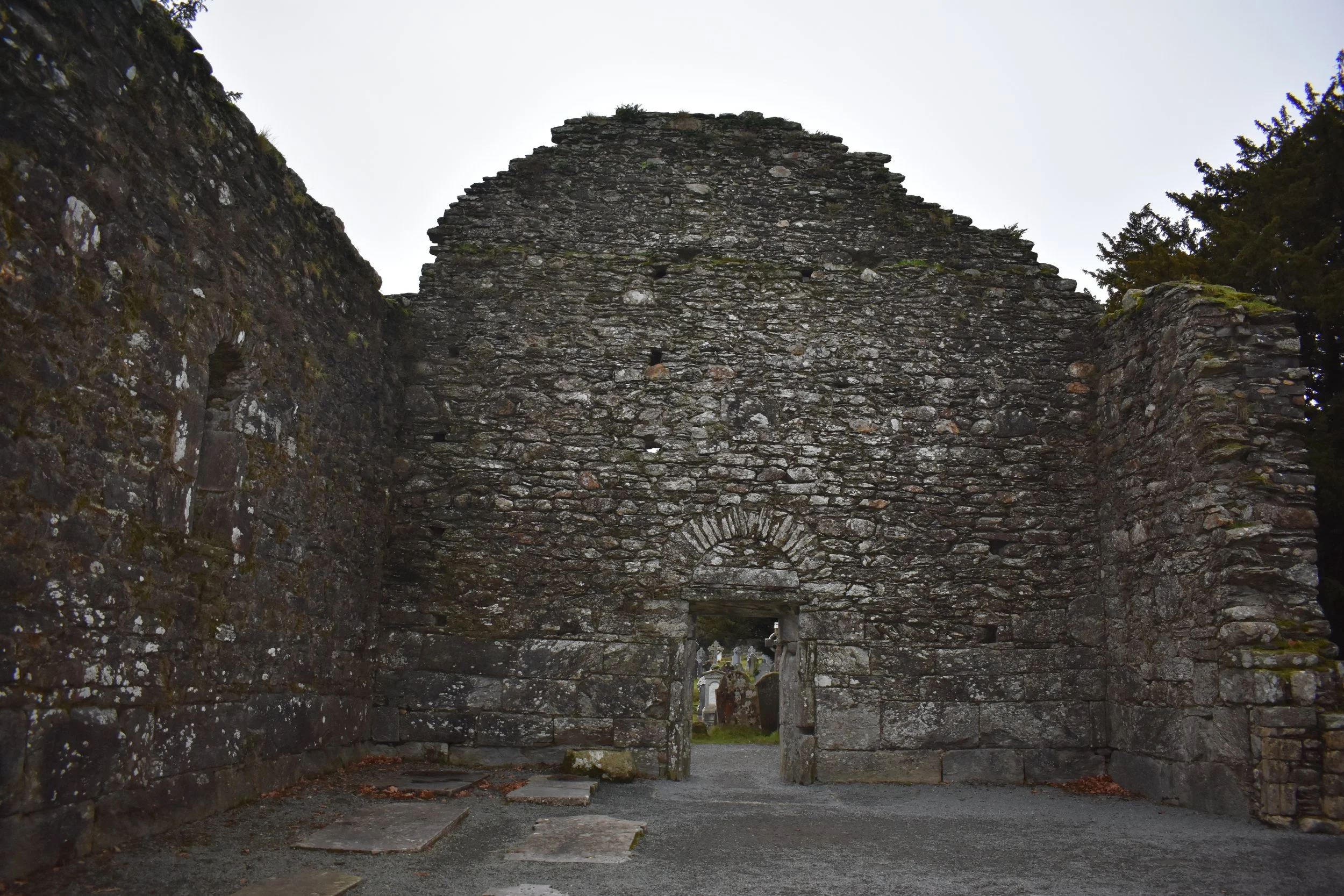
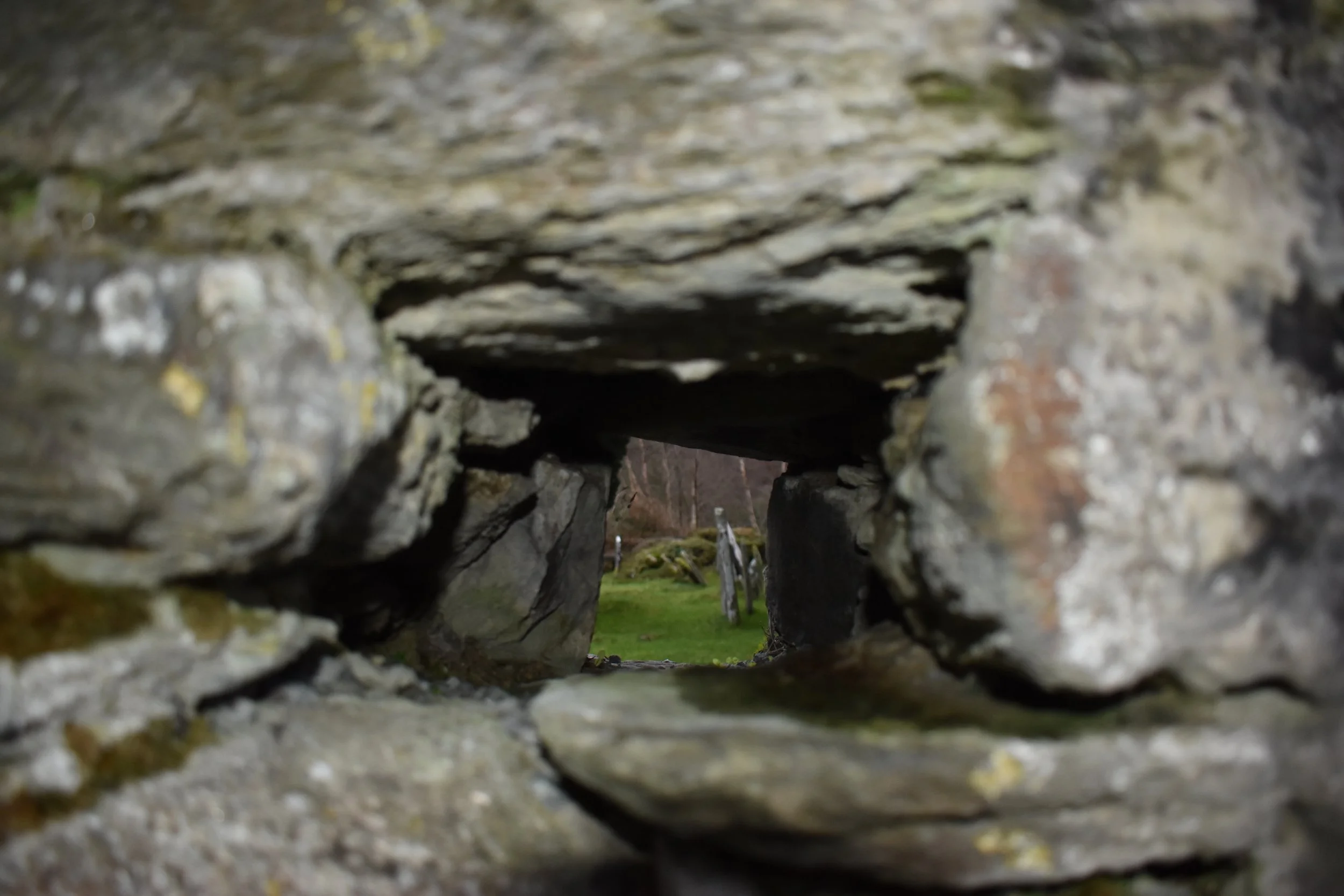
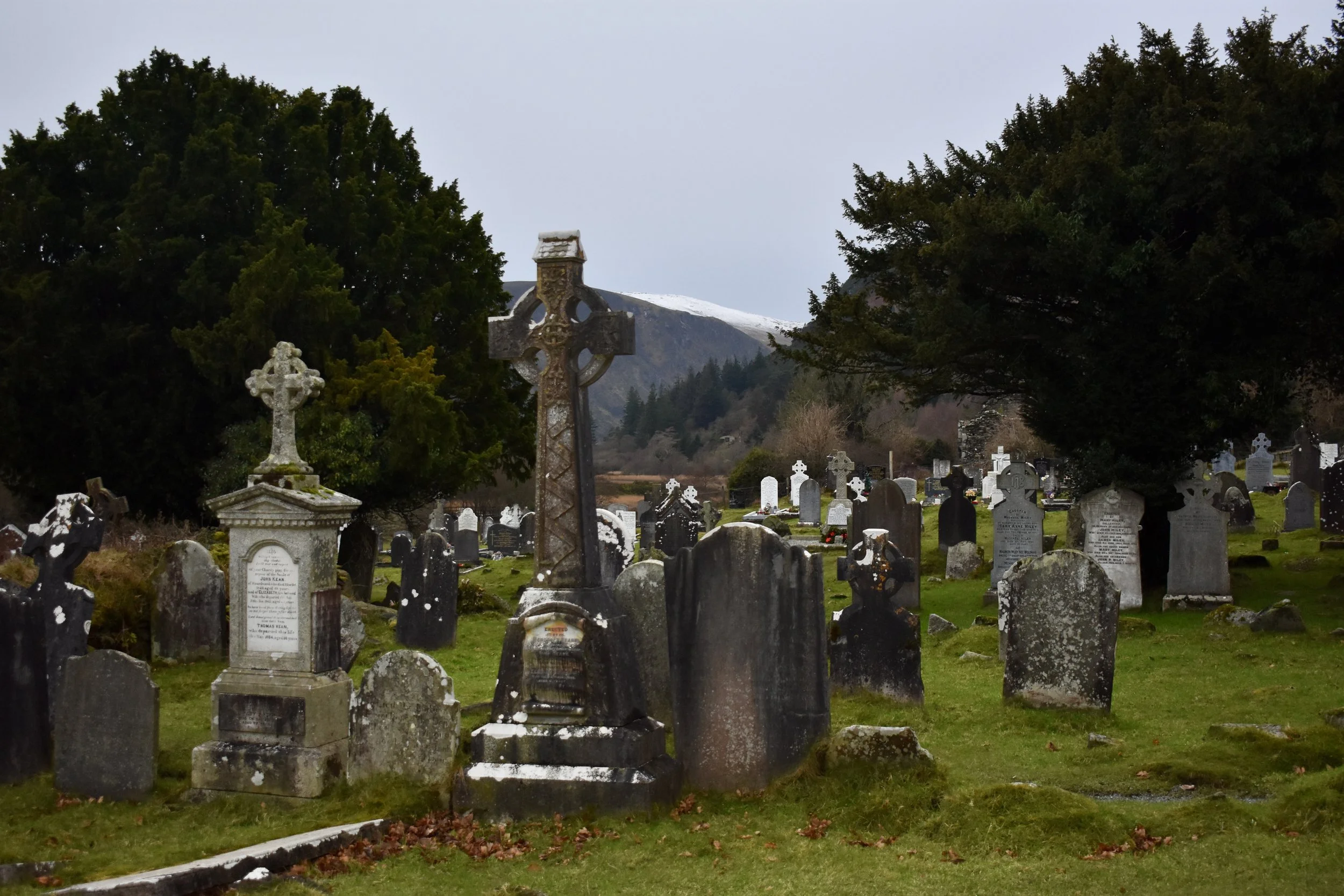
About an hour south of Dublin lies Glendalough, a magnificent glaciated valley. This is the site of an early medieval monastic settlement founded by St. Kevin in the 6th century. Throughout the valley are now hiking trails as part of the national park. We started with the Green Road Walk (~1 mile), which takes you through the oak woodlands to the Lower Lake. You can follow signs here for food, and there are restrooms and a few food trucks set up near a parking lot. Options were limited, but we did get insane garlic mayo-loaded cheese fries and millionaire’s shortbread (and Flora a hot dog). Flora then took a carrier nap while we hiked the Miner’s Road Walk (~1.25 miles), which takes you through a Scots Pine woodland along the banks of the Upper Lake to the ruins of the miner’s village from the galena lead mine that operated in the valley from 1825 to 1957. About halfway through the hike, you can see a cave known as St. Kevin’s bed where he used to seclude himself. Because of the short daylight hours (and getting a later start due to a later bedtime after the evening panto), we didn’t have time to do another longer hike on the Spinc trail, which gives you views of the lakes and valley from above. Instead, we jogged up to see the Poulanass Waterfall and then headed back to the monastic settlement to walk around the ruins.
The buildings of the settlement that now survive date between the 10th and 12th centuries. One of the most impressive was a 100-ft. tall tower which served as a bell tower and a refuge during attacks. Another was St. Peter and St. Pauls' Cathedral, the sprawling ruins of a 12th/13th-century cathedral that dominate the settlement.
Hiking is one of my absolute favorite toddler activities—it burns energy, doesn’t require helicoptering to prevent mass destruction of themselves or others, and still allows you to experience the beauty of wherever you’re traveling.
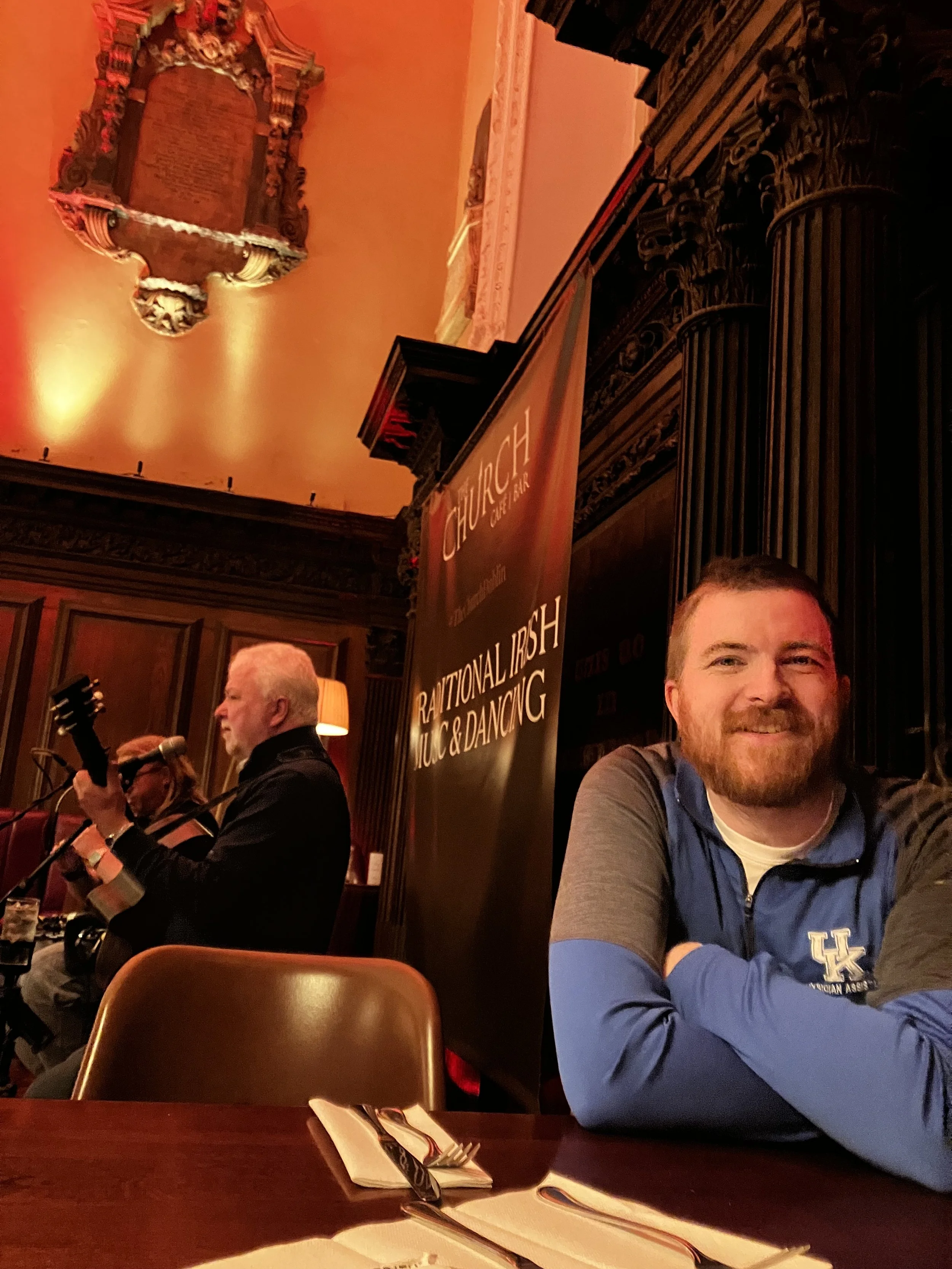
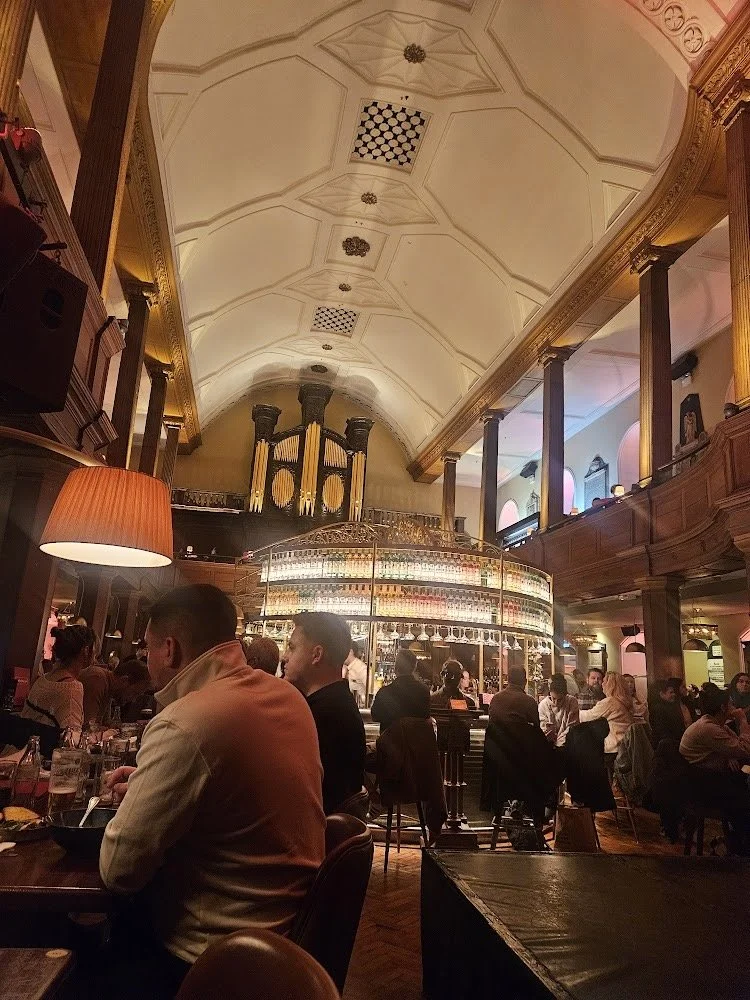
Dinner - The Church Cafe and Bar, Dublin
I’m making a special note about this dinner experience because as Flora gets older and we travel more again, I’m finding it more difficult to find restaurants that are toddler-friendly, GOOD, and culturally interesting. More often than not the places I see recommended are tiny (albeit cool-looking) establishments covered in breakables, with $30 artisanal meals my toddler currently won’t touch. Child-friendly establishments, conversely, tend to be chain restaurants, ones that specifically cater to kids (and don’t taste good), or they’re far from any touristy area. So this was a gem in my opinion.
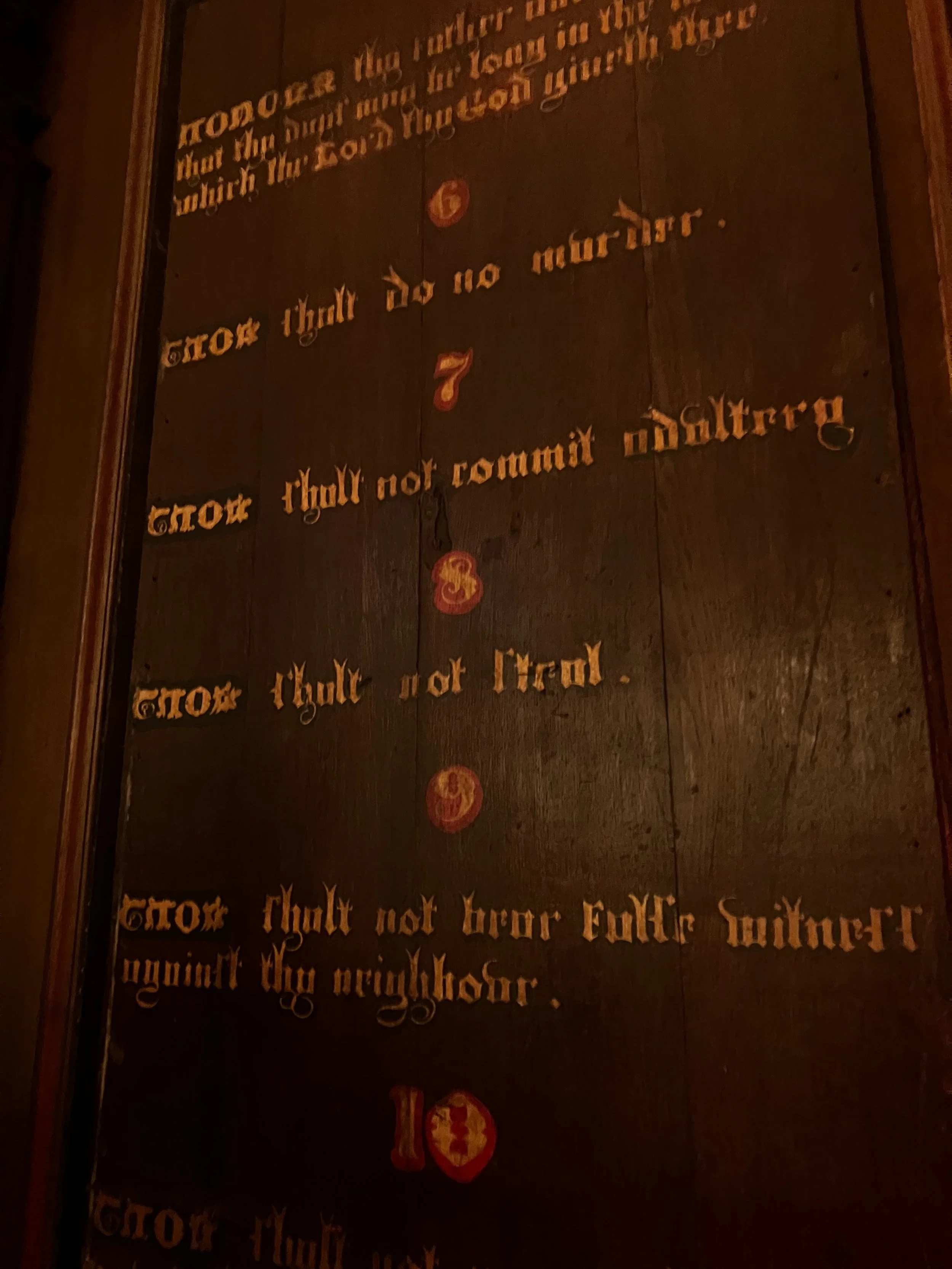
The restaurant is situated in Saint Mary’s Church of Ireland, which opened in 1701. The building has been restored and preserved, and the inside is all vaulted ceilings and galleries, giving the space a unique vertical feel. Not only did they have a kid’s menu, but there was also a live band playing traditional Irish music and traditional Irish dancers performing all evening. Flora was thoroughly entertained, we got to experience some Irish history and culture, and the food was well-received by all of us.
Day 5: Newgrange Neolithic Ruins
Newgrange Tour ($23 per adult, Children under 12 free)
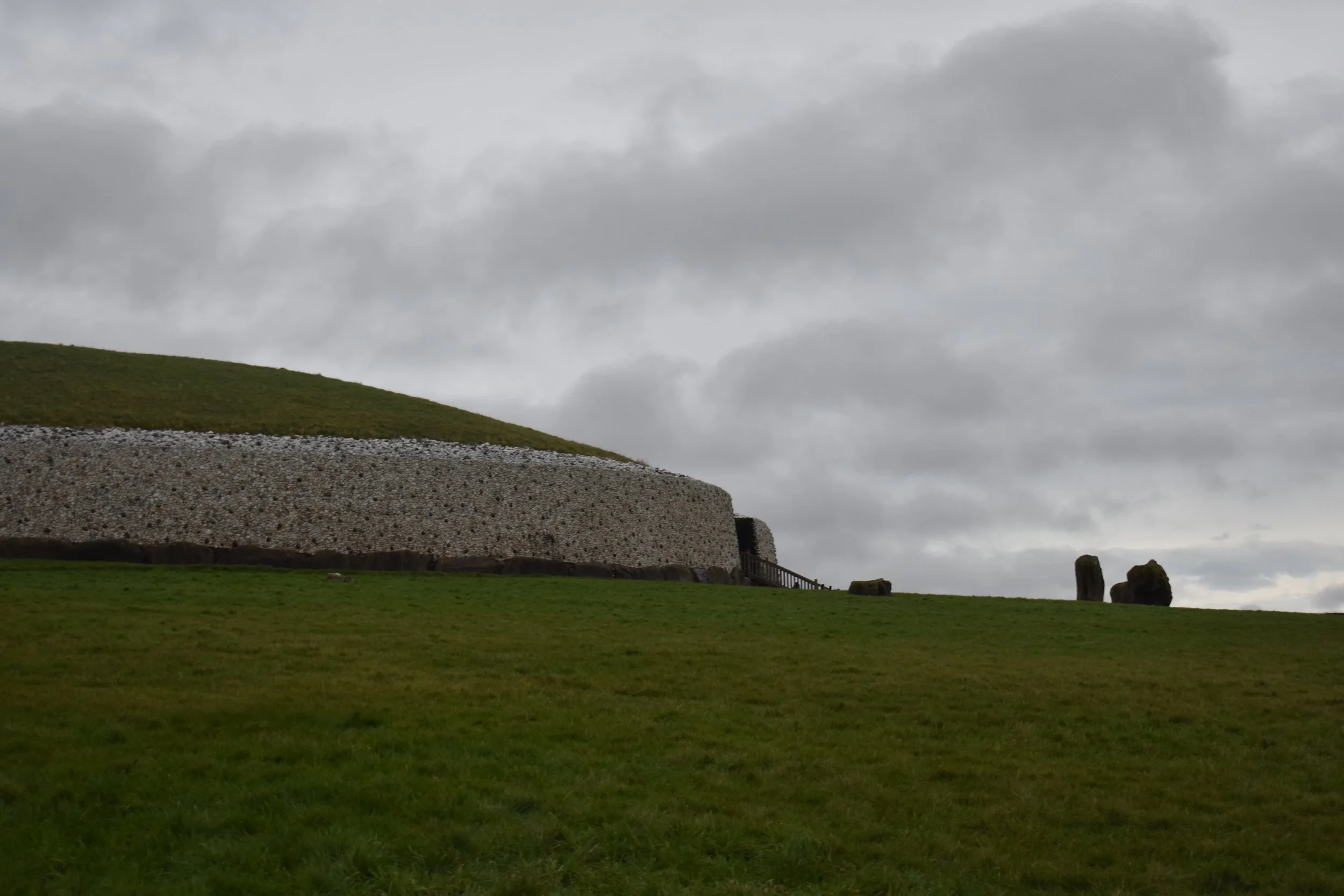
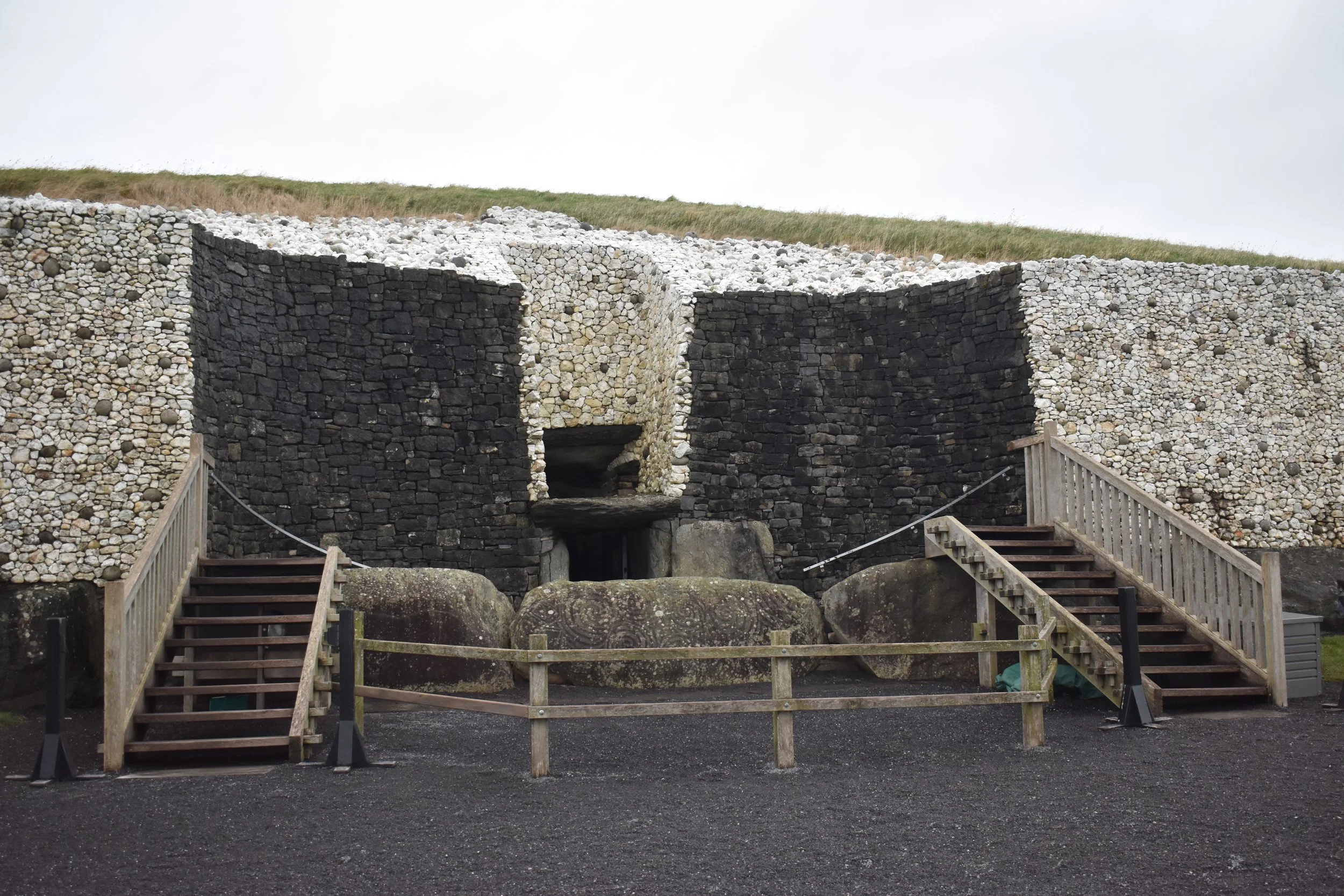
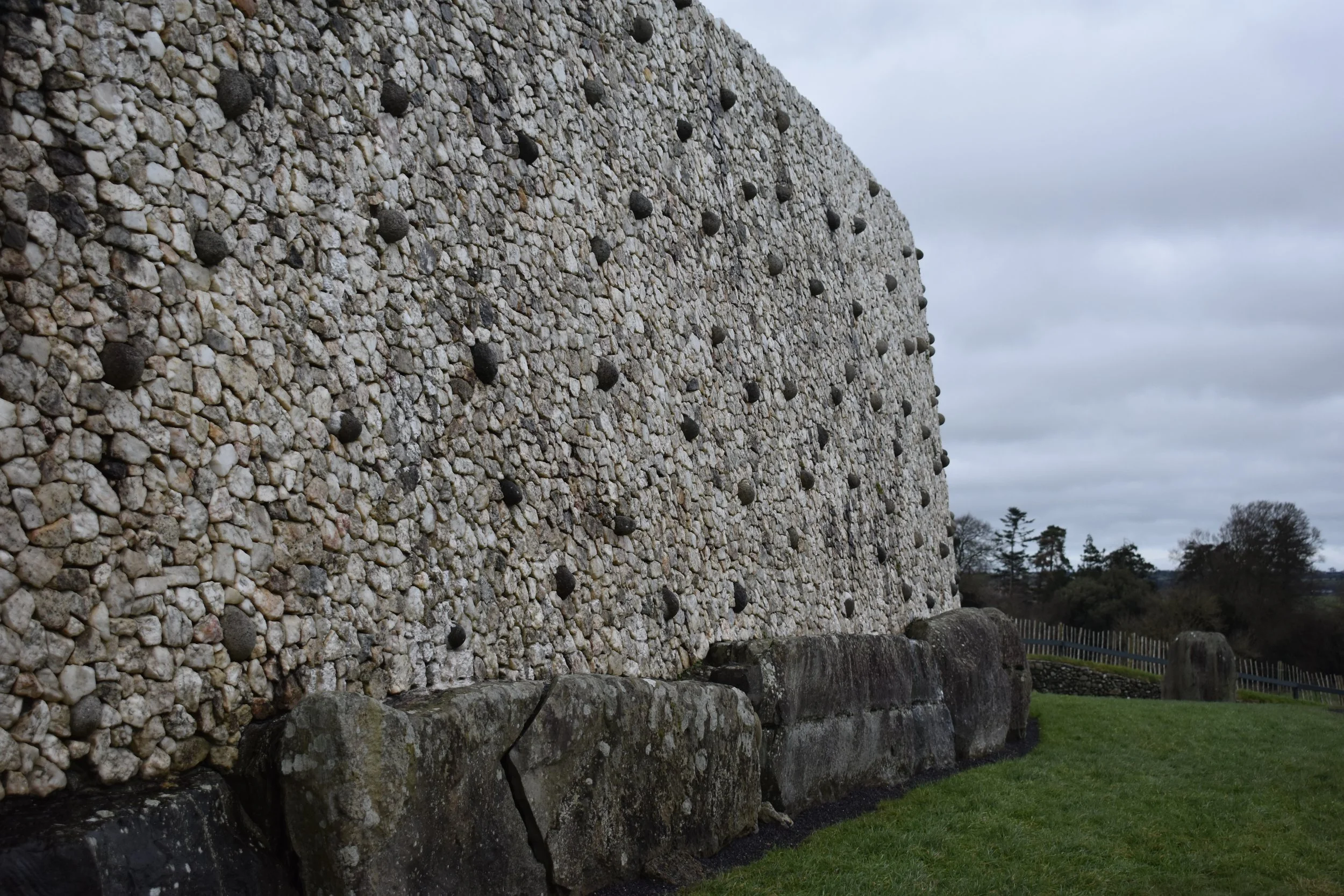
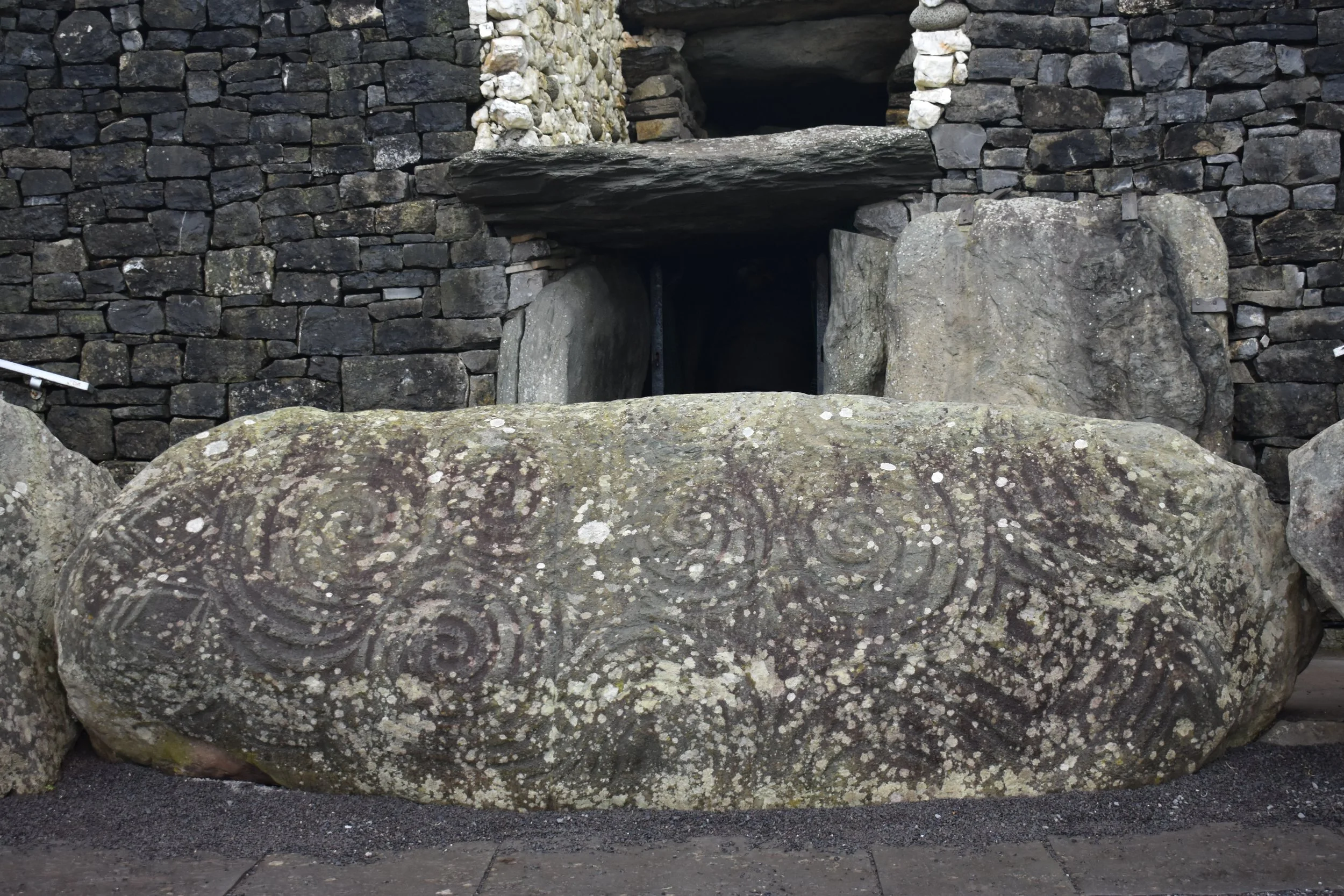
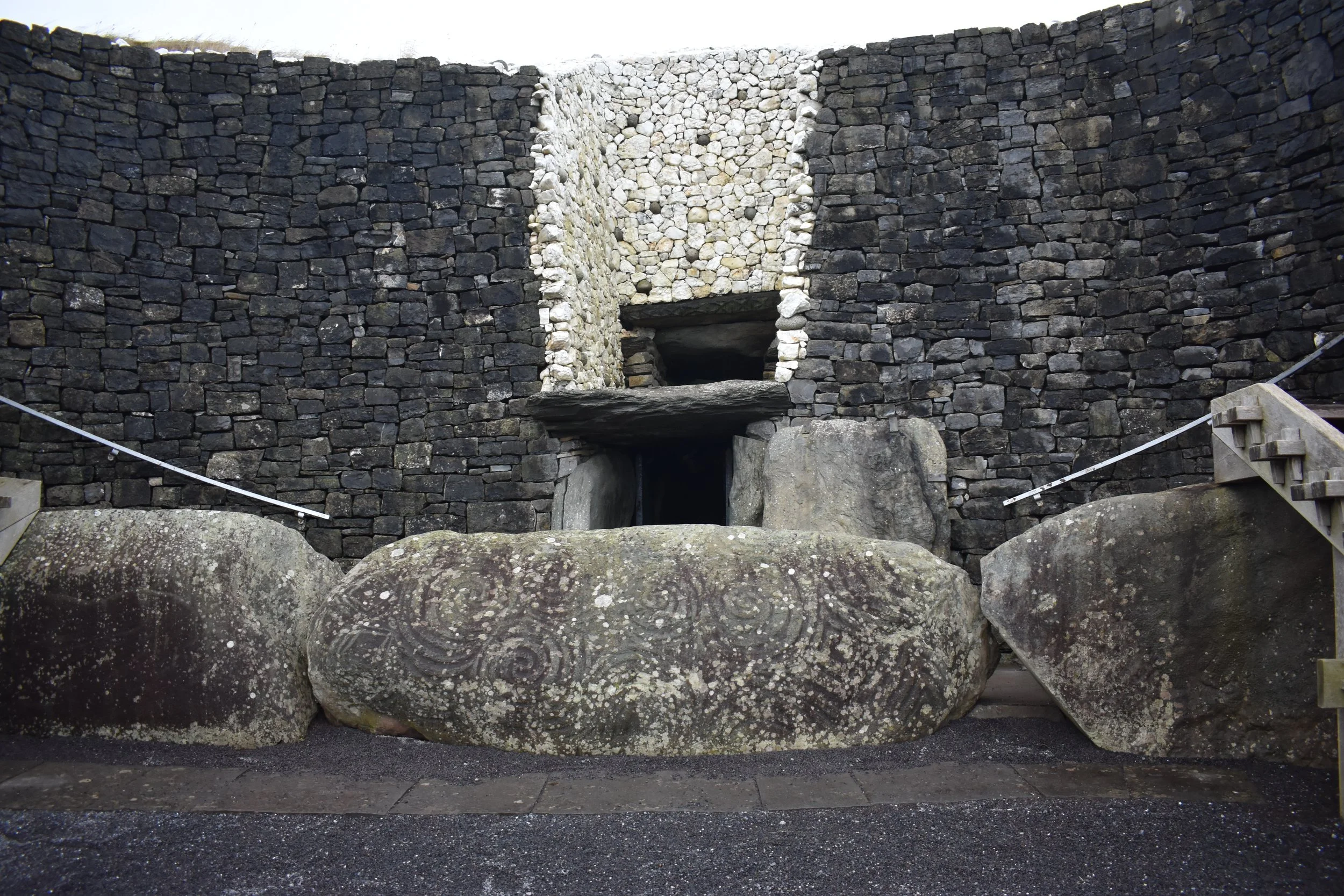
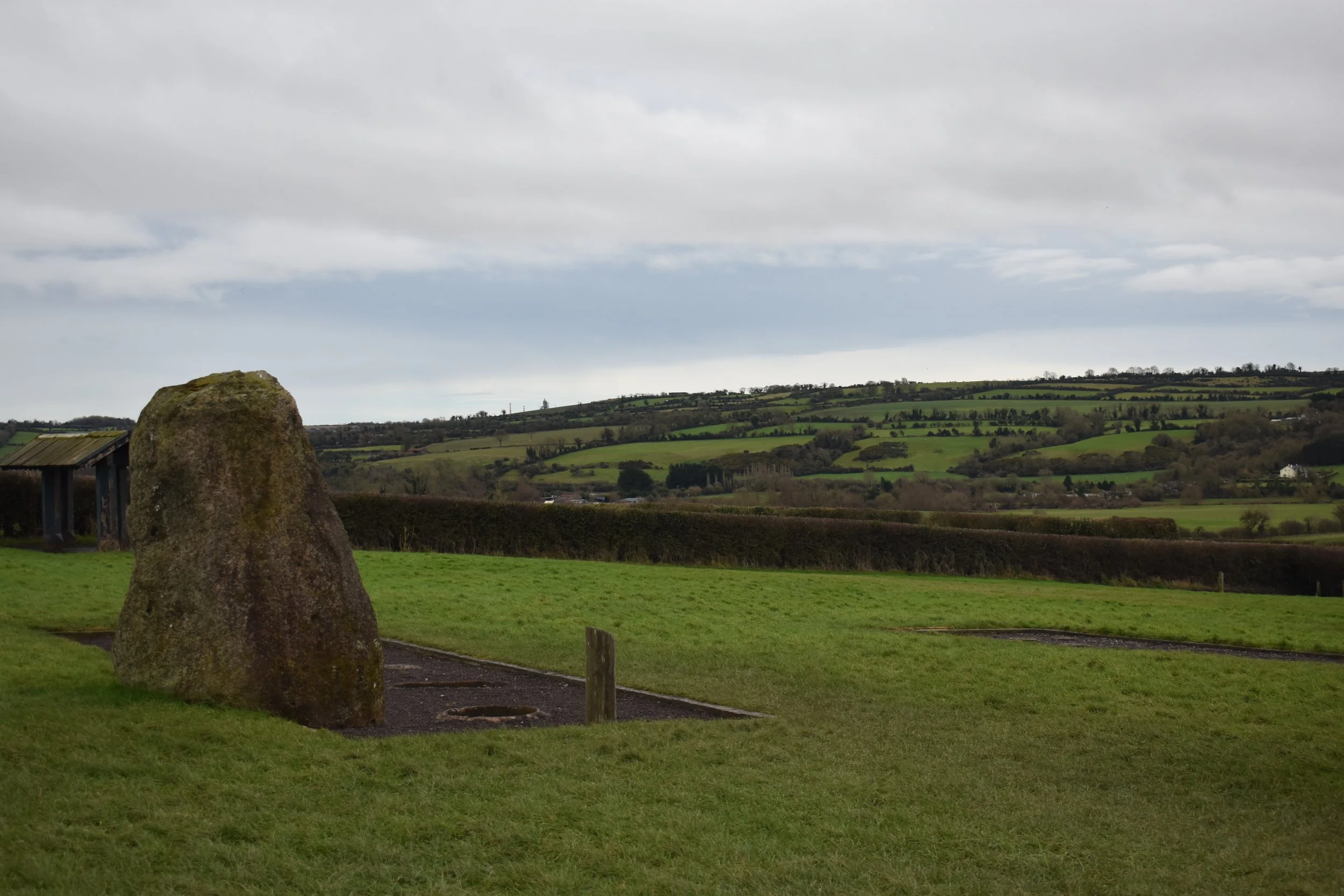
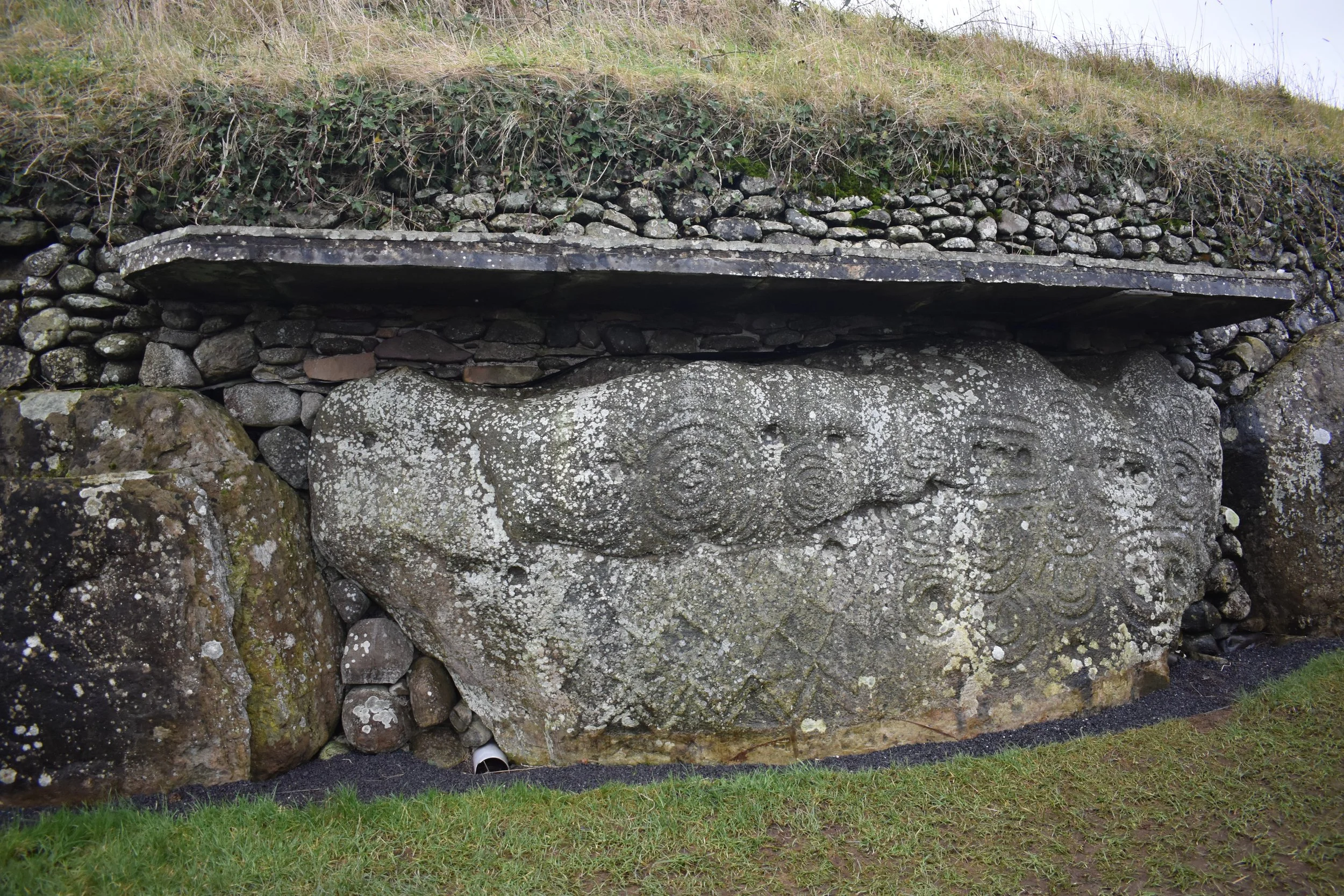
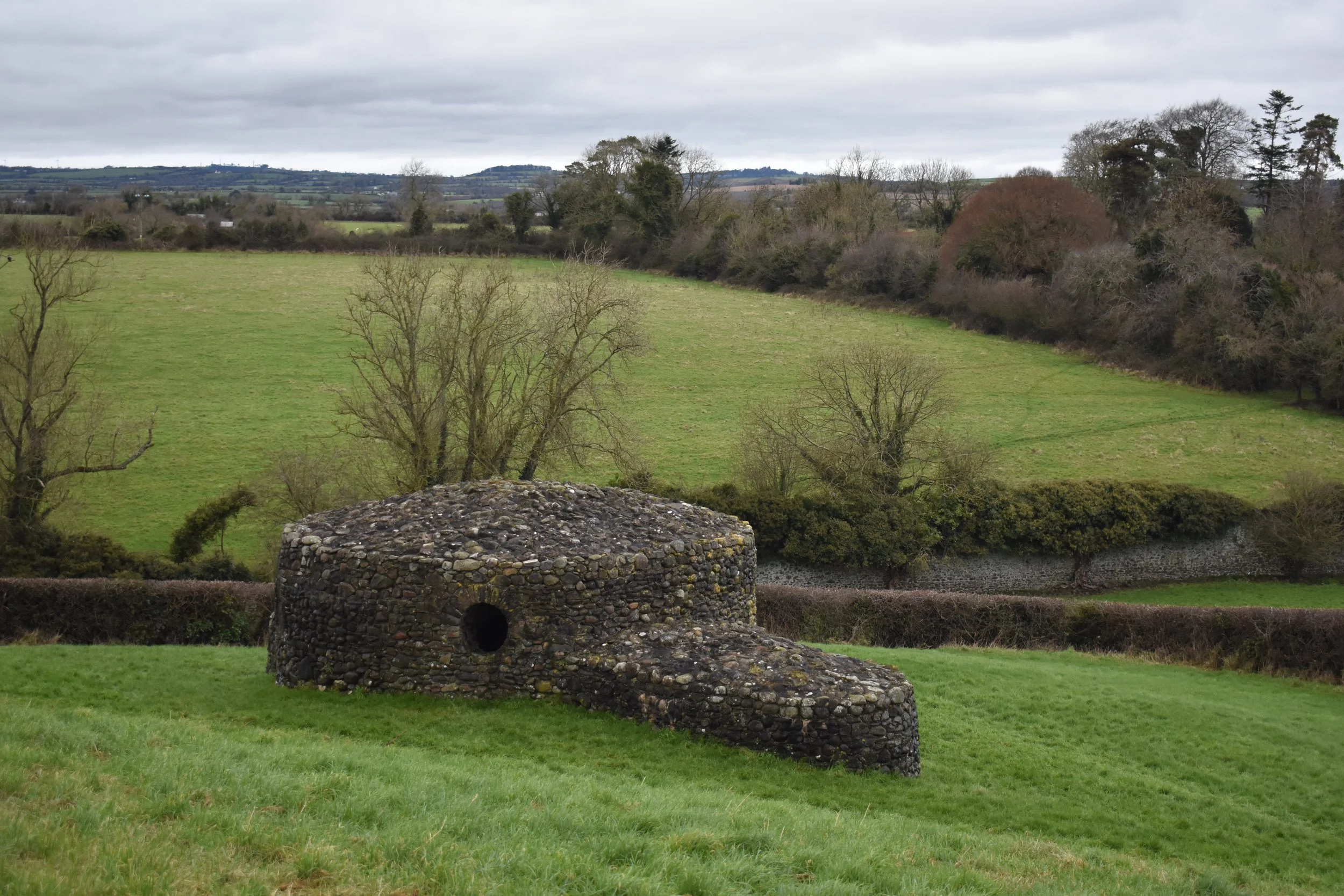
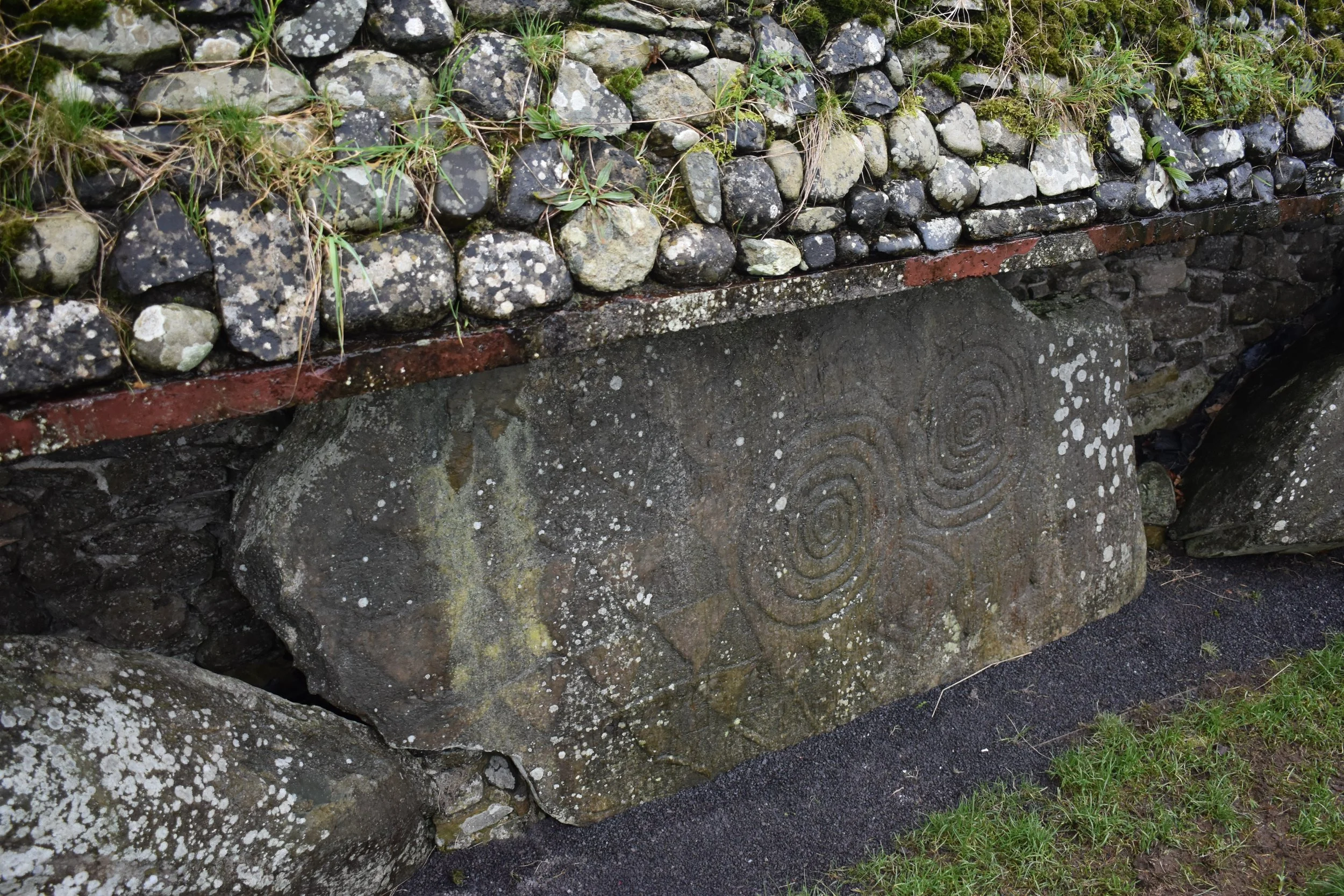
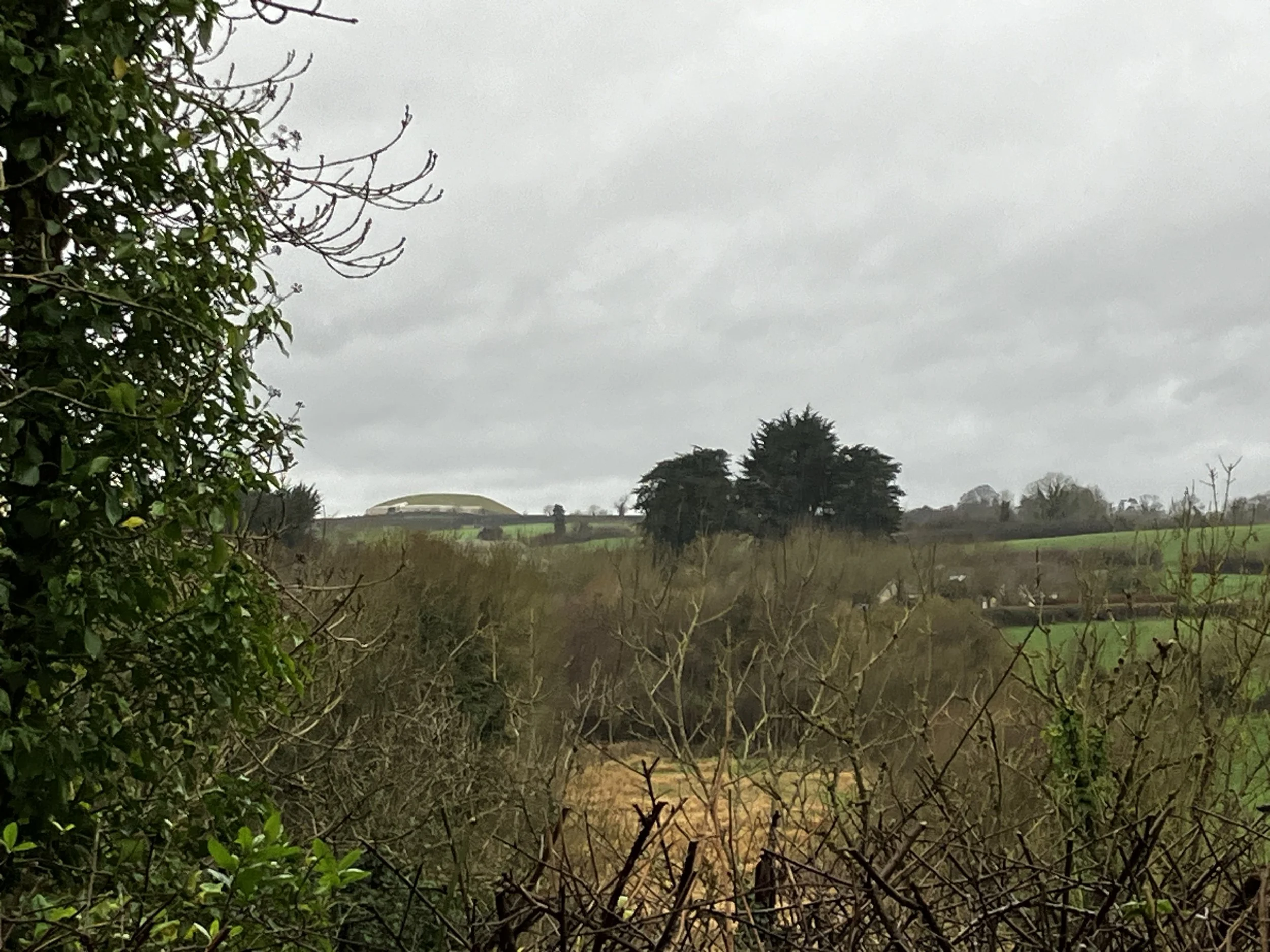
In the Boyne valley between Dublin and Belfast lies a unique UNESCO World Heritage Site. Newgrange is an over-5,000-year-old passage tomb, or the site of prehistoric burials and spiritual rituals. It was built in 3,200 BCE, making it older than Stonehenge and the Pyramids of Giza, and it is estimated that its construction would have taken a work force of 300 at least 20 years. The outer kerbstones and some stones in the inner chamber are carved with megalithic art, featuring spirals and geometric patterns whose meaning remain a mystery. Newgrange is the roof-box (the hole above the door) is positioned exactly to direct the light of the sunrise of the winter solstice into the inner chamber. Because of this, scholars believe Newgrange was built to celebrate the end of winter and the coming of the new year for these farming communities. Interestingly, despite its tri-spirals that are often associated with Celtic art, Newgrange was built 2,500 years before the Celts reached Ireland, likely by Anatolian immigrants from modern-day Turkey.
Once again, the cafe in the Newgrange Visitor Center proved to be the choice—we grabbed breakfast before the tour and a snack there after the tour. We then drove the remaining hour and a half to Belfast in Northern Ireland, where we would be staying for the rest of the trip. Because we left Dublin slightly later than planned and missed the shuttle bus for the 10:30 am tour at Newgrange, we ended up getting to Belfast later than initially planned. I had wanted to do a walking tour, but it was raining, Flora was feeling a little run down and wanted to just play with her toys at the hotel, and it was going to be dark within the hour. We opted to stay in until dinner, which we had a Holohan’s Pantry, another great child-friendly find near our hotel. This was our first time trying a boxty, which is a traditional Irish potato pancake originating in the late-18th century. I had the vegetarian option, which was delicious—kind of like a hardier, savory, filled crepe.
Hotel: The Malone Hotel, Belfast
This was my first time in Belfast, and our hotel was very nice (boutique, apartment-style, in a residential area). It was near Queen’s University, and just because of the timing, this mostly worked out for us. Most of the popular, highly recommended restaurants were located in the Cathedral District, but almost all of them happened to be closed during the weekdays we visited. The other recommendations were coincidentally both in the university area and open during our visit, so we lucked out. If I were returning to Belfast, however, I would probably choose somewhere closer to the Cathedral District for access to restaurants and more tourist sites.
Day 6: Causeway Coast
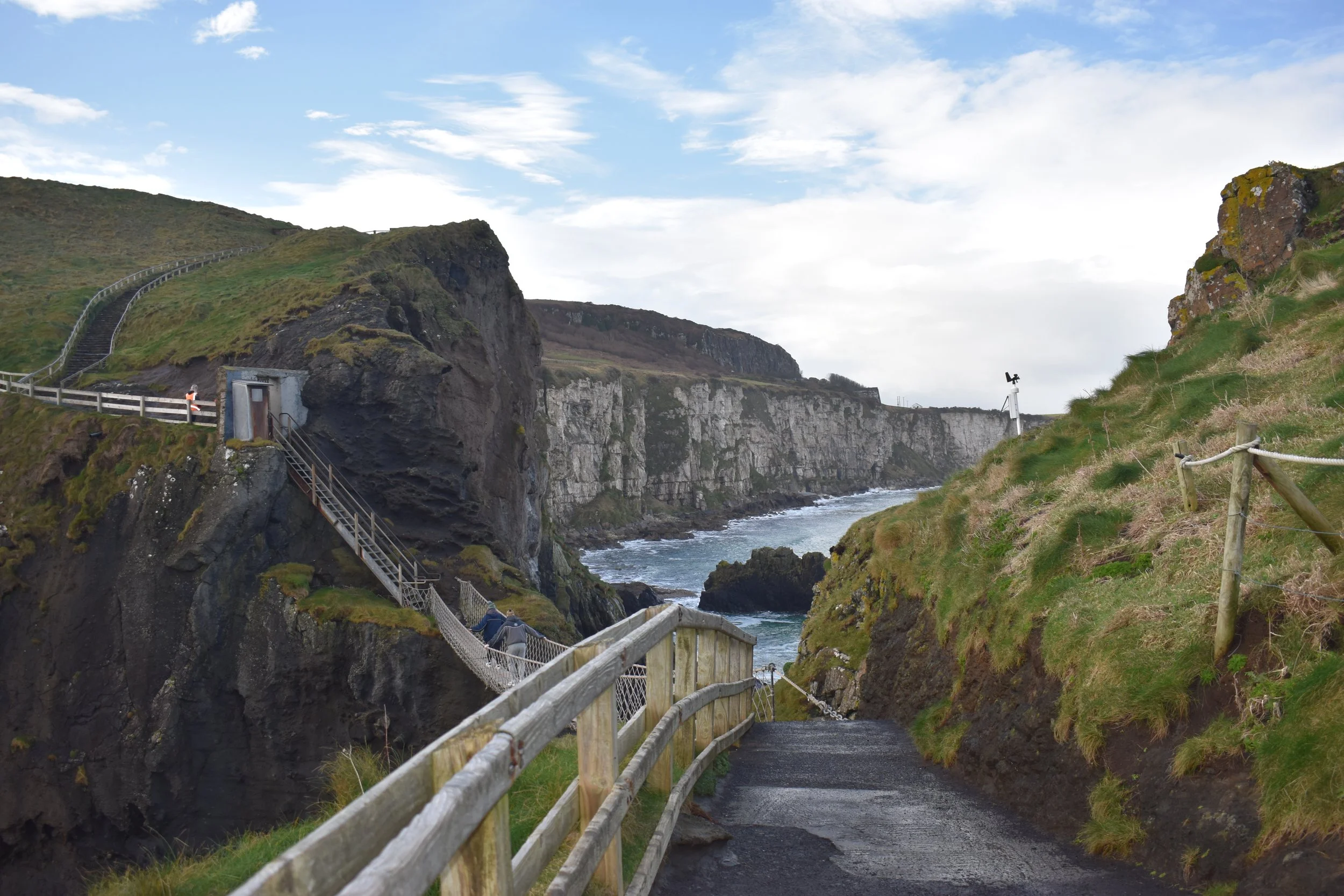
Carrick-a-rede rope bridge ($20 per adult, children under 5 free)
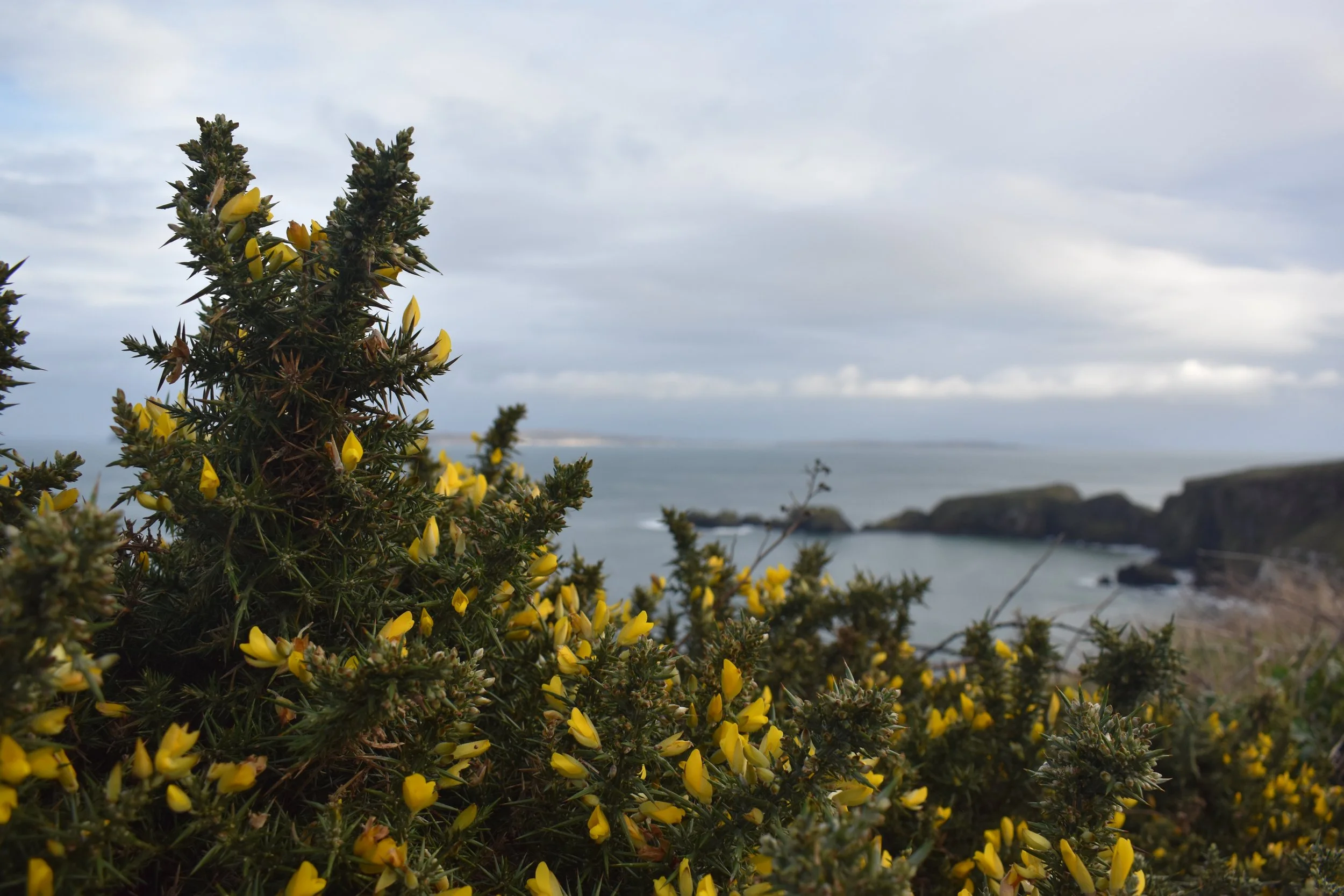
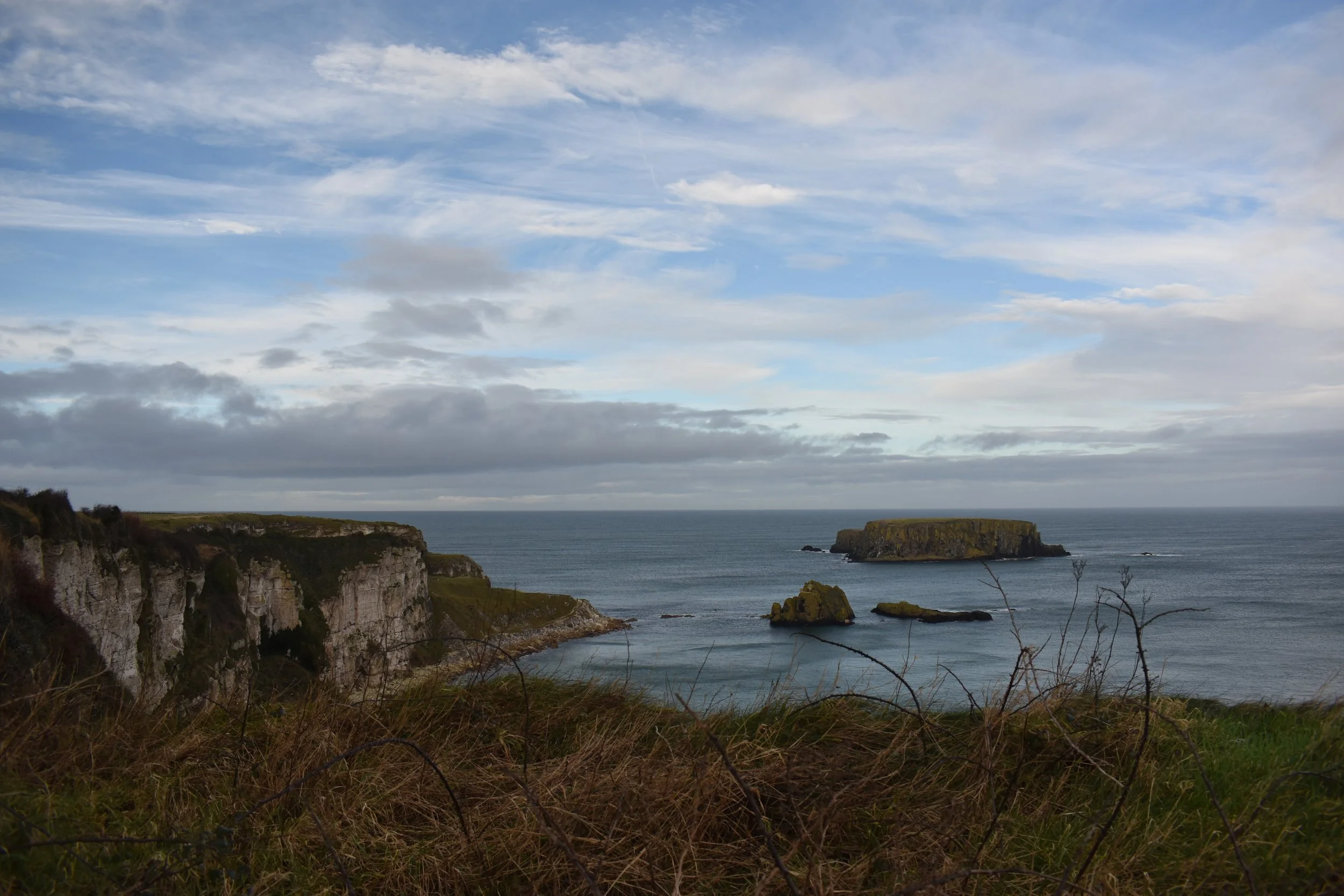
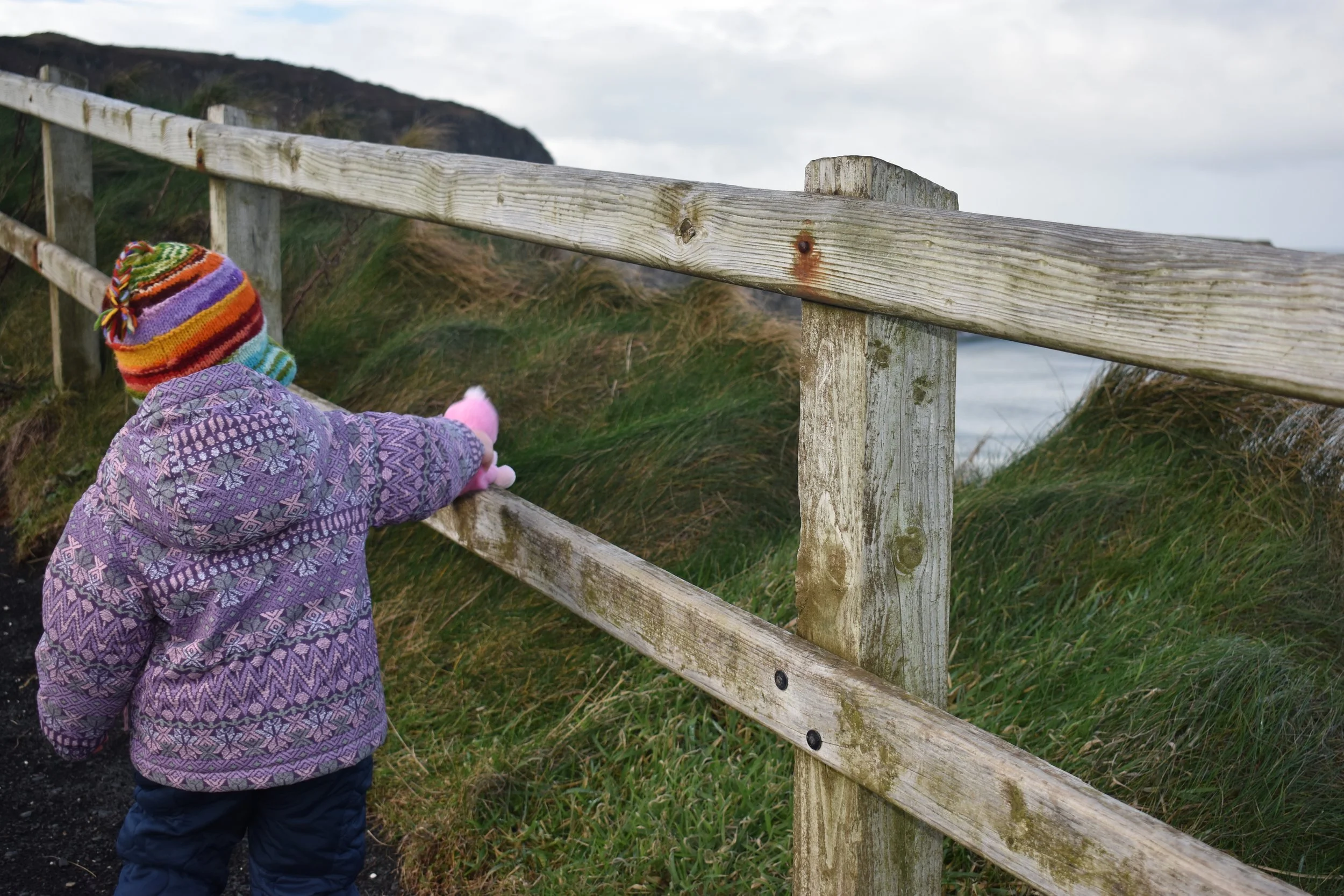
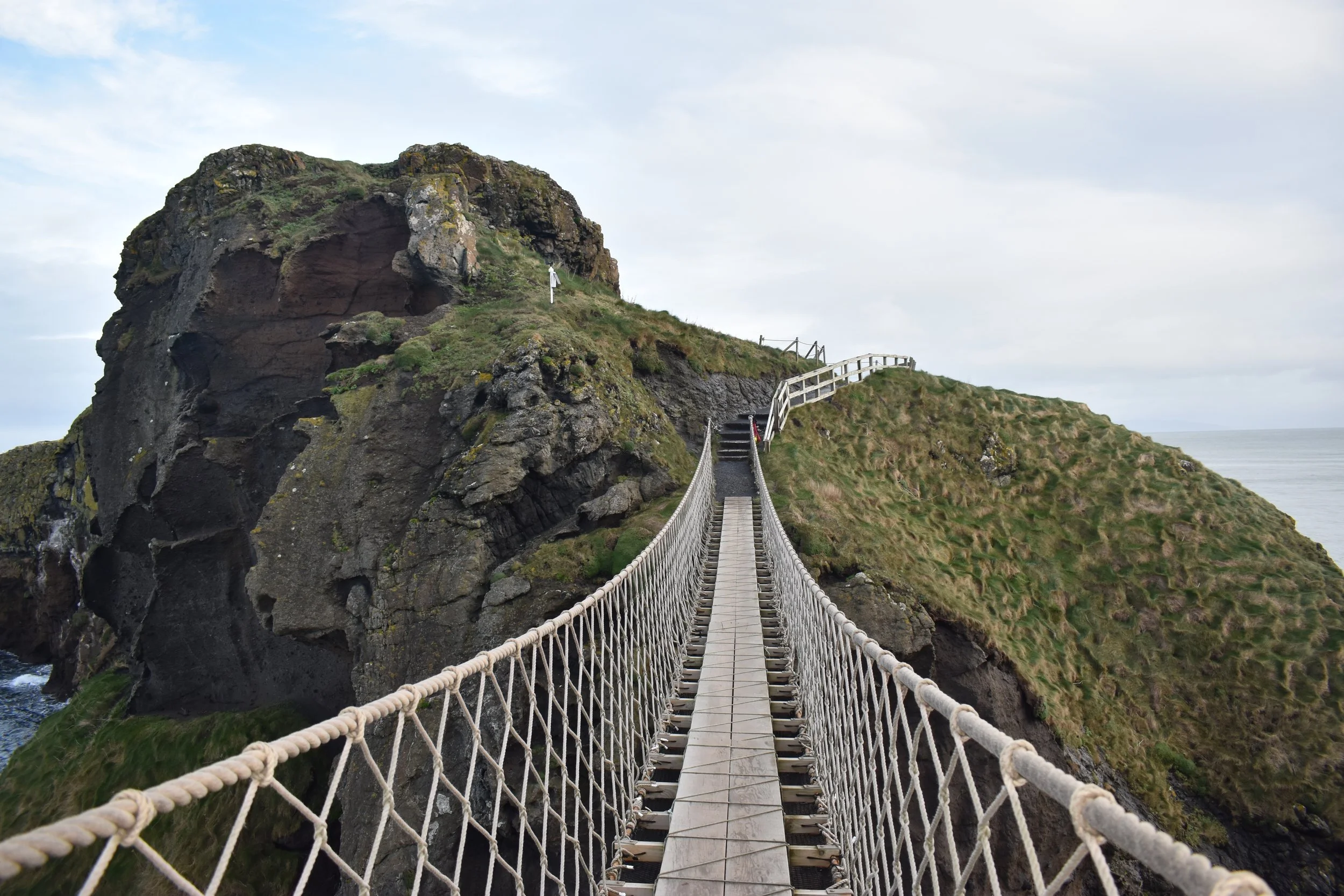
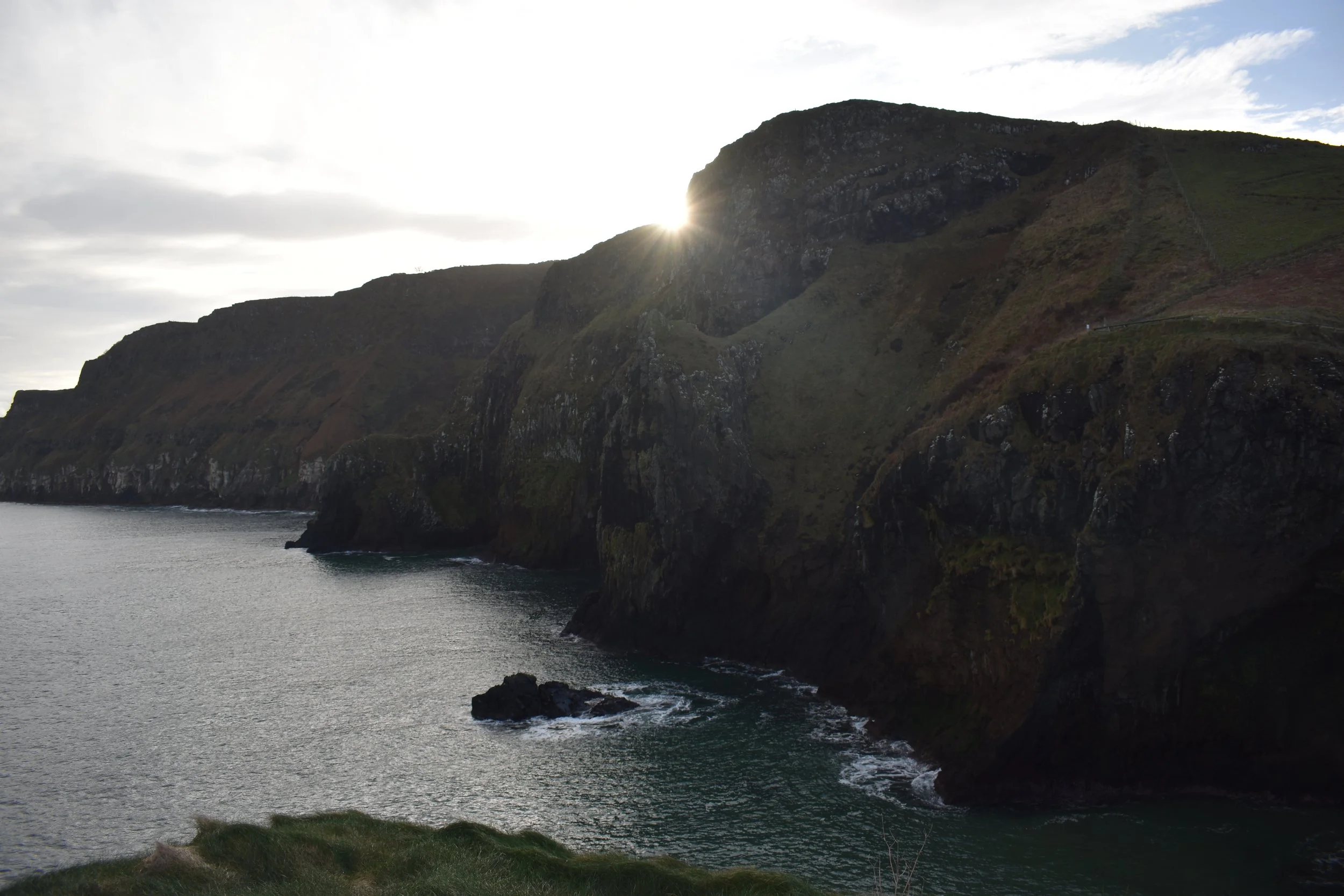
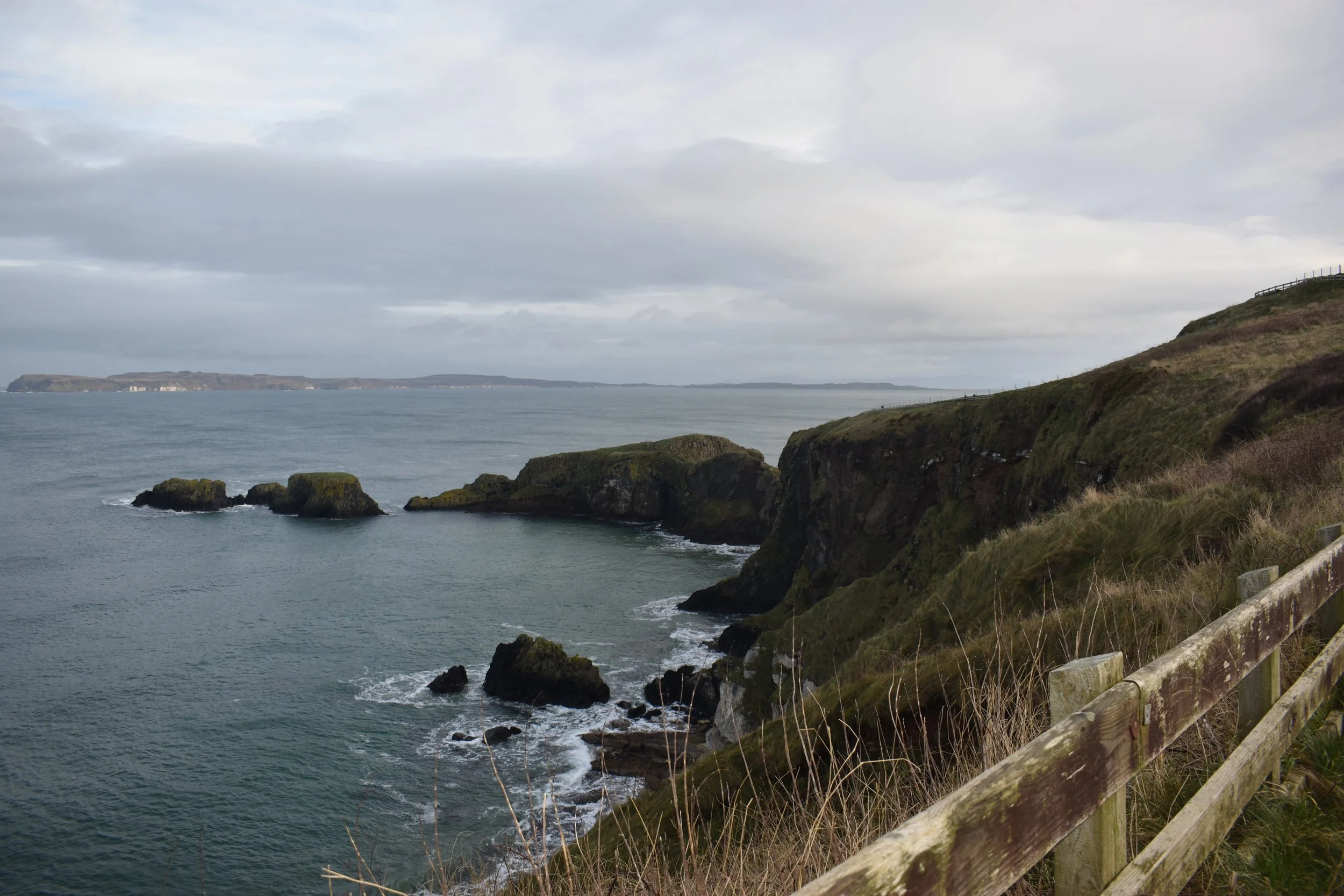
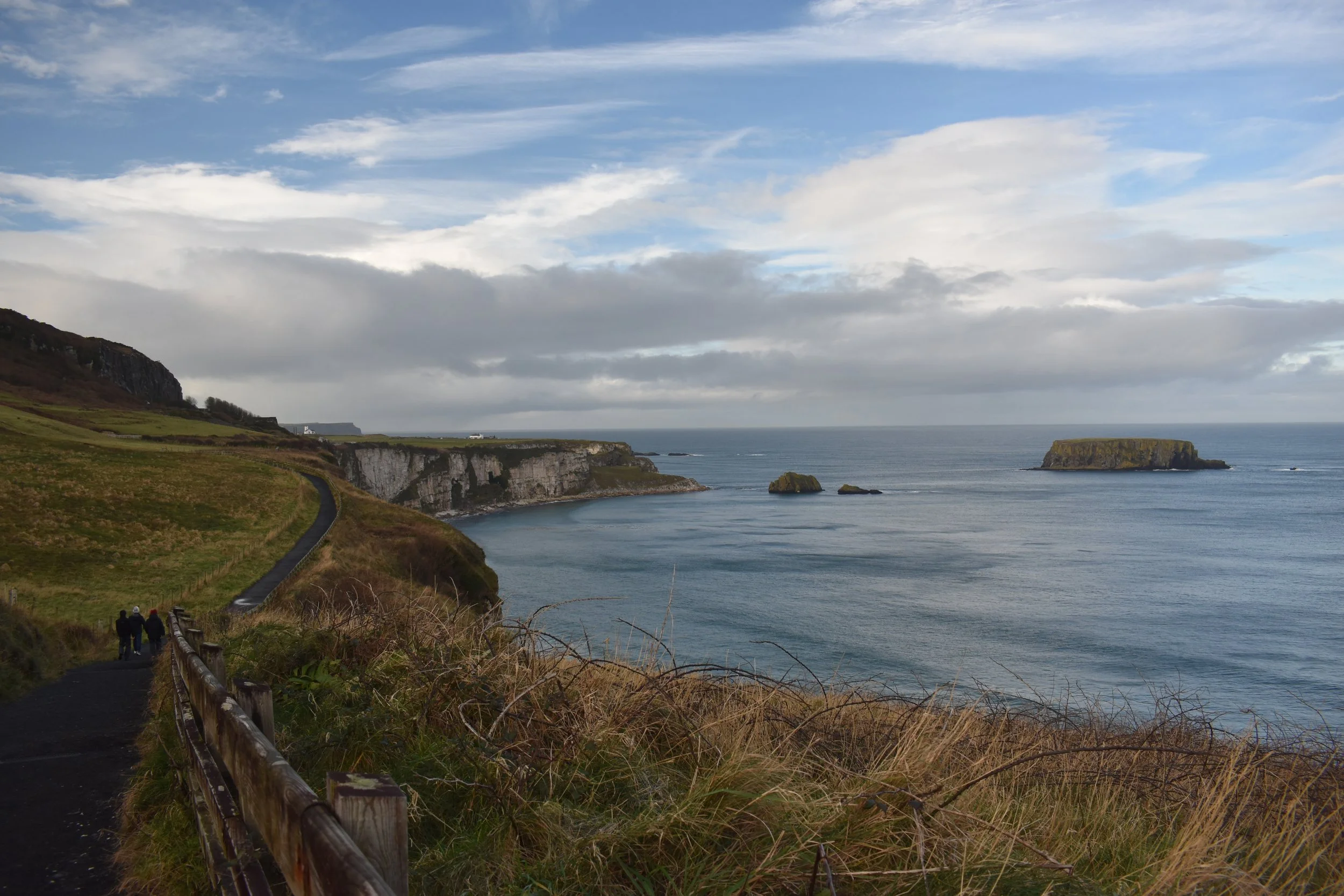
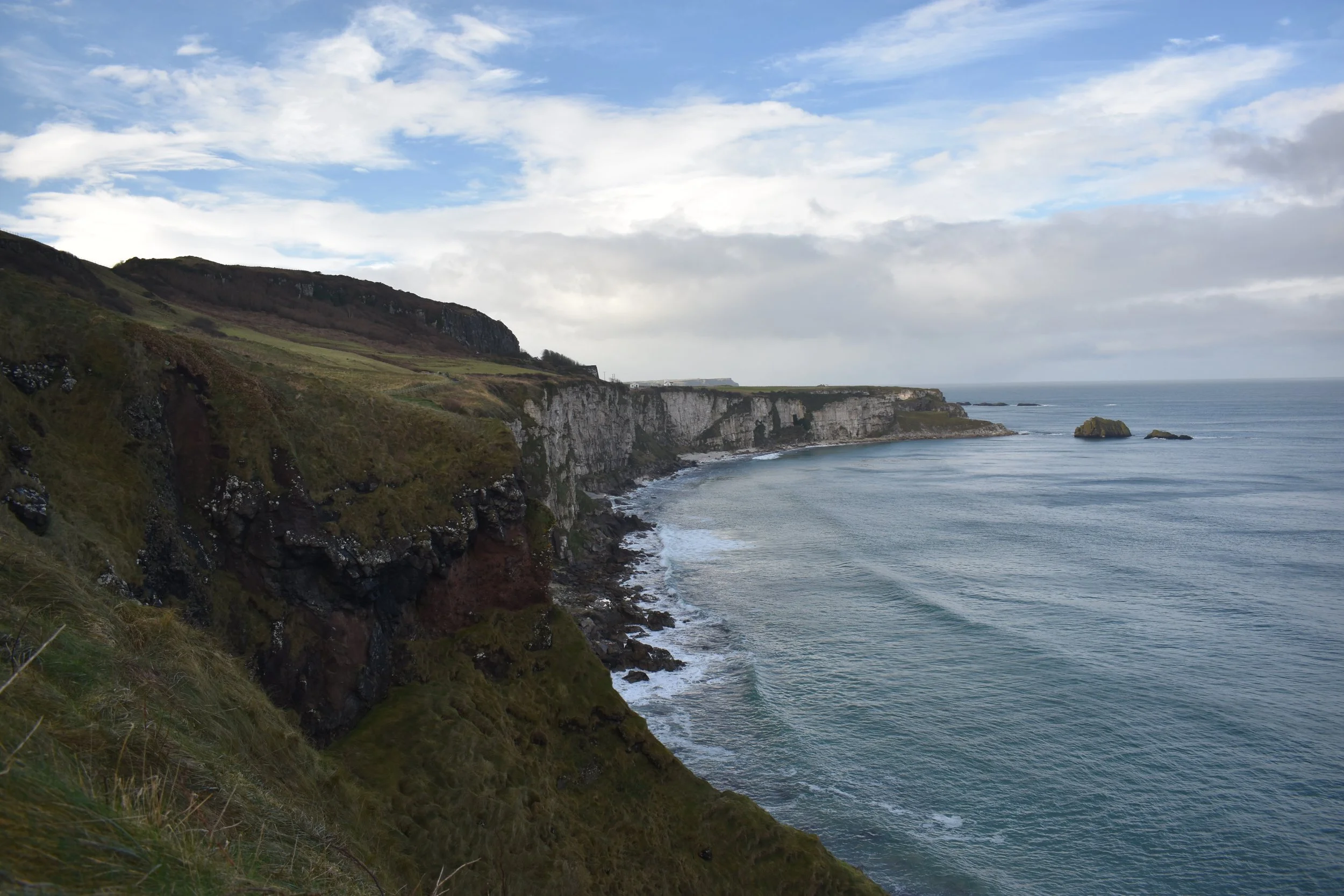
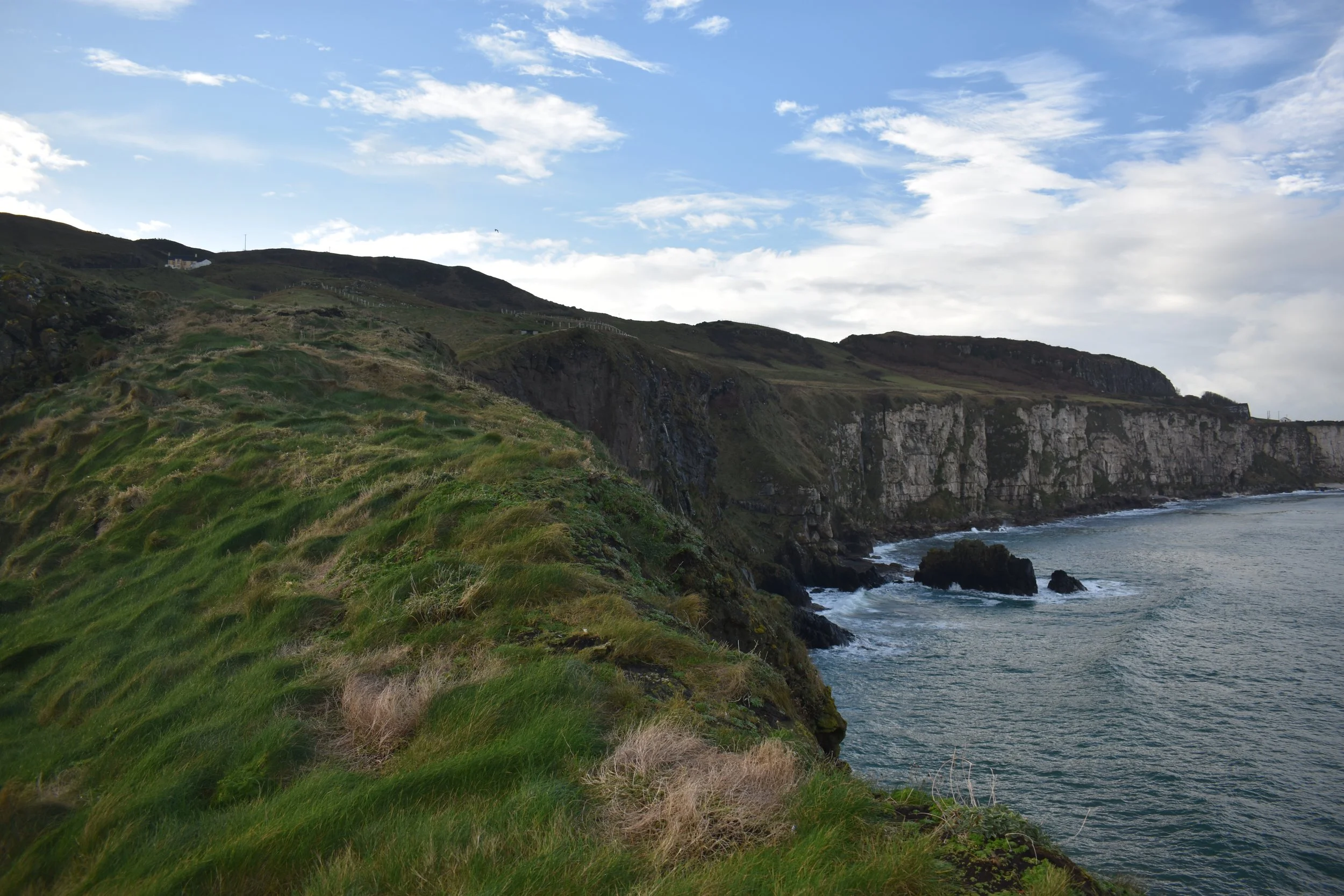
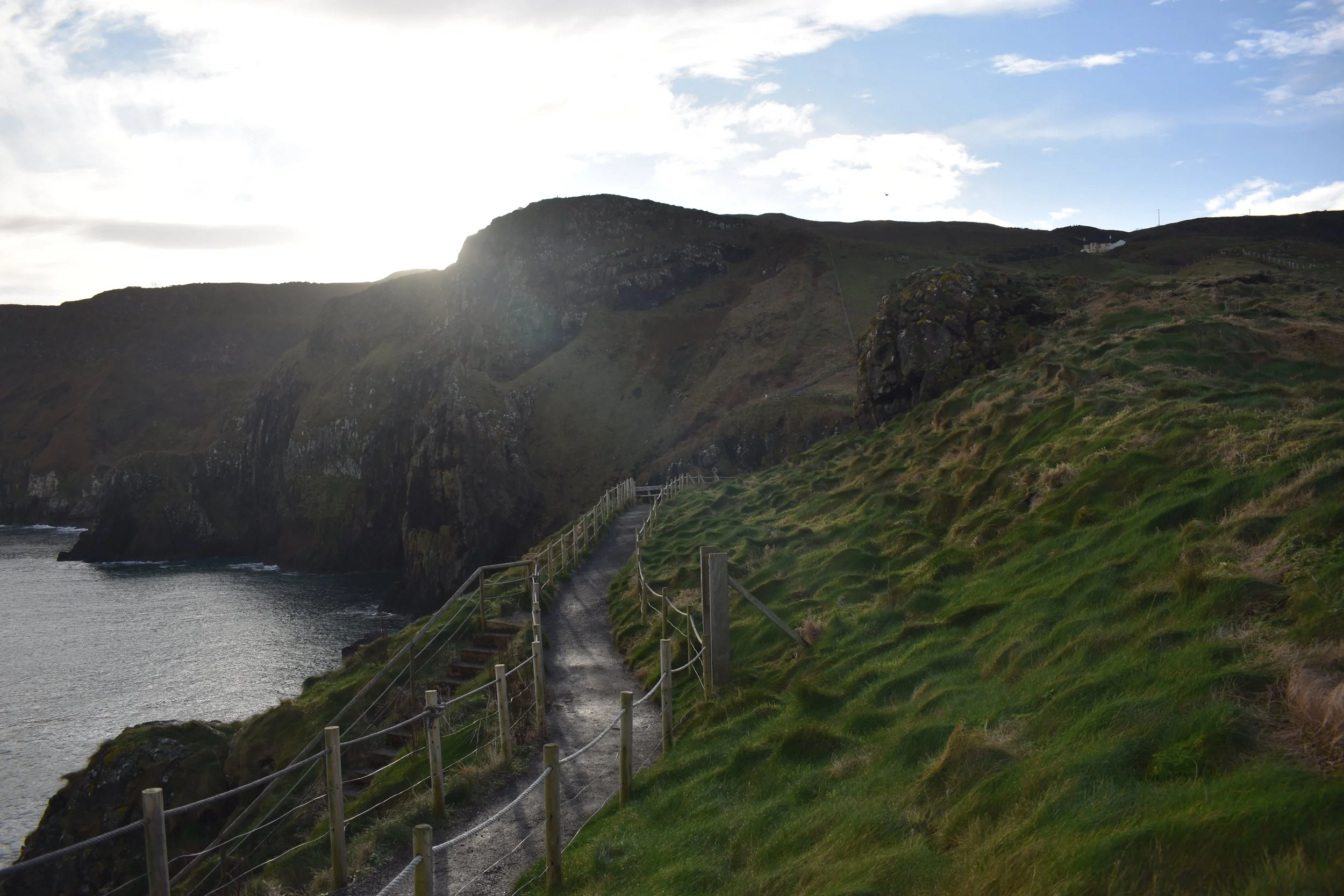
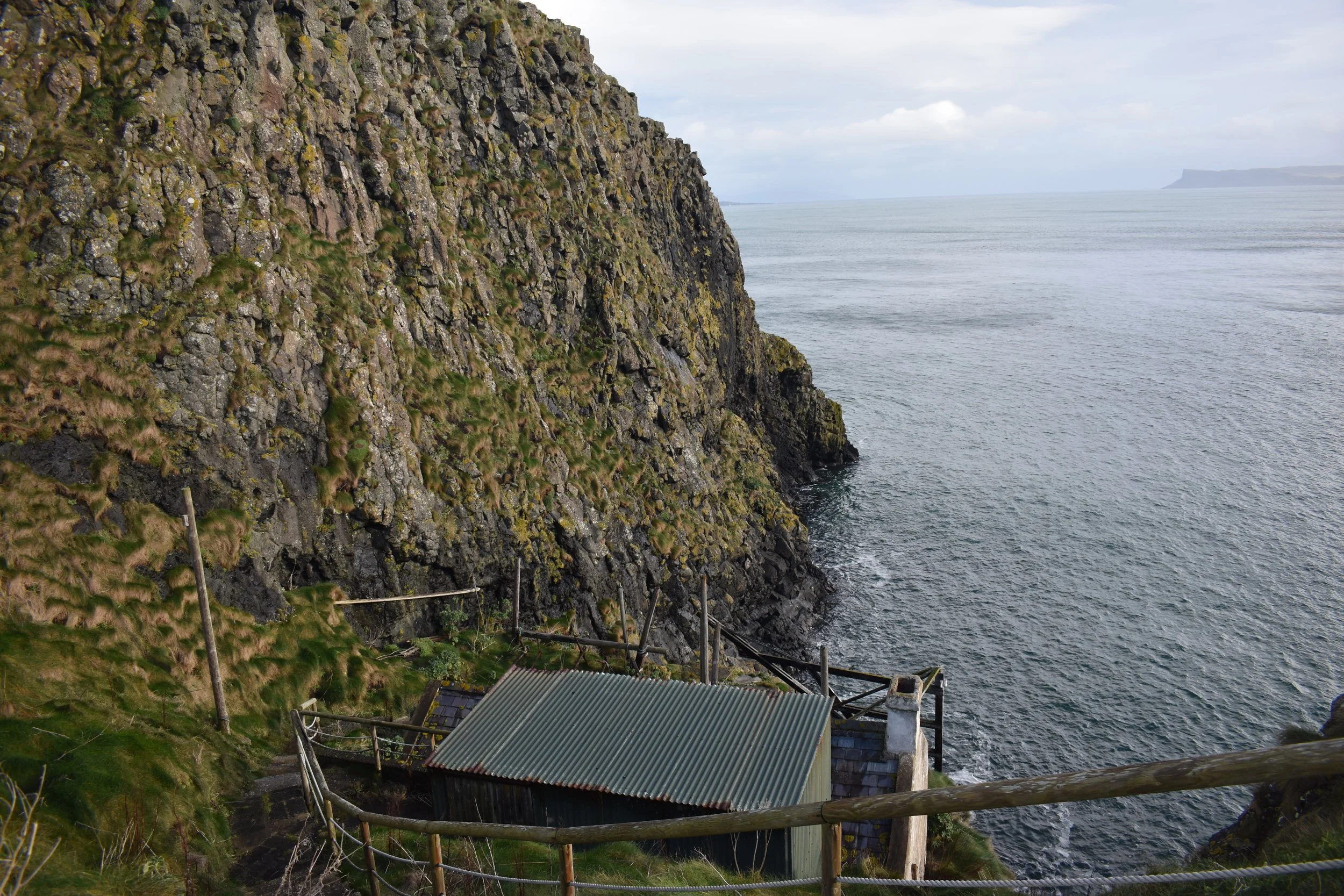
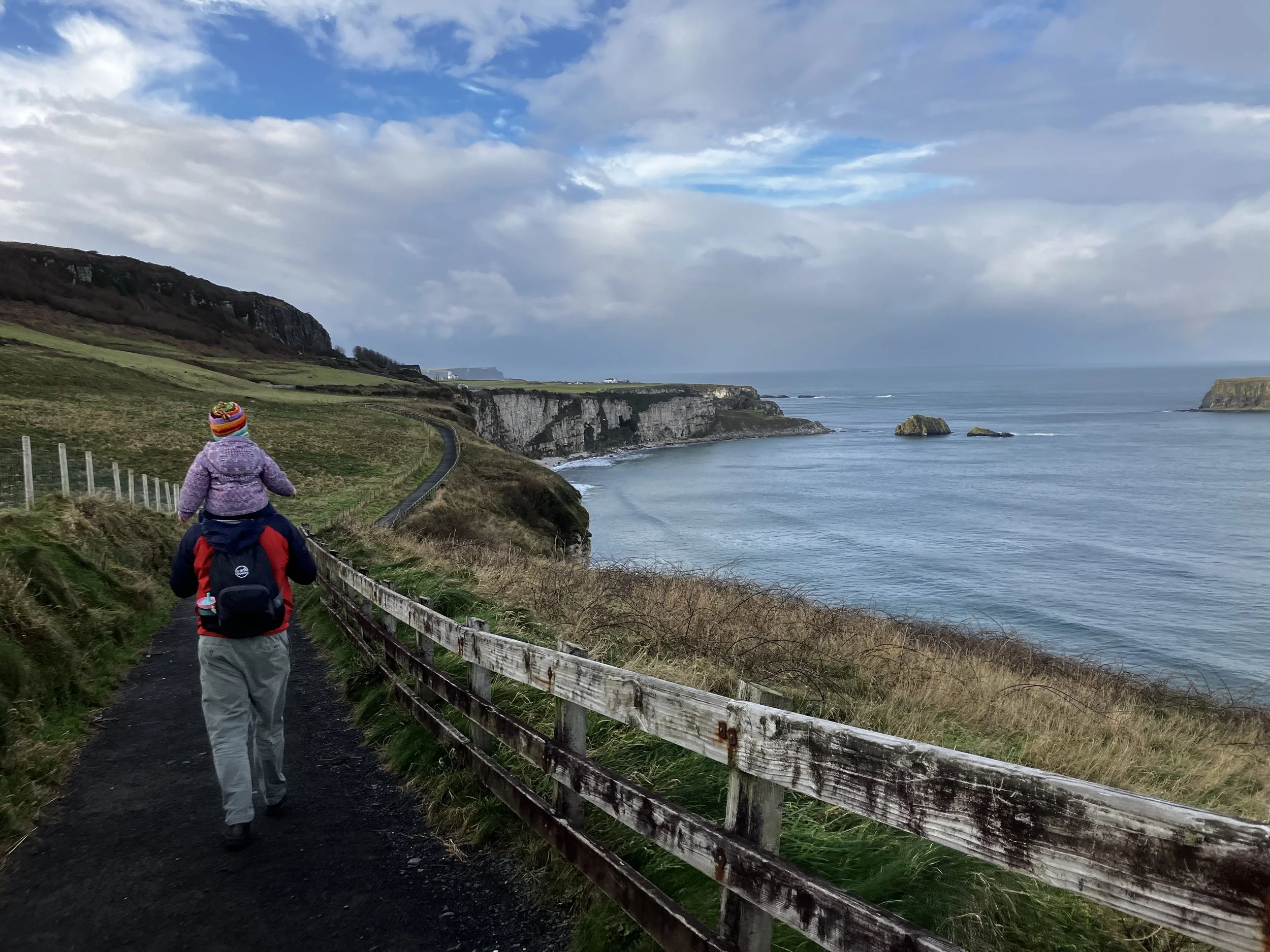
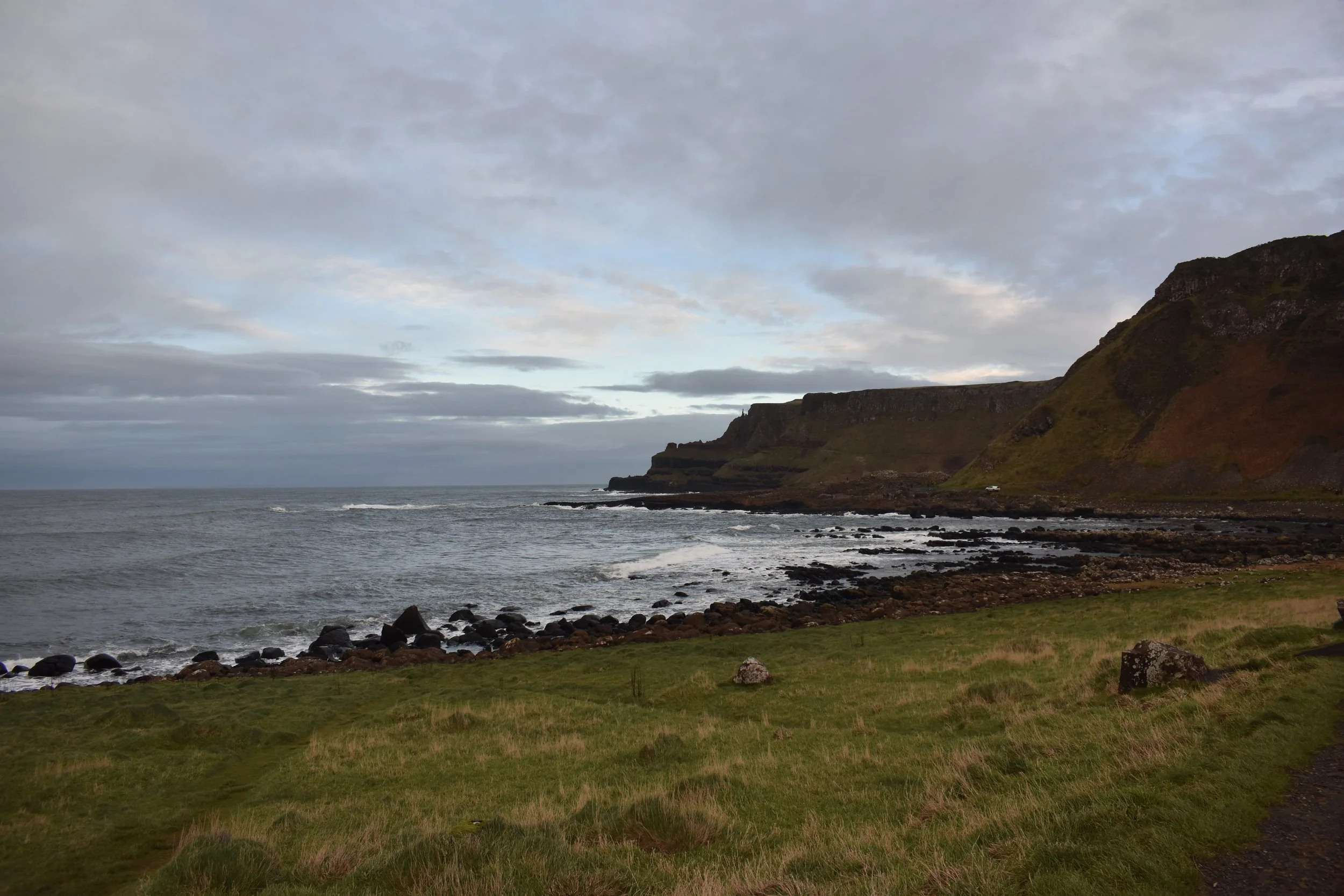
This was our biggest/longest day and probably the one I was most excited for. The Causeway Coastal Route is a spectacular scenic drive from Belfast to Derry in Northern Ireland, featuring views of the Atlantic, awe-inspiring cliffs, and castles galore. Having a toddler, we opted not to drive the coastal route the entire way (which adds significant hours to the drive) and instead take the motorway straight to Carrick-a-Rede Rope Bridge, working our way back towards Belfast along the scenic route.
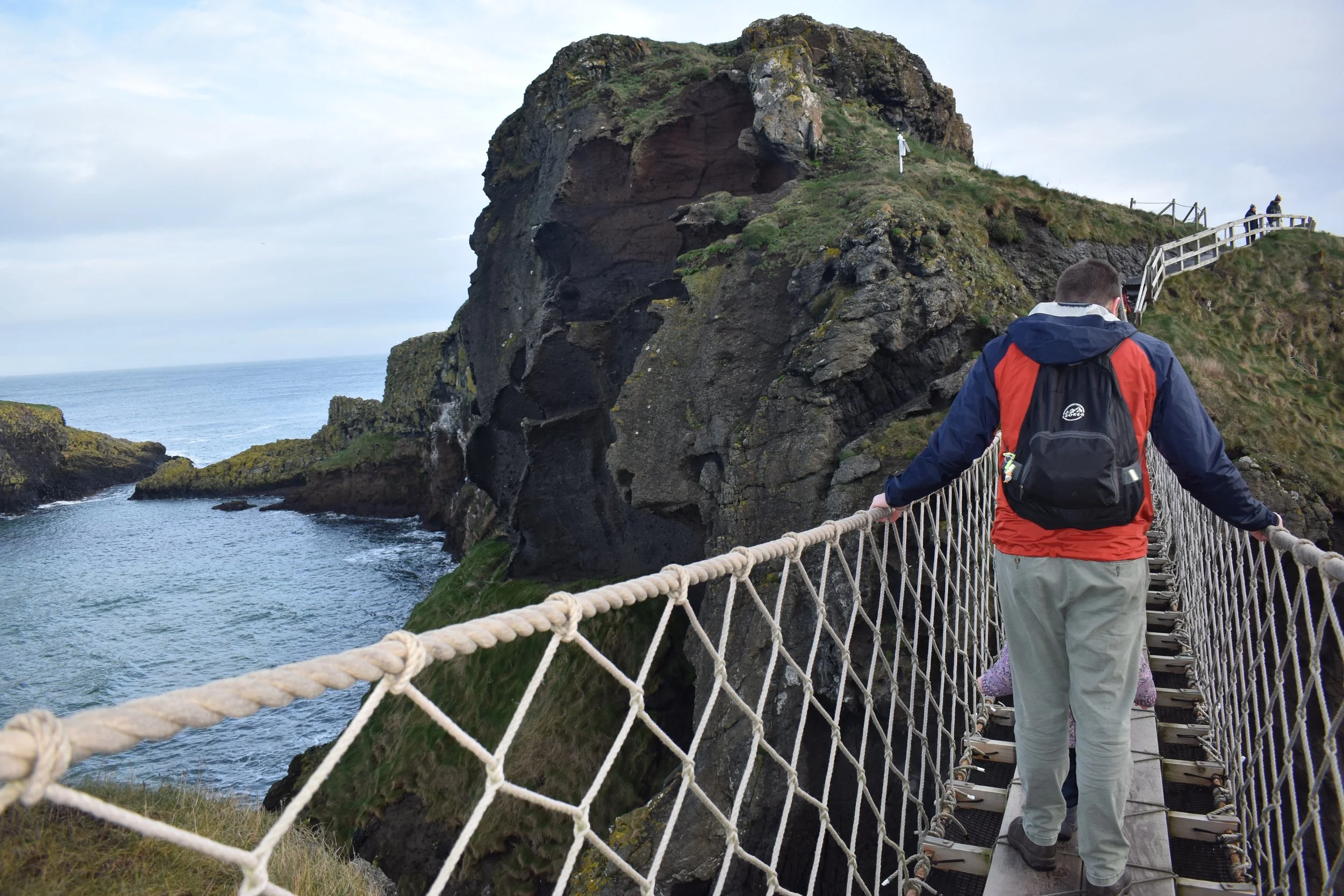
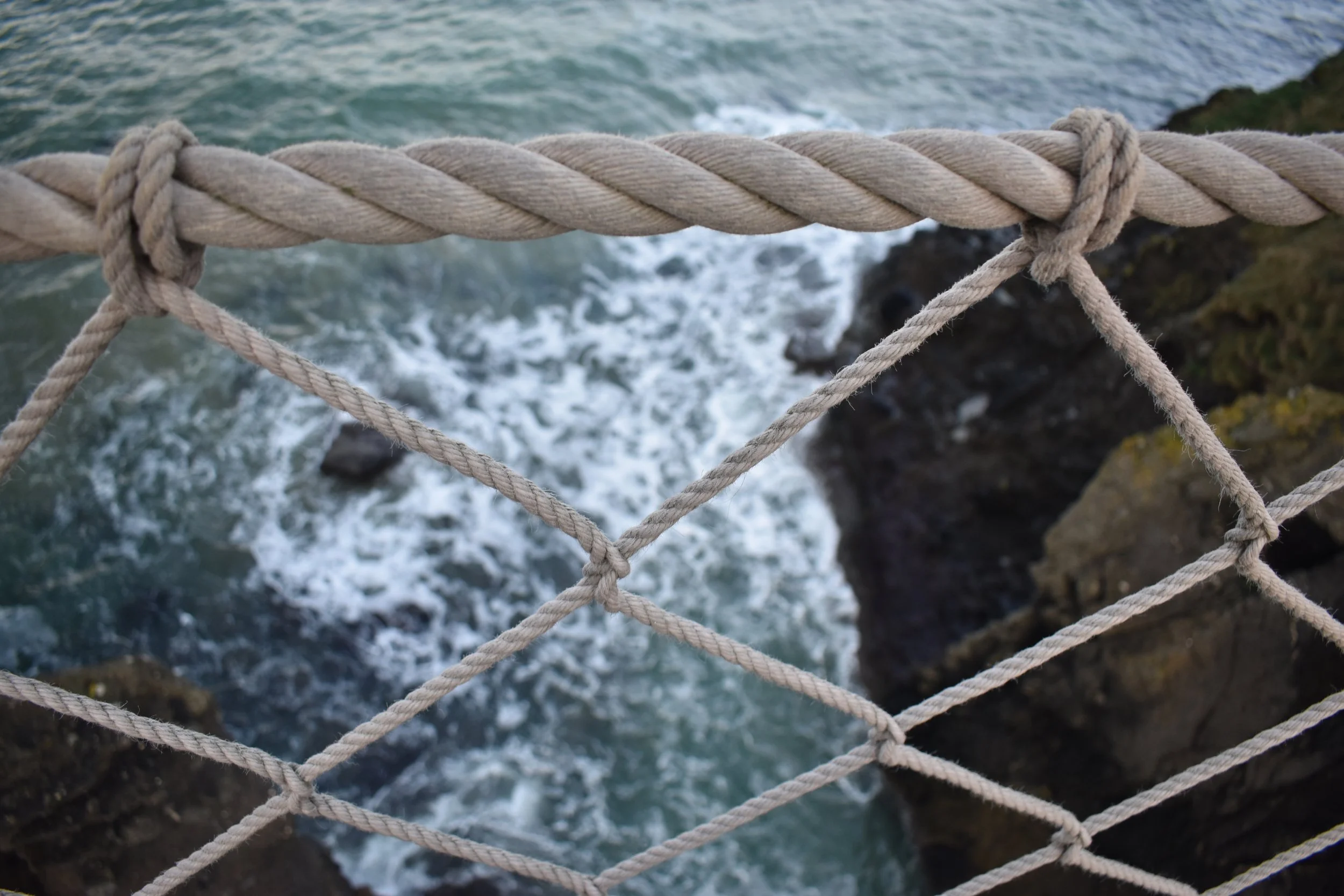
Carrick-a-Rede Rope Bridge is 100 ft. above sea level, first erected by salmon fishermen over 250 years ago in 1755. It stretches from the cliffs to the Carrick-a-Rede island where a single fisherman’s hut still stands. The name is from the Gaelic “Carraig-a-Rade,” which means “The Rock in the Road,” pointing to the rocky island preventing the migrating salmon from finding passage to the river. Unfortunately, overfishing and pollution led to a significant decline in the salmon population; the last salmon was caught at Carrick-a-Rede in 2002.
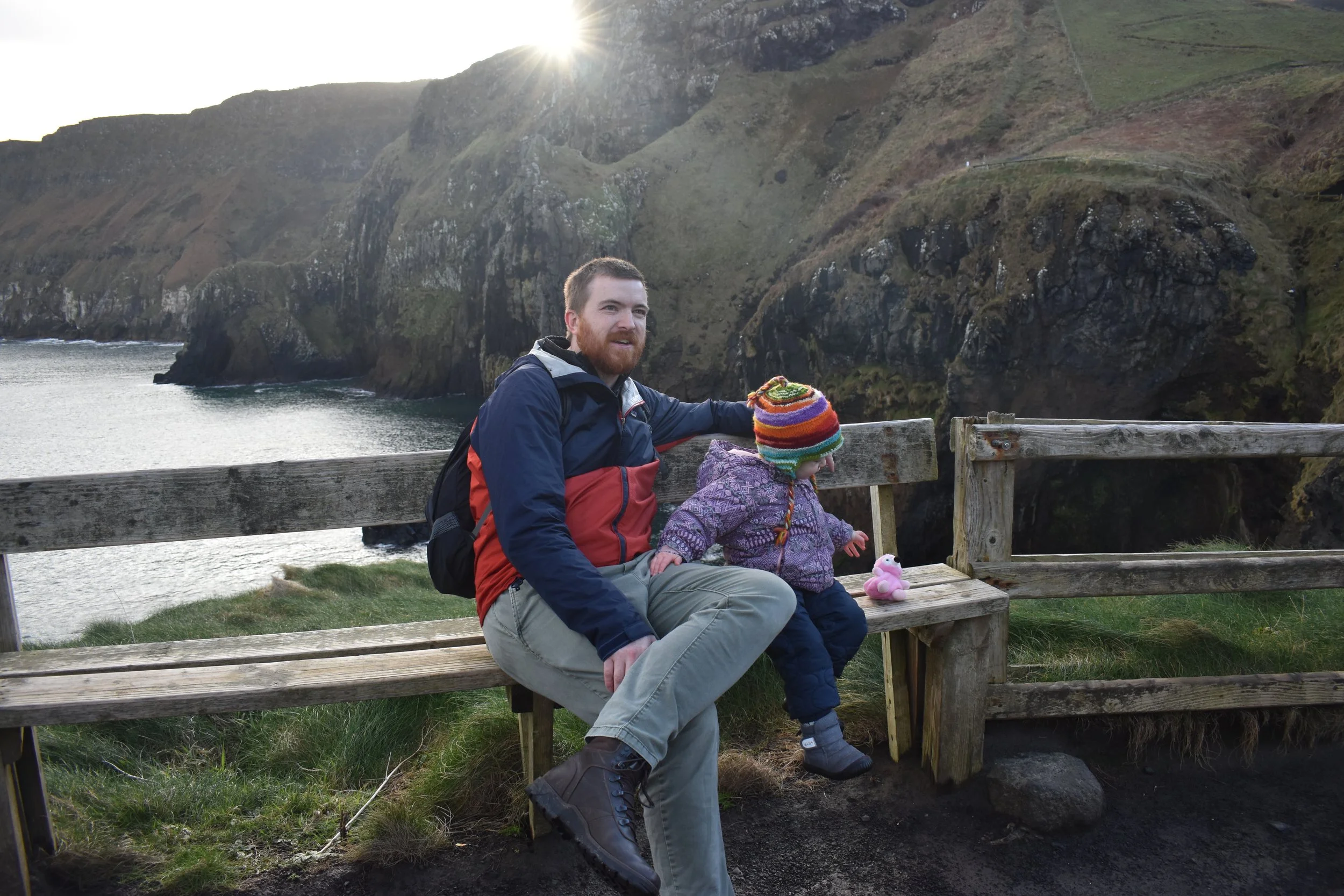
During the summer months, the bridge is crowded, and you aren’t allowed to stop on it to take photos. However, one of the perks of visiting during off-season was that it was empty. We basically had the place to ourselves and got stunning, nearly private views as a result. The one thing to note is that during bad weather or high winds, the bridge is closed.
Giant’s Causeway ($20 per adult, children under 5 free; 1 hr “Hike”)
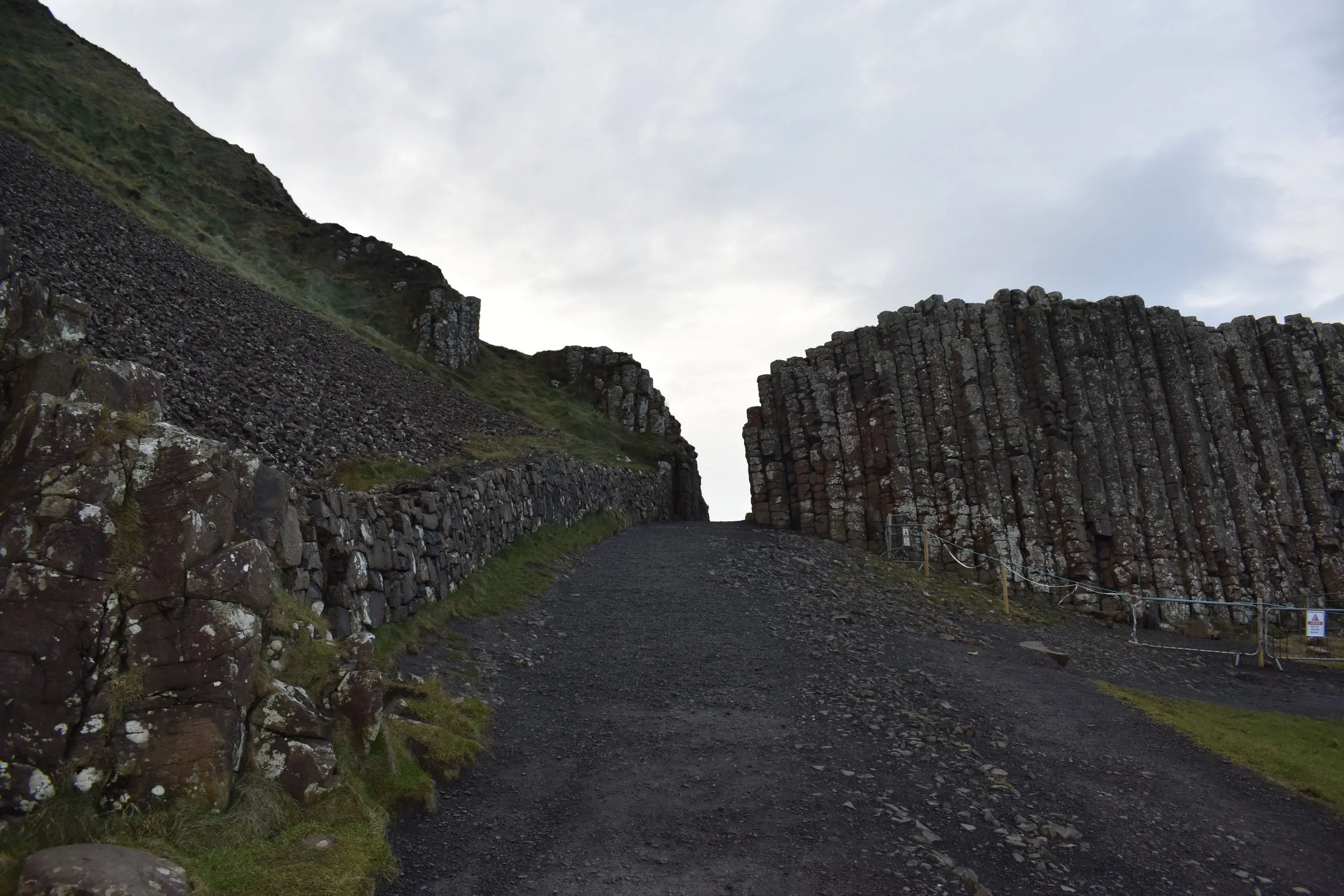
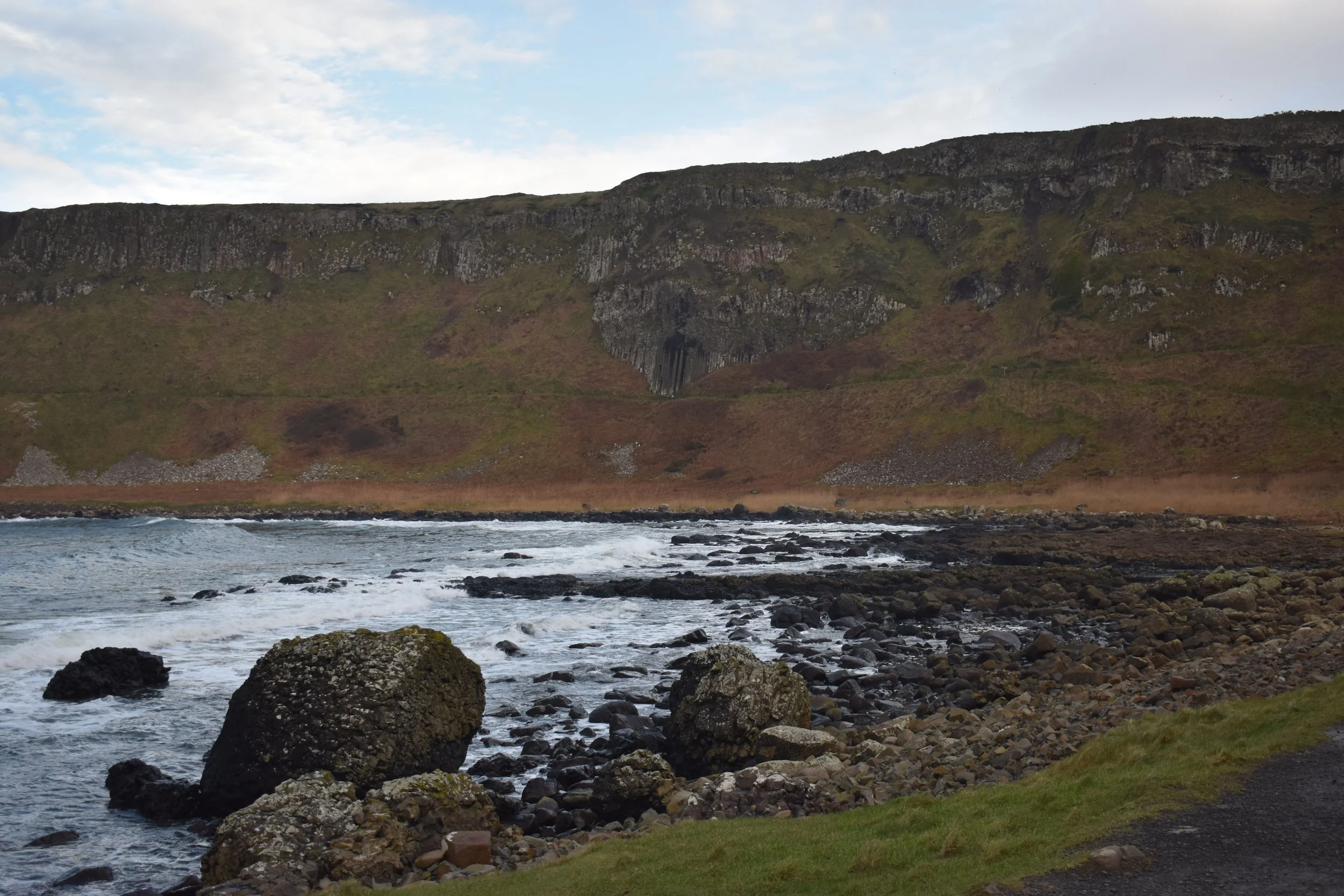
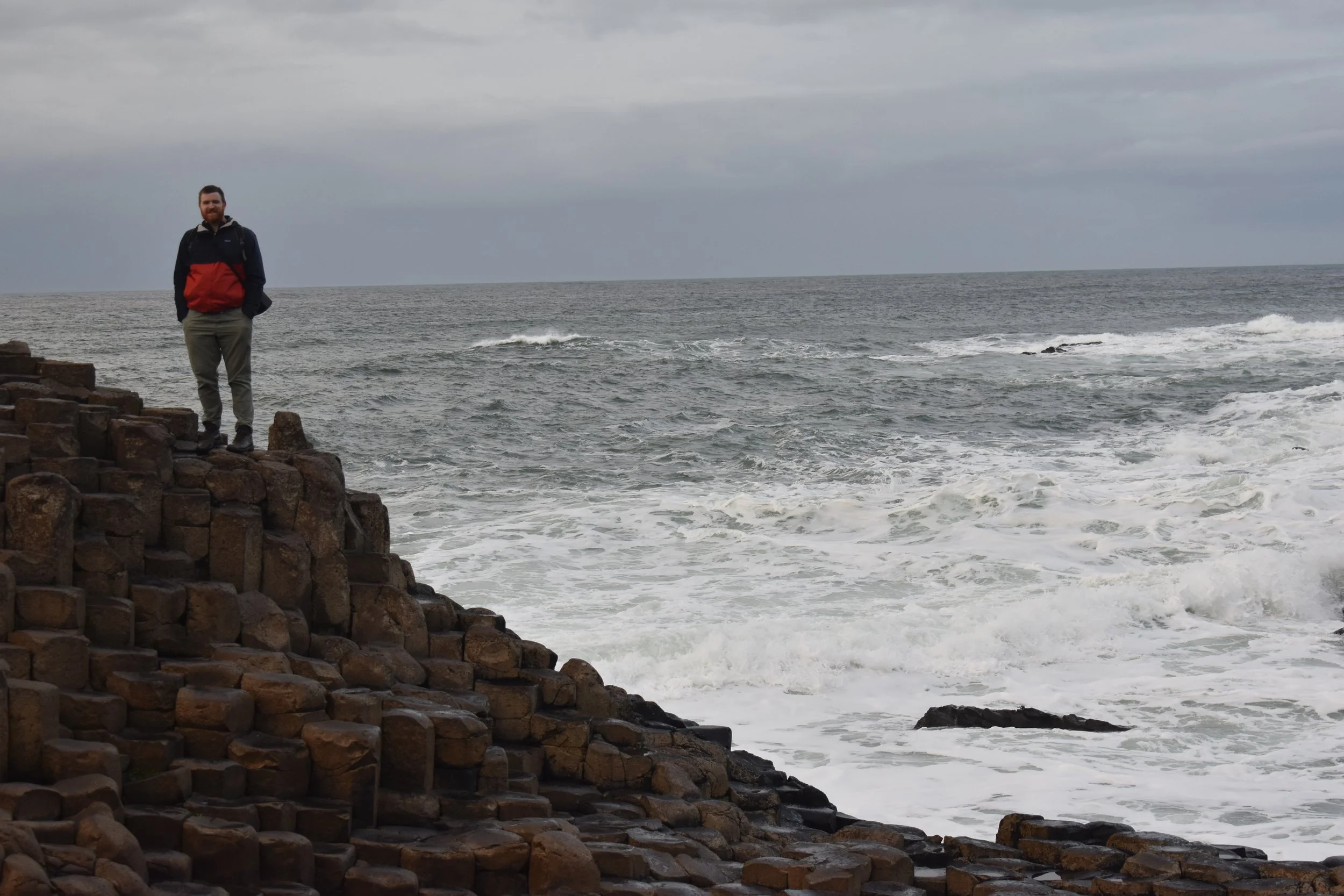
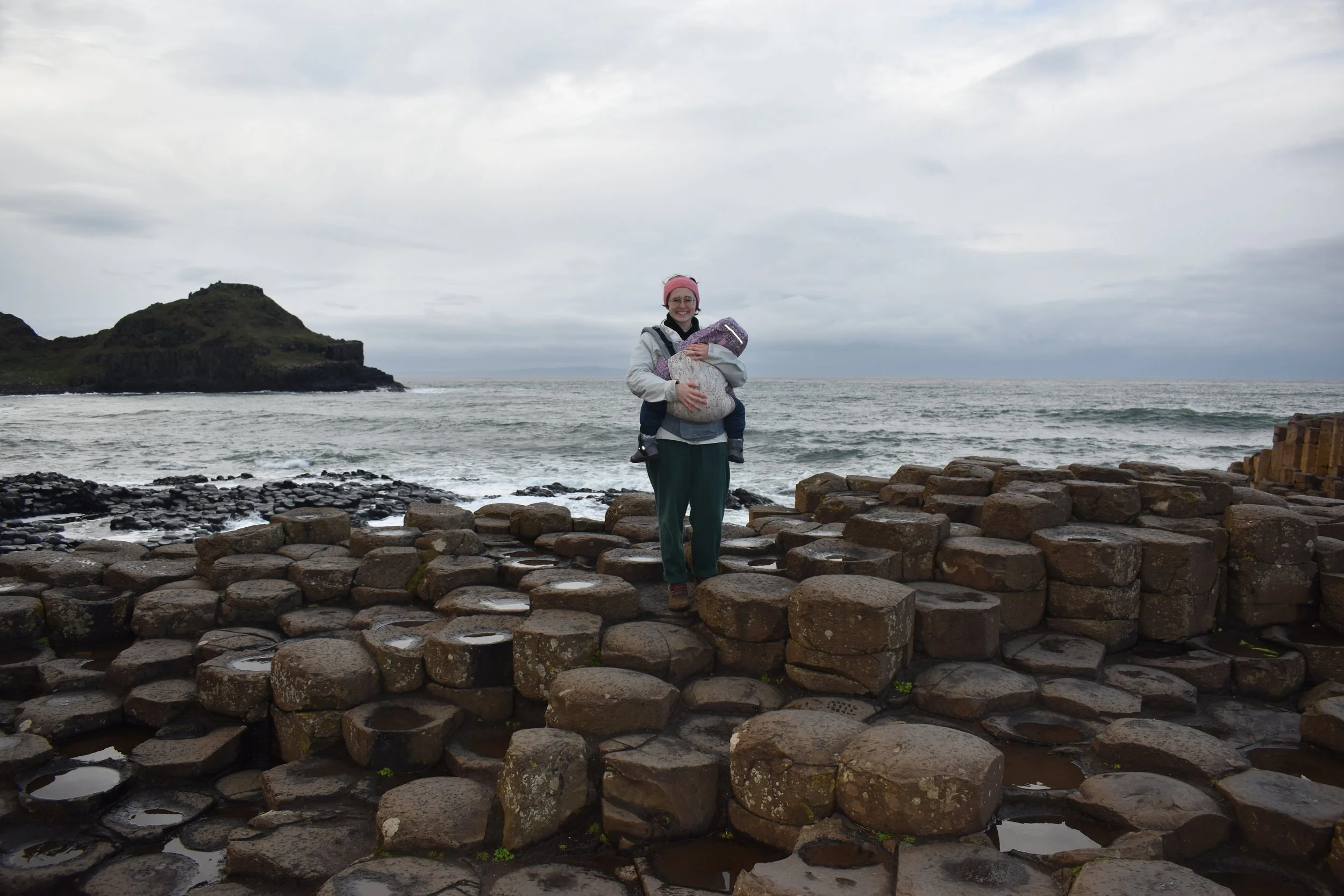
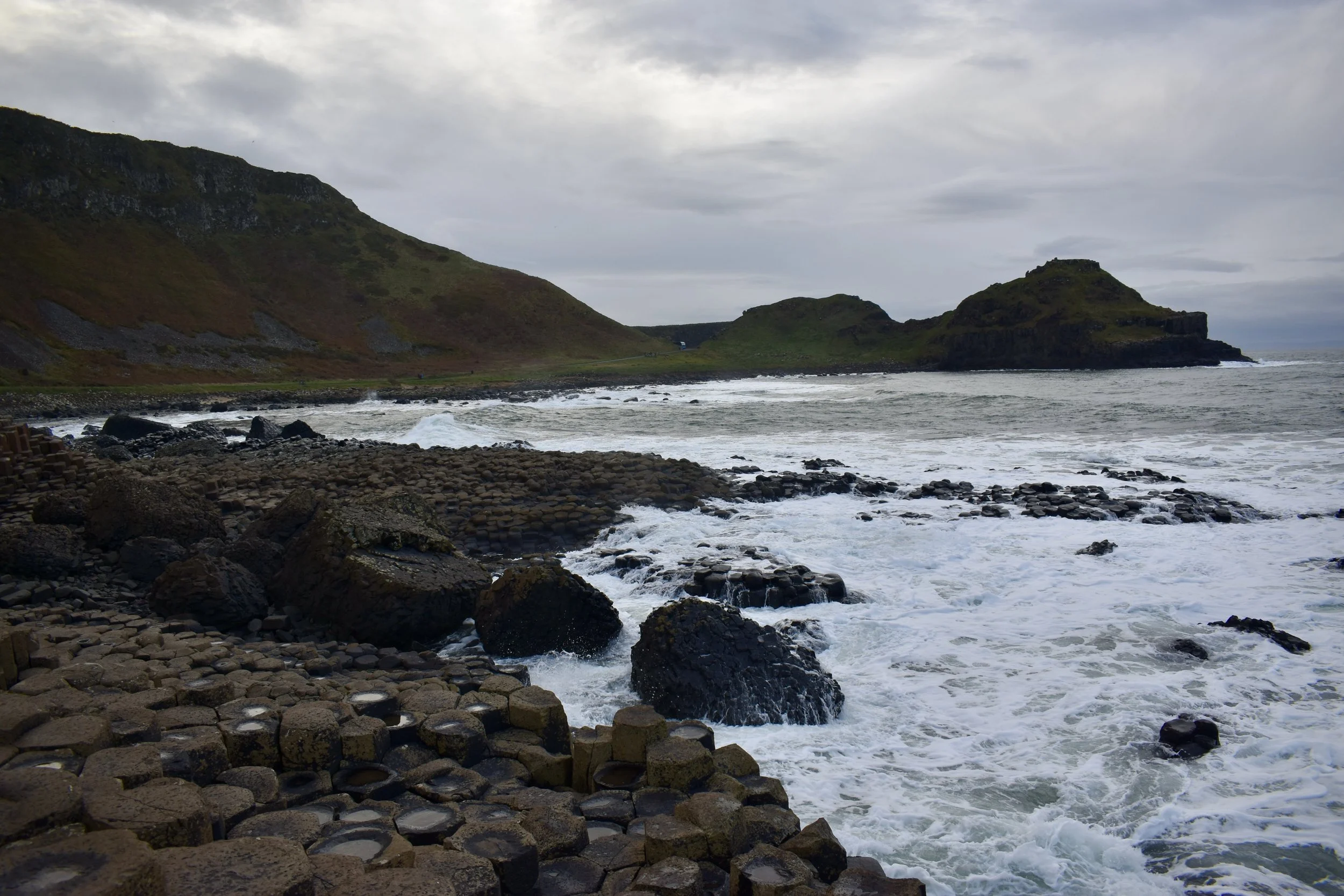
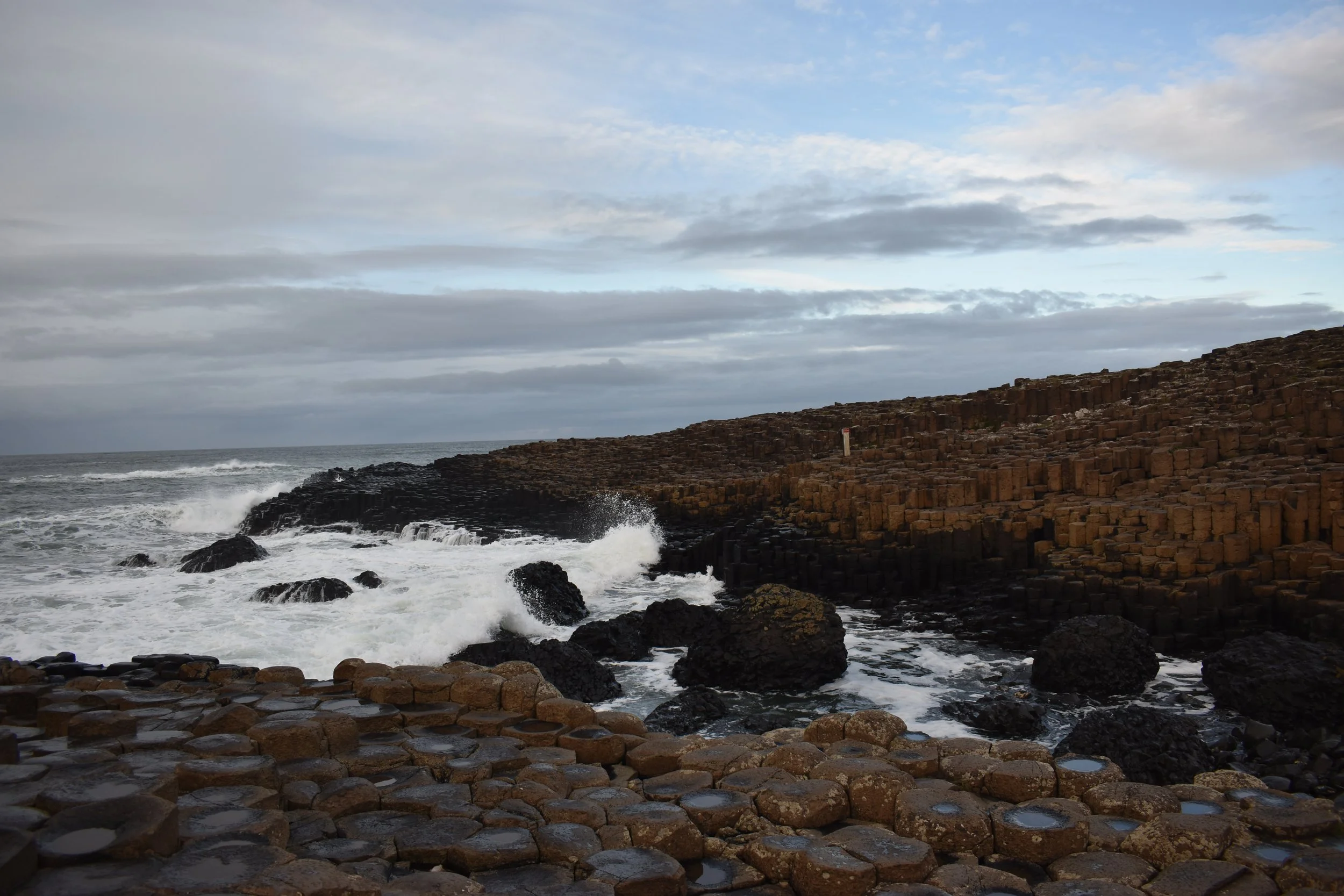
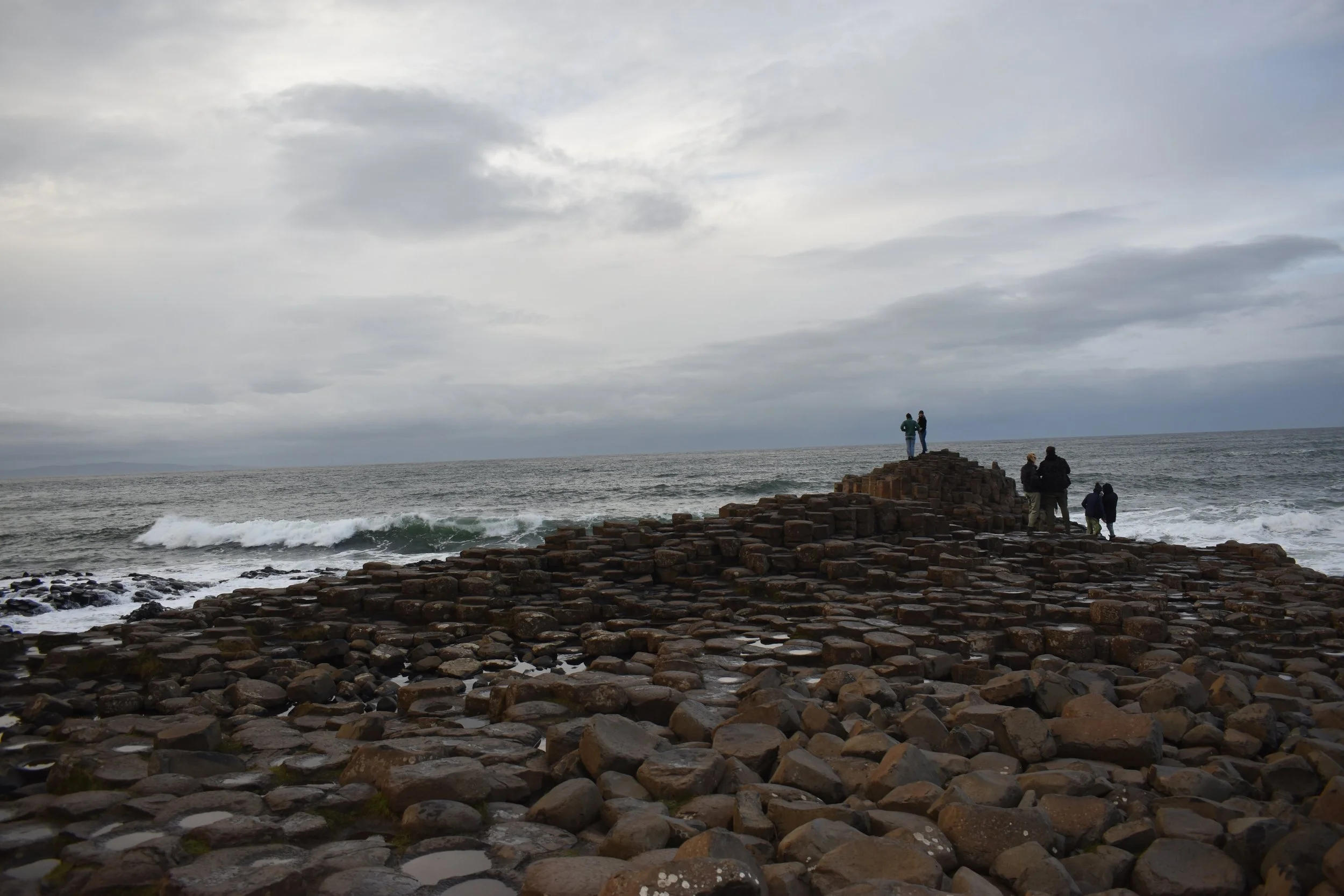
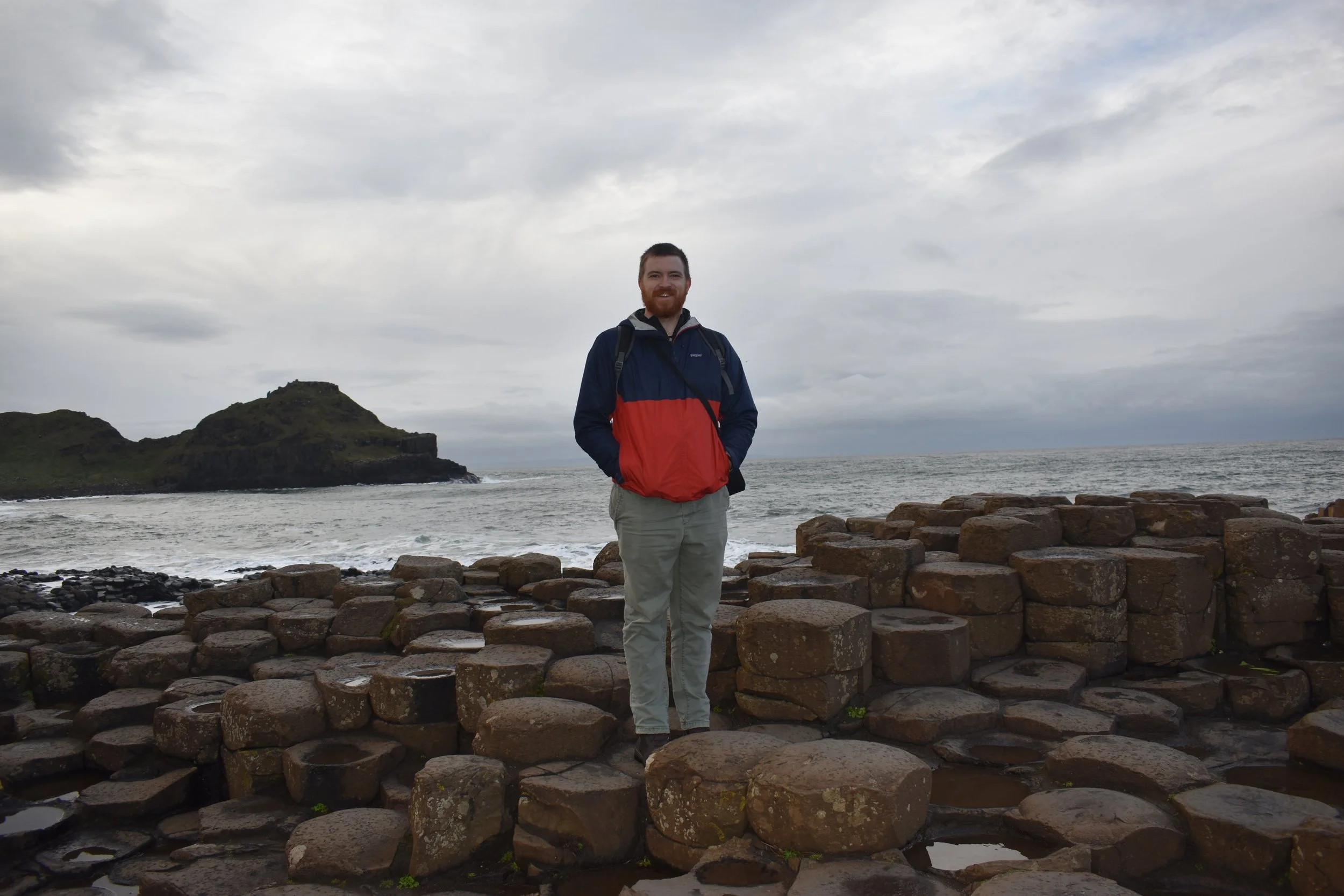
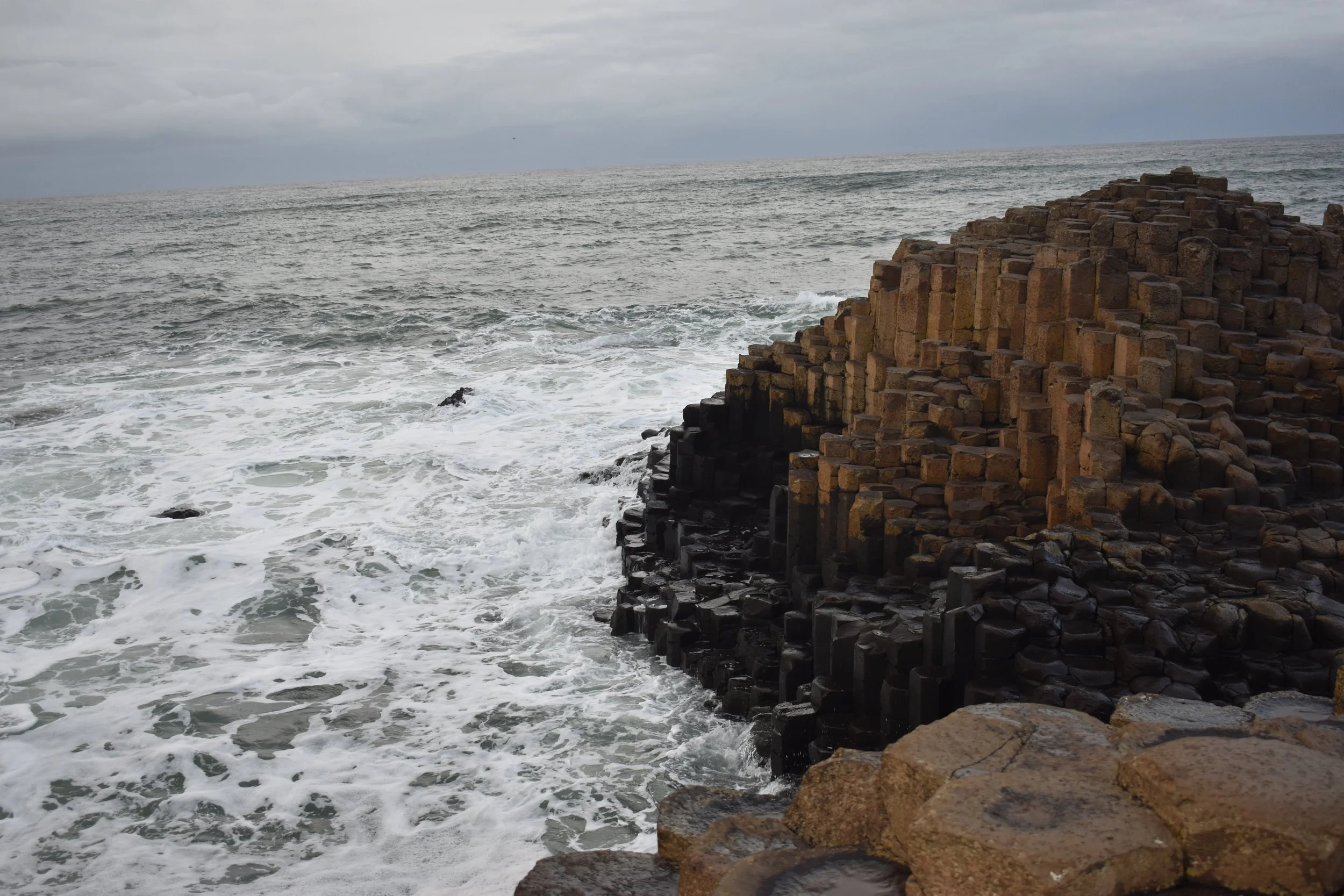
Another UNESCO World Heritage site, Giant’s Causeway is a short, 10-minute drive along the coast from Carrick-a-Rede. Formed 50 to 60 million years ago by volcanic activity (lava cooling extremely slowly, allowing for horizontal and vertical contracture), Giant’s Causeway is composed of interlocking basalt columns. The area is deeply intertwined with Irish mythology; the legend goes that the Irish giant Fionn was challenged to a fight by a Scottish giant, and he built the causeway to Scotland to reach him. Fionn realized the Scottish giant was much bigger than him, fled back to Ireland, disguised himself as his own baby, then when the Scottish giant gave chase and saw the giant Fionn-baby, he fled back to Scotland, scared of how big Fionn must have been if his baby was so massive. The Scottish giant smashed up the causeway to prevent Fionn from following. Various other myths connected to Fionn, his mother, a giant camel, etc. are rooted in the bays surrounding the causeway.
The visitor's center included an area that was a haven for toddlers, with interactive exhibits, train toys, a boat to ride in, and a crayon-rubbing station. We took the (free with admission) tour led by a National Trust guide, which I would highly recommend. Flora took a carrier nap while we (courtesy of off-season) got a private tour, in which we learned all about the geological history and Irish mythology. They also offer handheld audio guides for those who don’t want a tour guide. The 40ish-minute tour ends at the causeway, and from there, you have the option to continue on with more hiking. If we’d planned more of our trip around hiking and stayed in this area, I would have loved to create a whole day around the causeway and hiked out to see some of the other rock formations and up to the clifftops to get some more stunning views. But since it was winter, we hadn’t wanted to stake an entire day (or days) on good enough weather for full-day hiking. So instead, we hiked back out to the visitor’s center to continue our coastal tour.
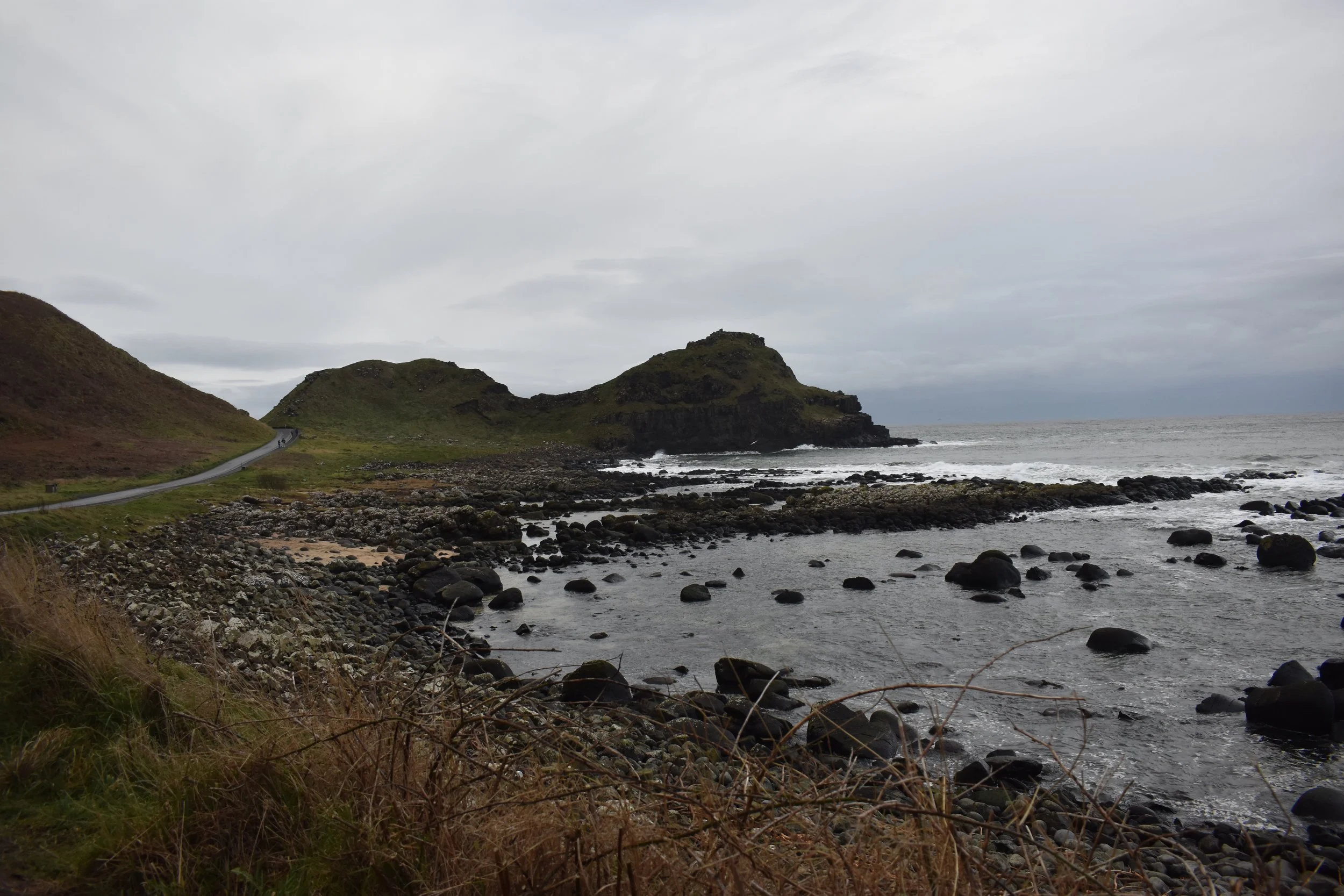
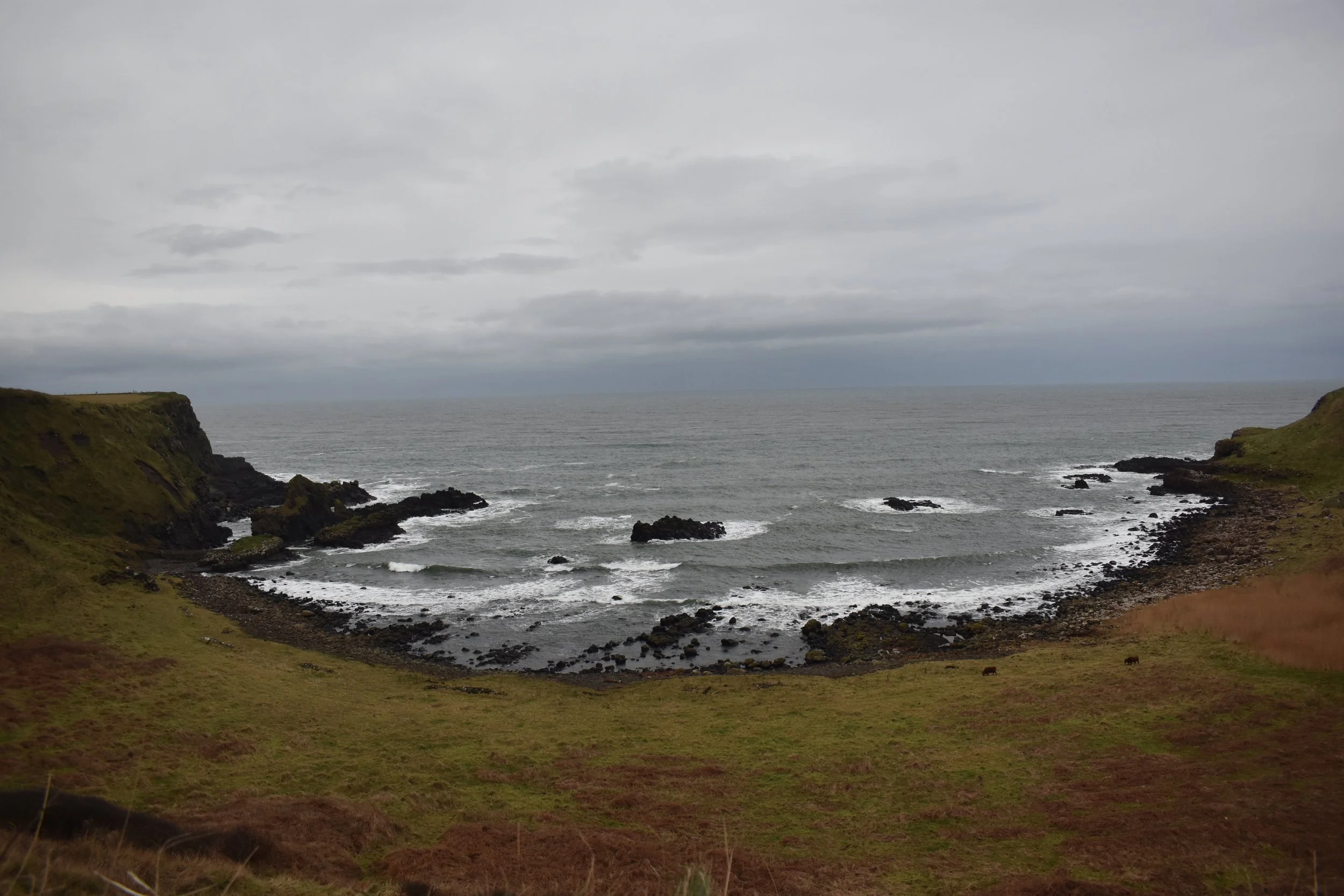
Dunluce Castle ($8 per adult, children under 5 free)
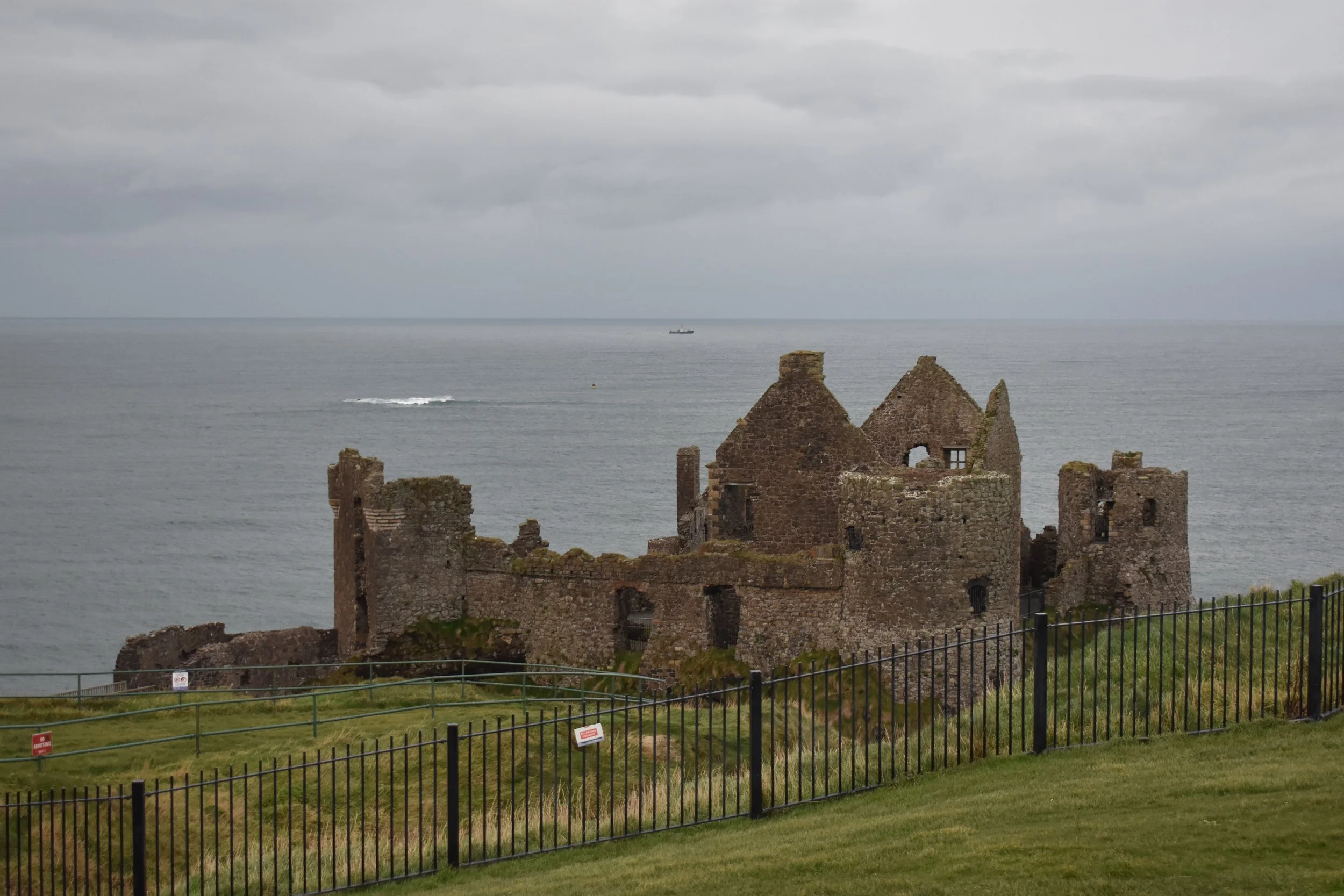
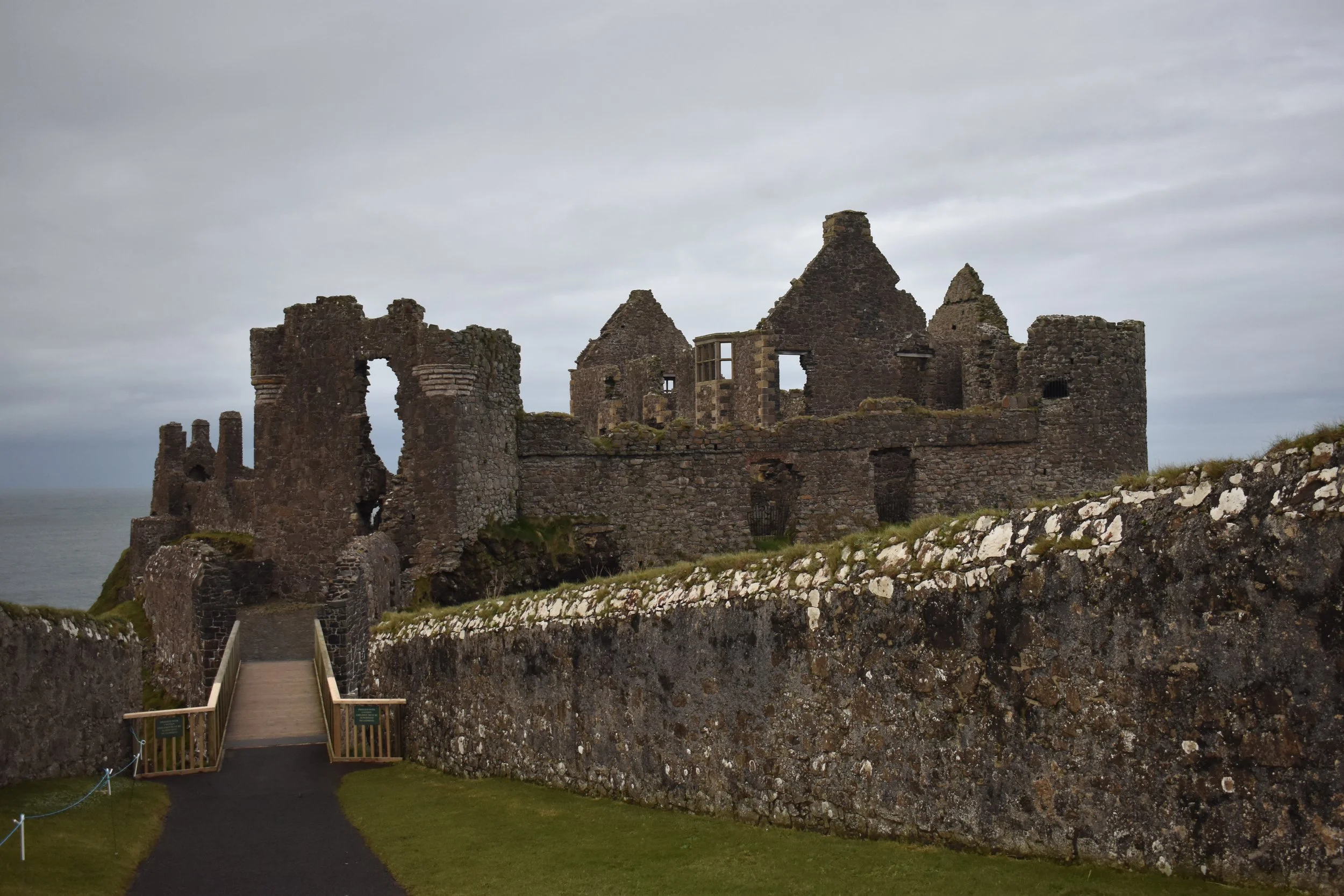
Dunluce is definitely one of the coolest castle ruins I’ve visited. Another short drive from Giant’s Causeway (10 min.), Dunluce can be found on the sharp drop of the cliff’s edge. The first castle was built in the 13th century, then fell into the hands of the McQuillan family in 1513. It stayed with the McQuillans while they were lords of the Route, a medieval territory of Northern Ireland, until they were ousted by the MacDonnell clan of Scotland. The Scottish lords of the castle were later made earls (and Anglicized) by James I in his efforts to obtain funds and support for the union between England, Scotland, and Ireland. The castle would fall into ruin over the centuries as the clan lost status and wealth, and part of it literally fell from the cliff, reclaimed by the sea.
Notably, the castle is thought to be the inspiration for Cair Paravel in The Chronicles of Narnia and served as a filming location for Pyke, the seat of House Greyjoy, in Game of Thrones.
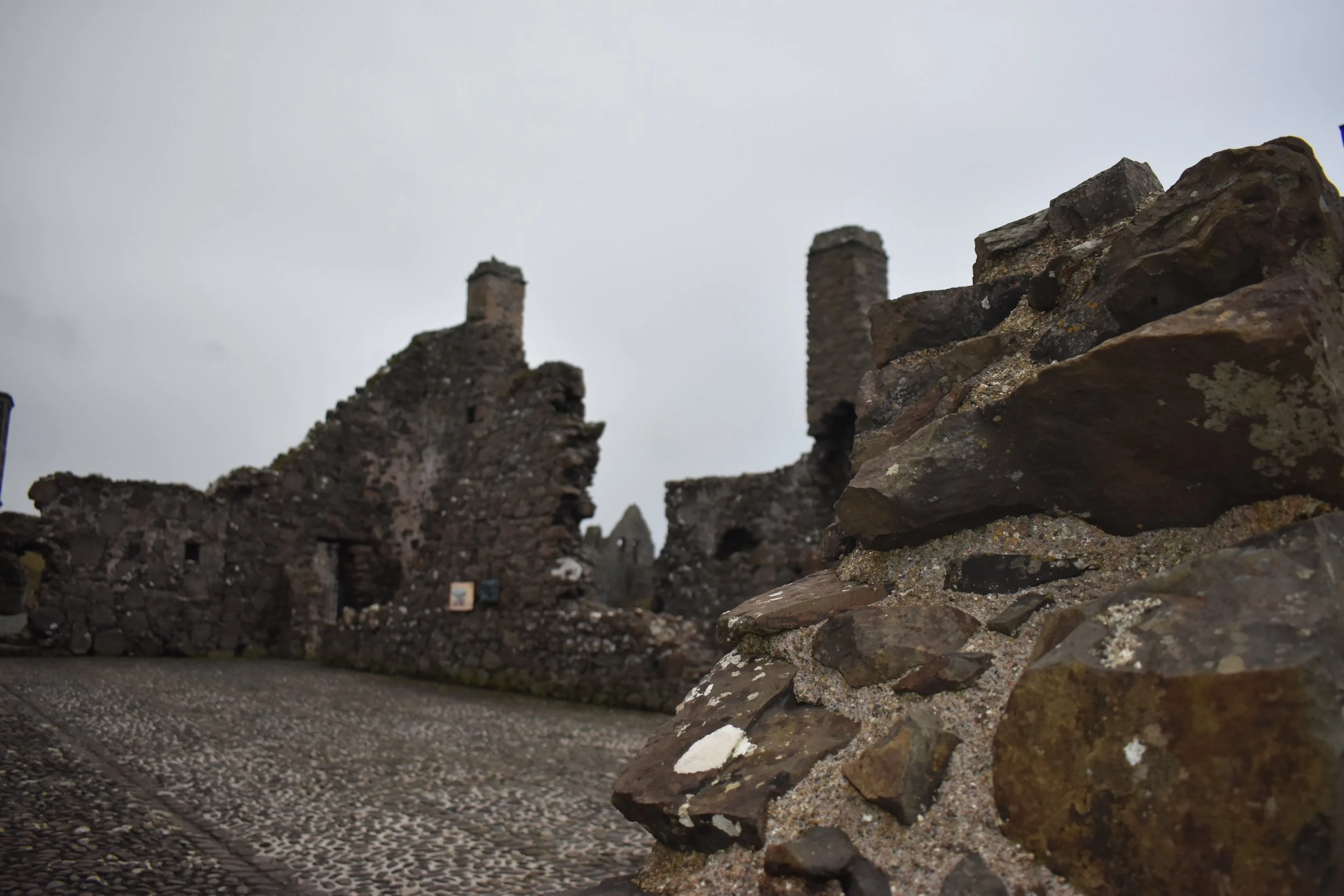
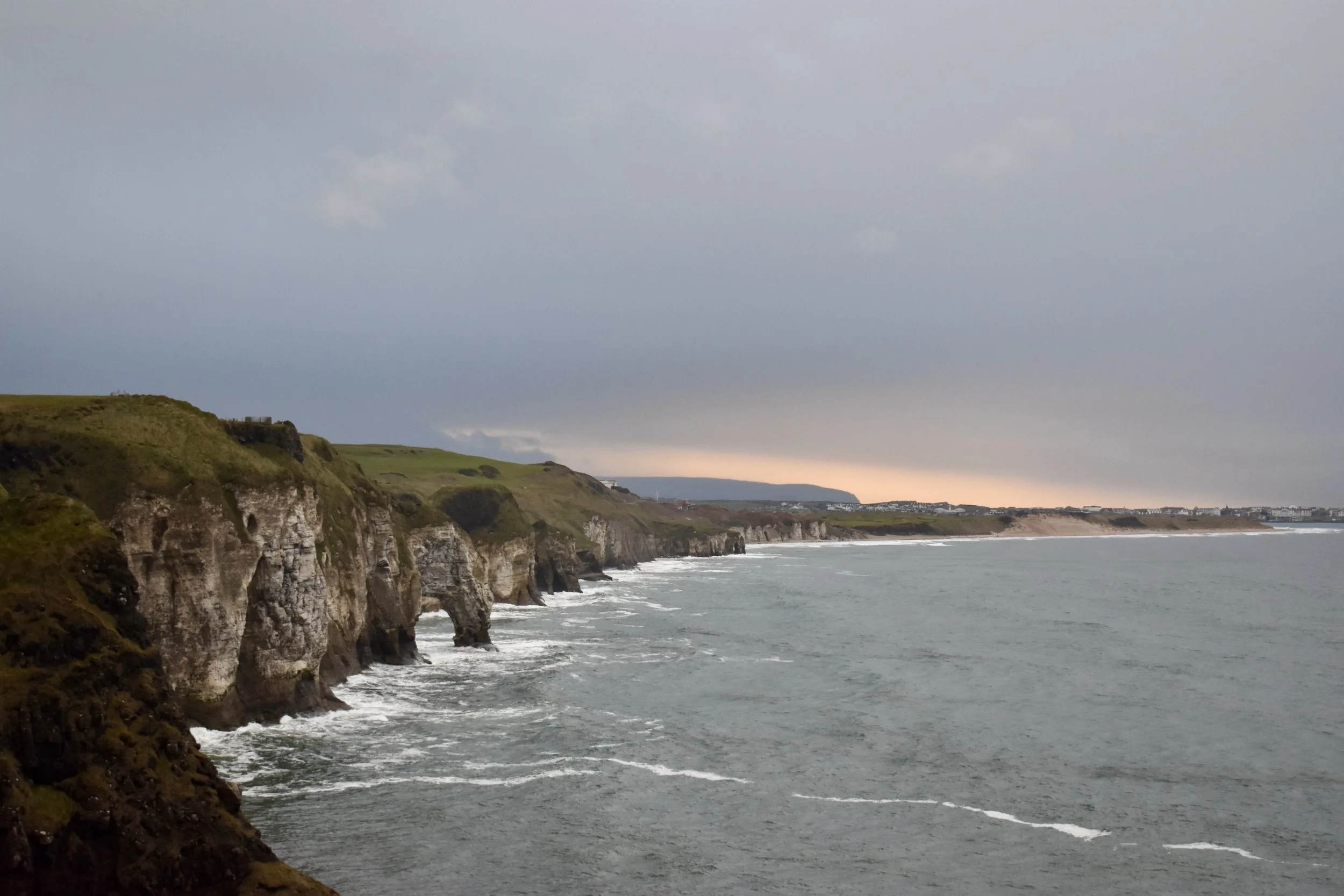
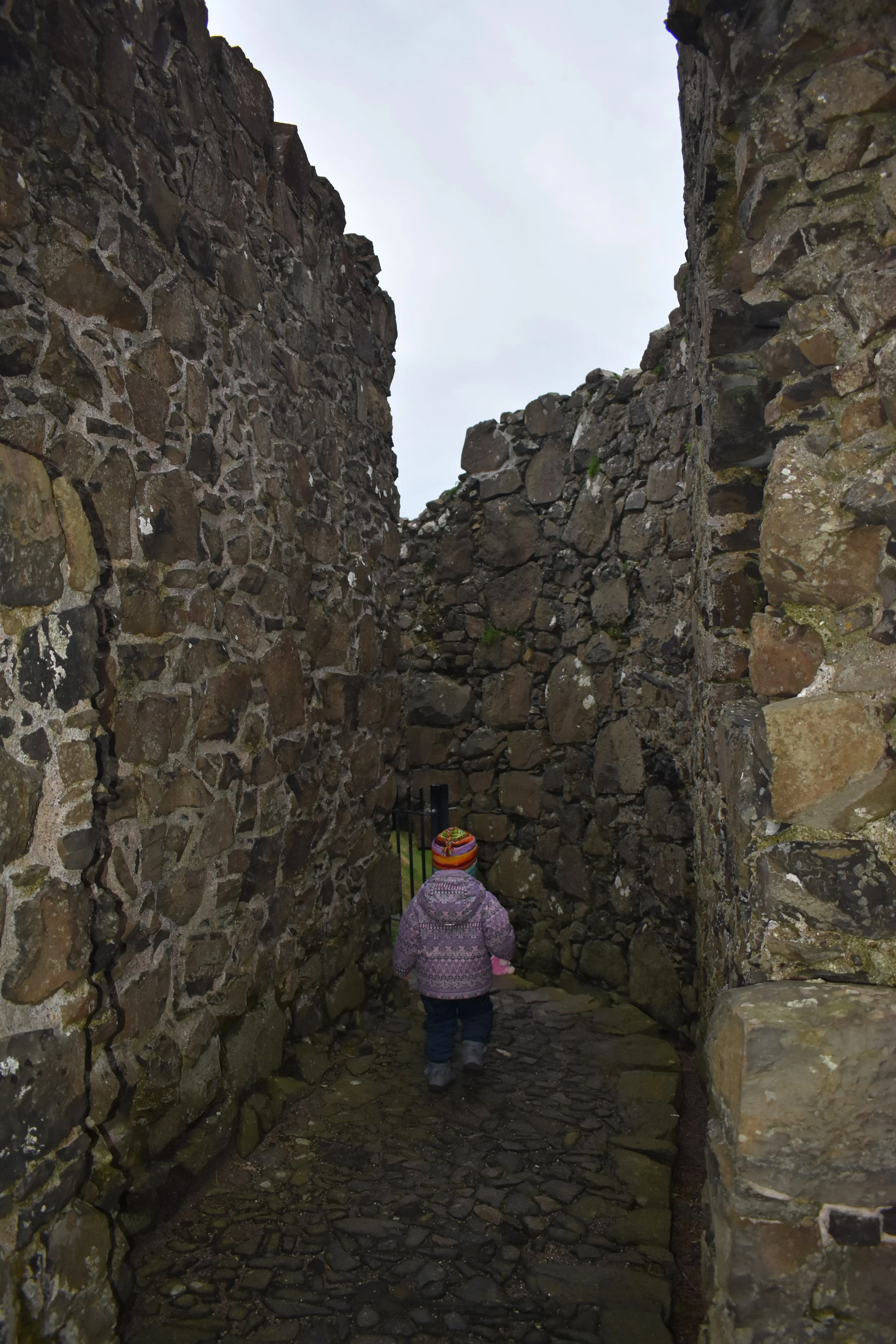
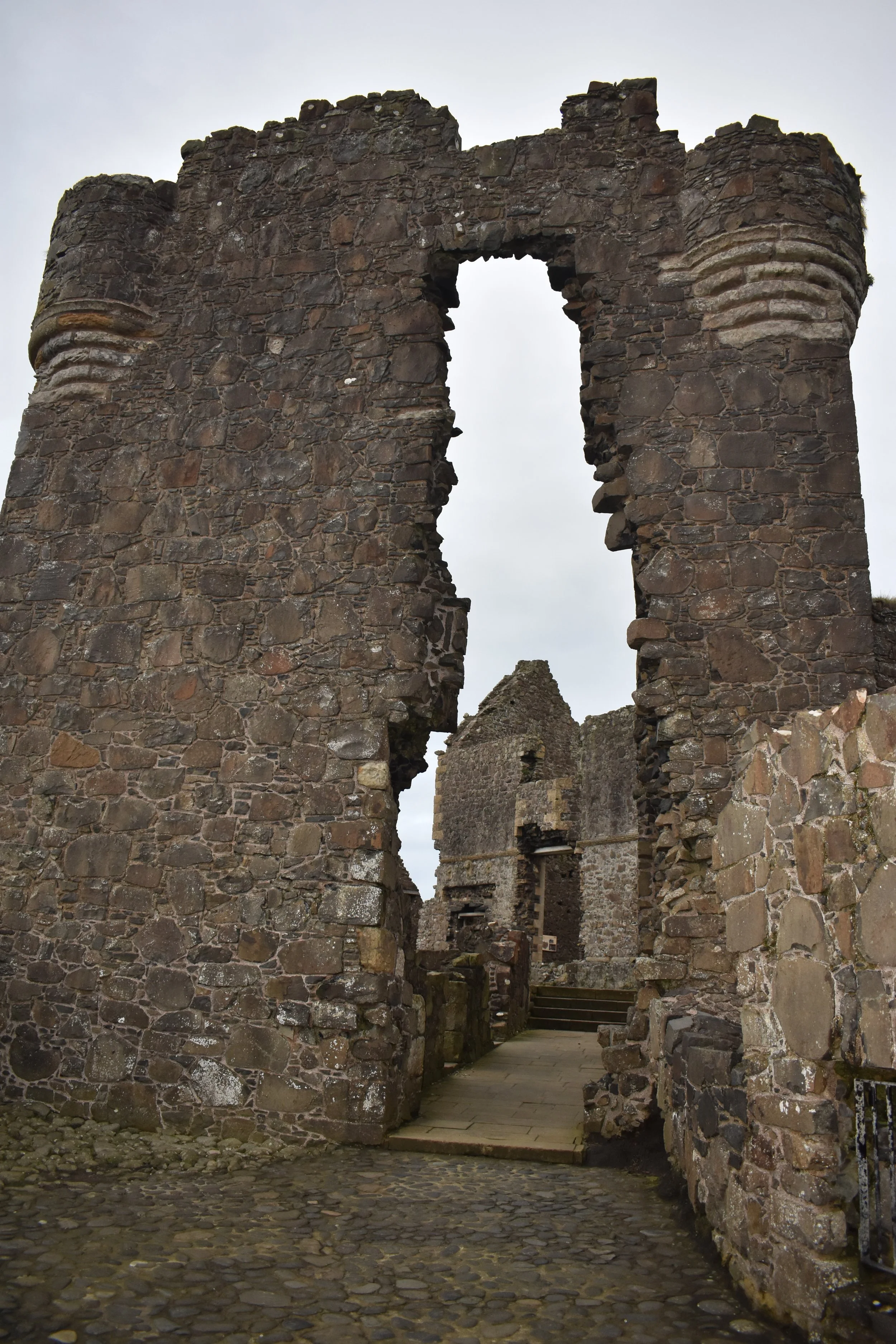
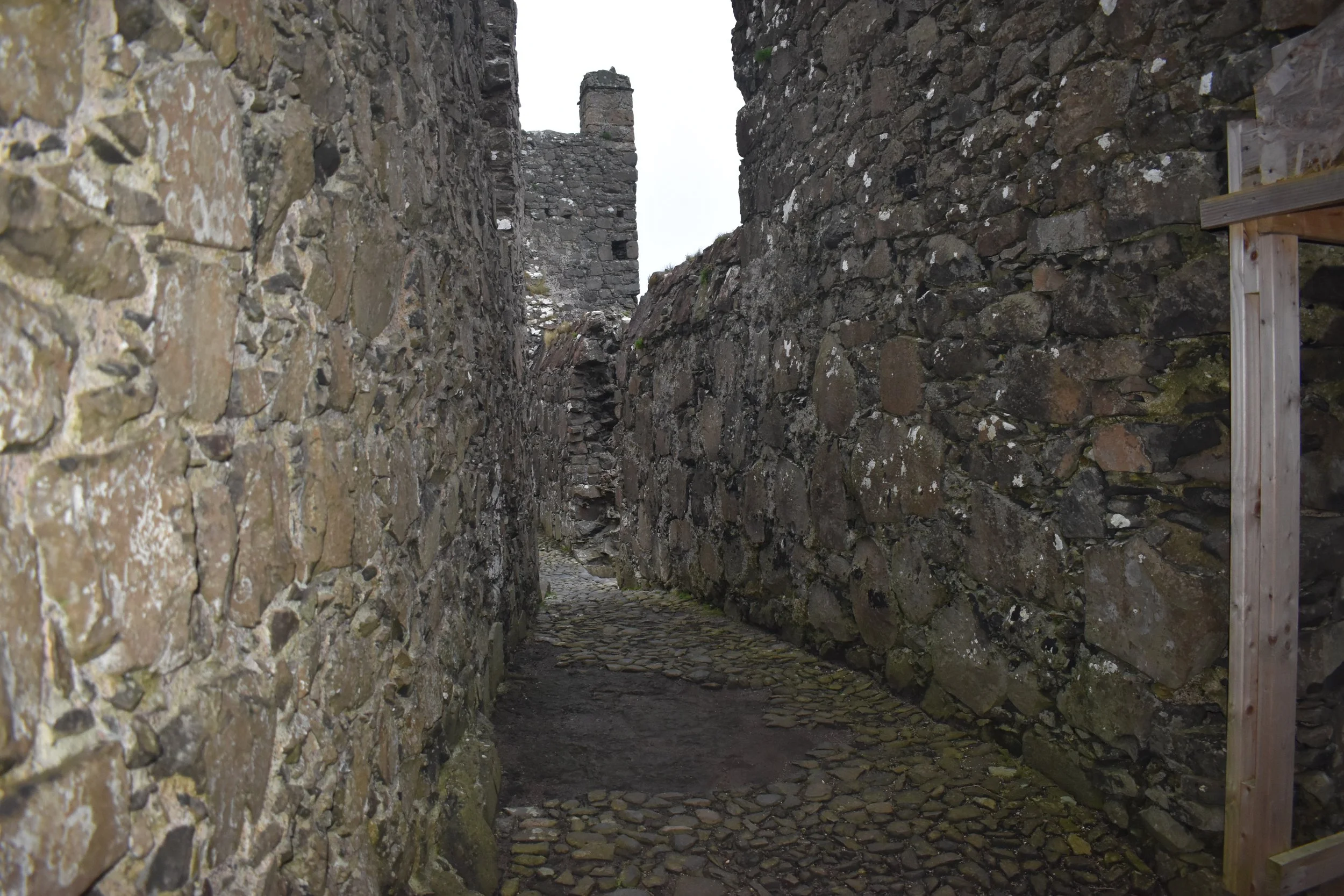
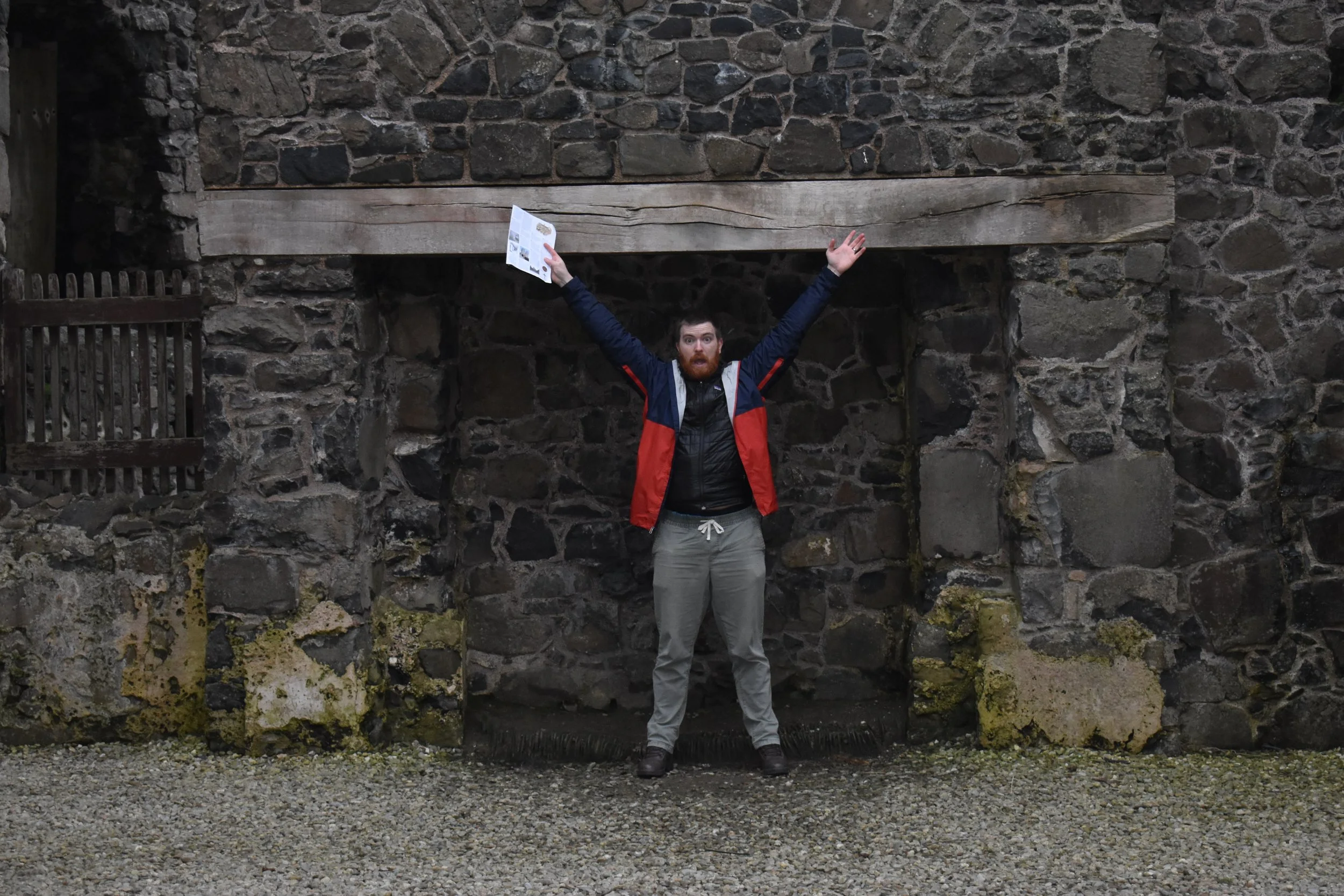
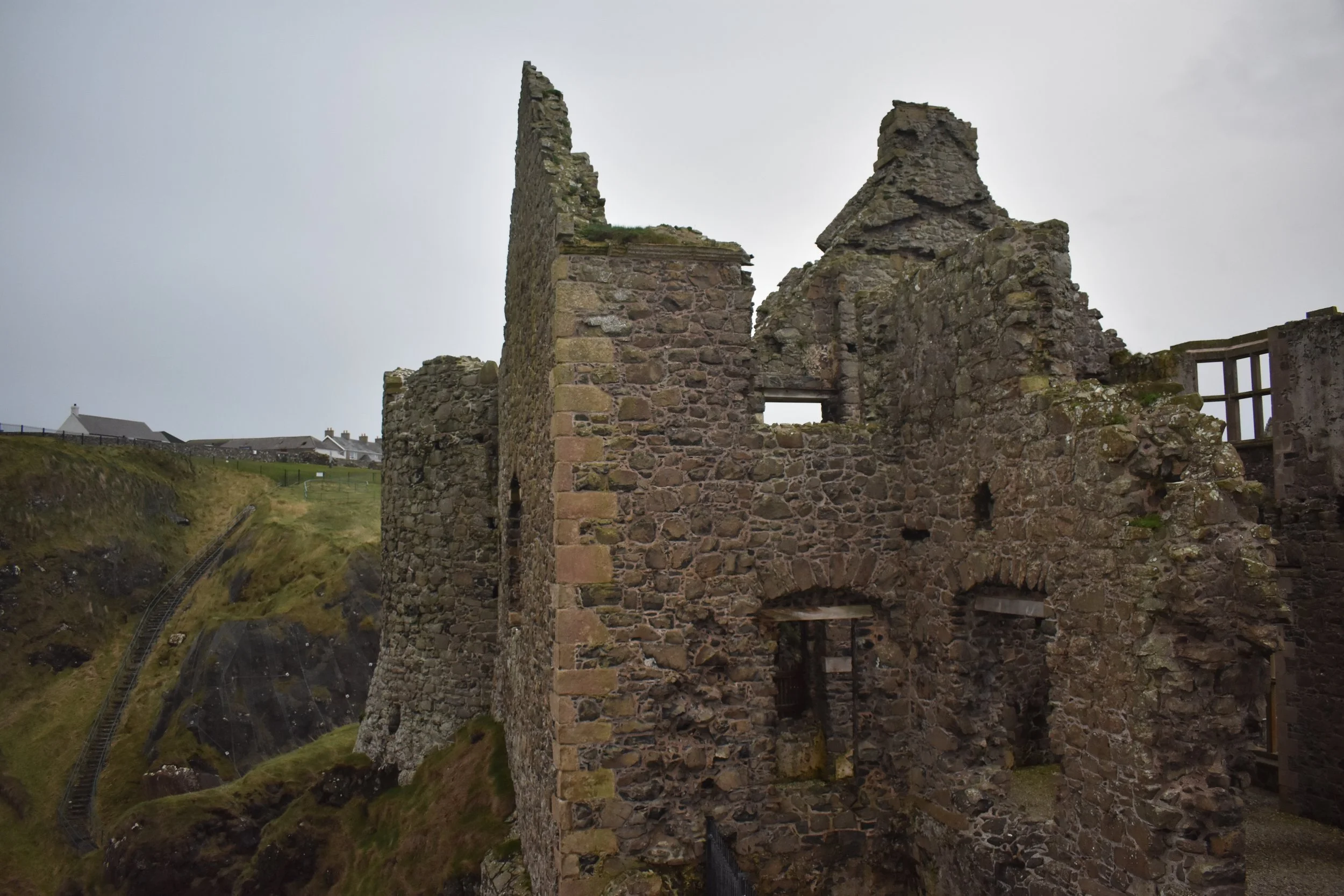
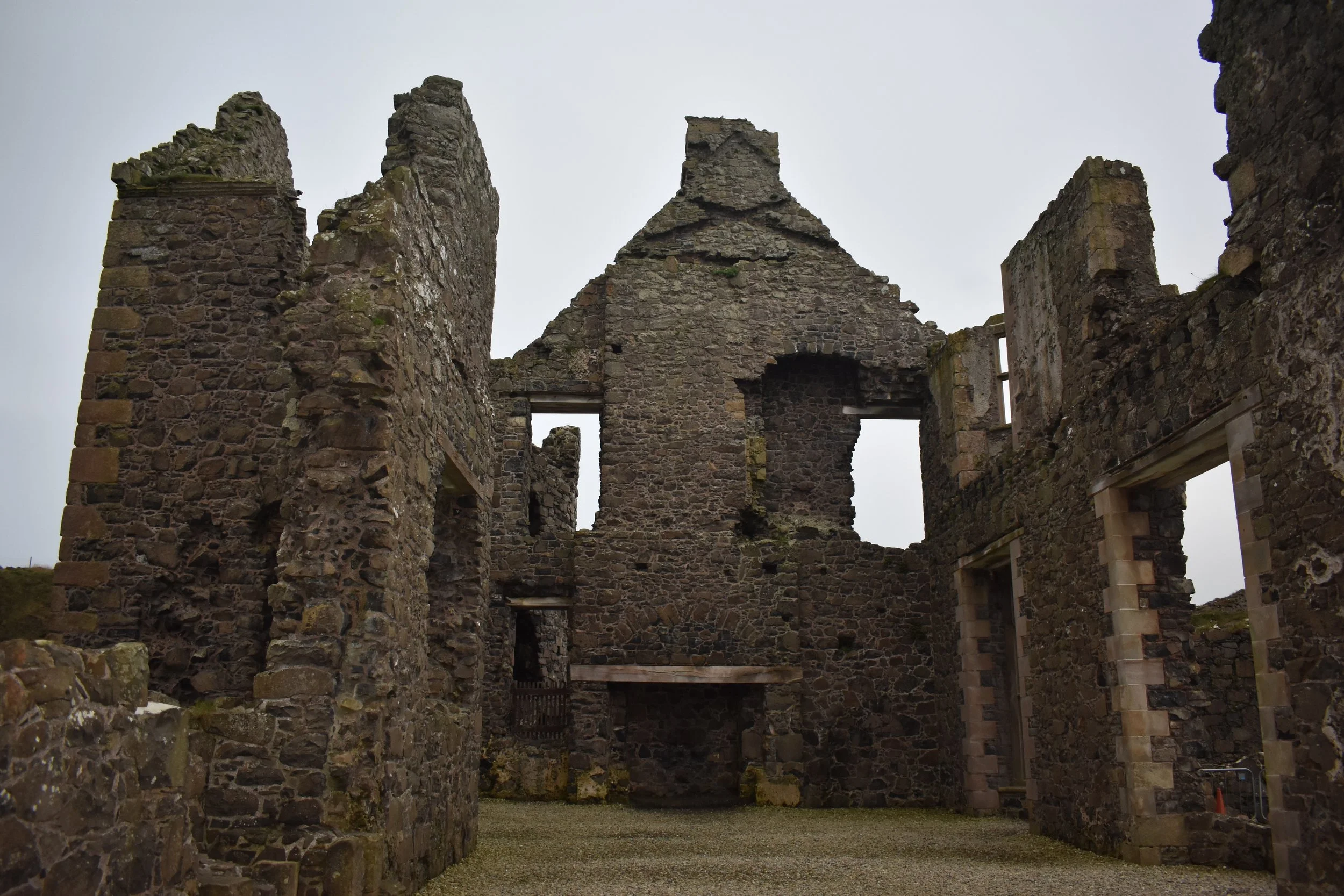
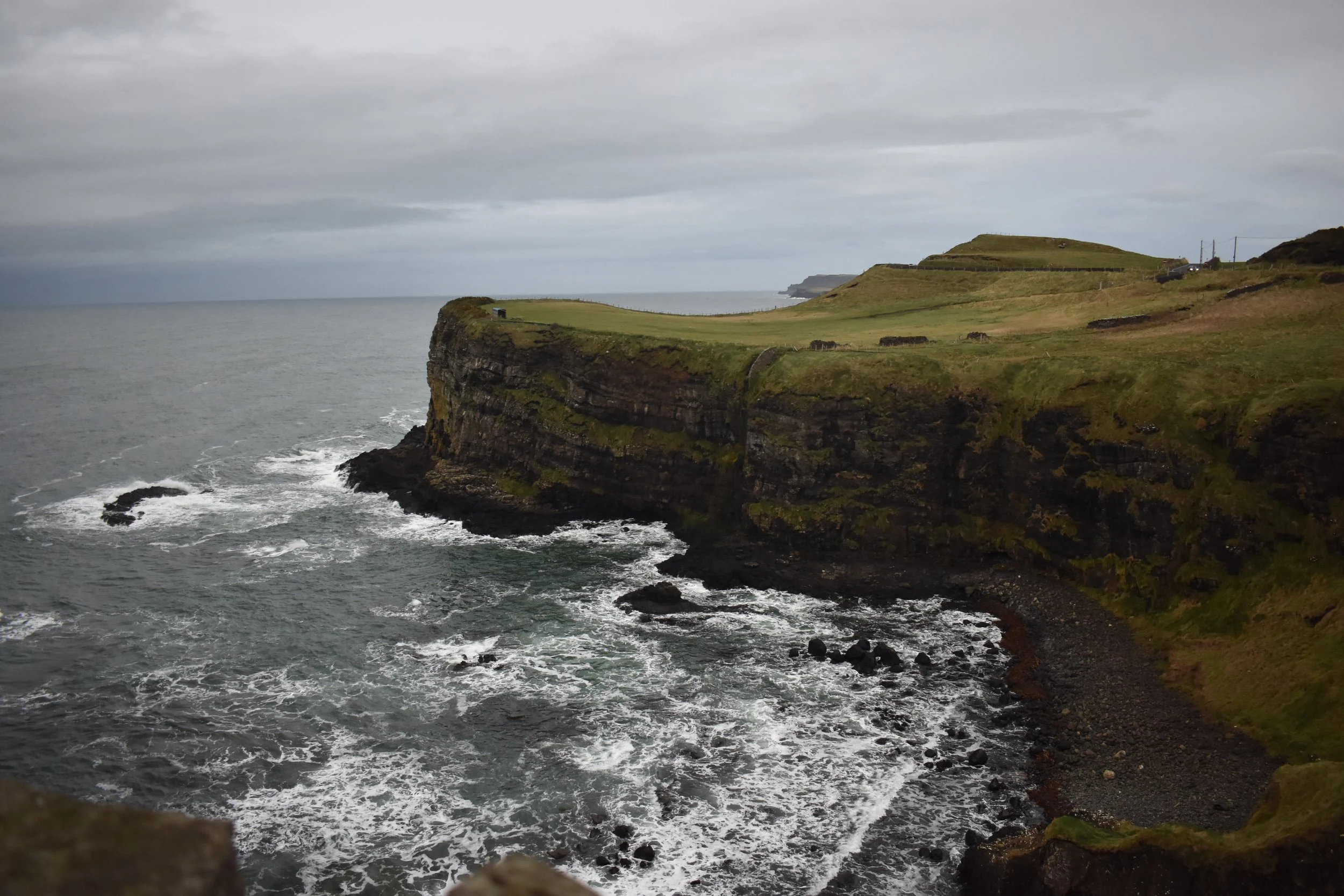
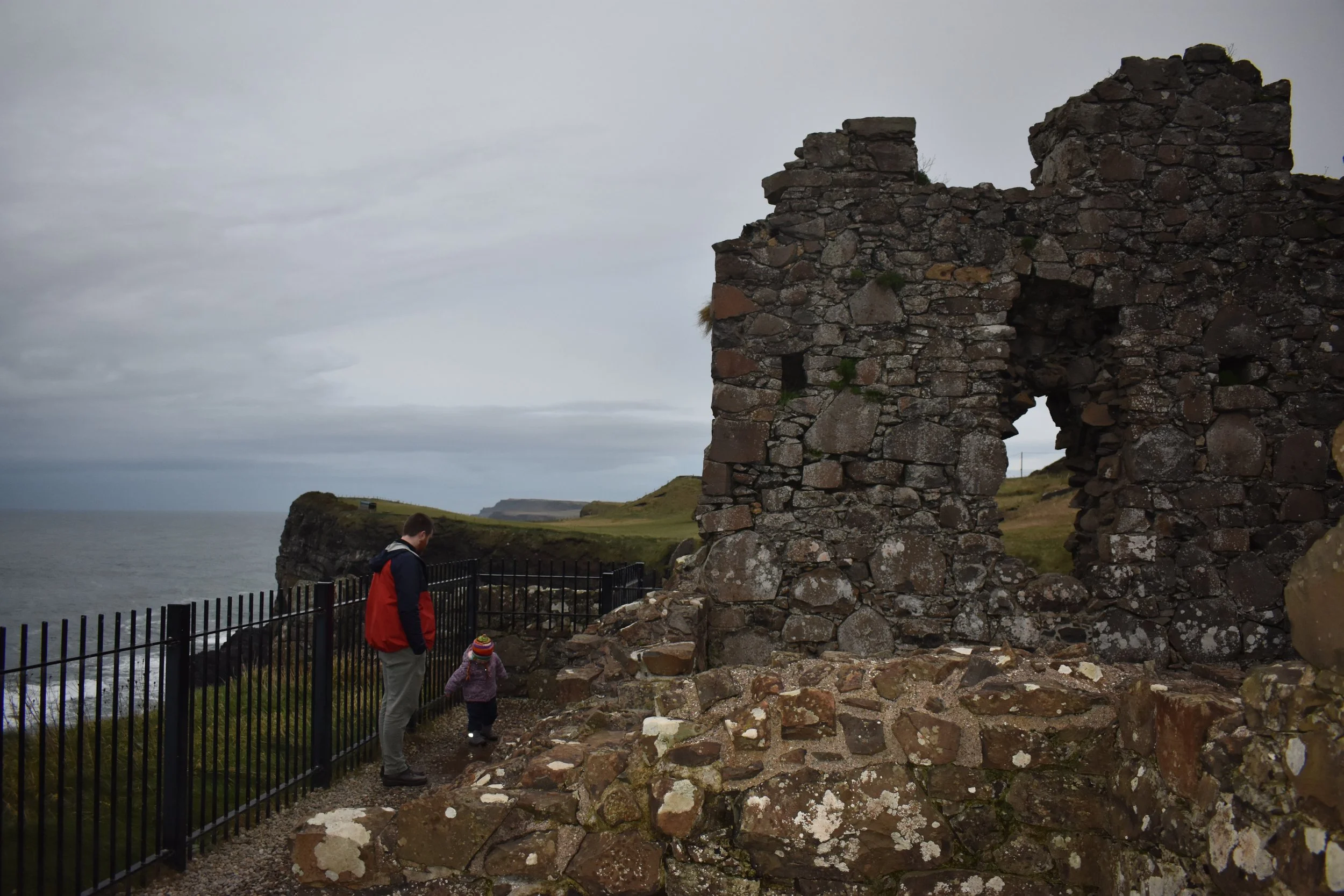
On winter days, you do have to be careful about timing for daytrips—there’s less daylight, and things close earlier. Getting there a little before 3:30 (the final time you can enter in the winter), we closed Dunluce down. On the drive home, we made a brief detour to see the Dark Hedges, a picturesque drive lined with beech trees, but it started raining, quickly getting dark, and we didn’t feel like parking in the hotel lot (it was unclear whether this would be free) and walking the 15 minutes in the rain to get a picture with bad lighting. That evening, we ate at Darcy’s in Belfast, and again, I’d highly rate them—both for kid-friendliness, atmosphere, and the quality of the food. I had a fish pie, which was excellent, Flora had a whole roast ham dinner off the kid’s menu, and they brought her food out earlier than ours, which was great thinking, as it gave her half a chance to finish around the same time as us.
Day 7: Ulster Folk Museum
Ulster Museum & Botanic garden (Free)
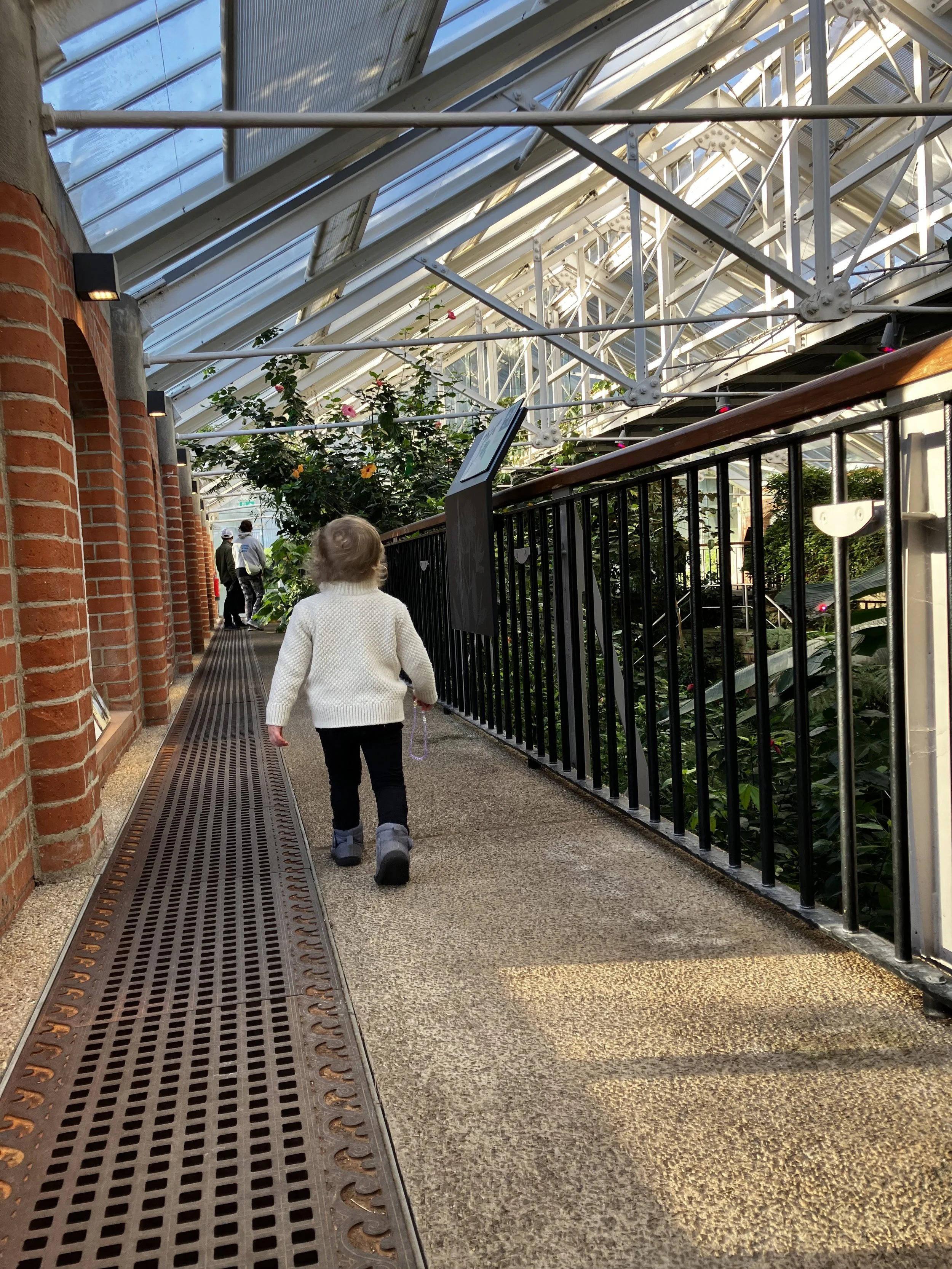
This museum combined natural history (our toddler’s favorite) with archaeology and art. It really had everything—including a cafe, where we grabbed a quick breakfast (my first scone and clotted cream of the trip). Now, what we were just starting to barely realize at the start of this day was that Flora was showing signs of getting sick (passed on from Ryan, who had been battling a cold since we left). It wasn’t clear at this point whether she was just tired from sleeping poorly or what, so we pushed through, but in retrospect, this is why I didn’t have the best time at this museum. While there were plenty of engaging exhibits, including one on the Troubles, a period of Irish history I was interested in learning more about, Flora was unwell, grumpy, and kept pushing us along at a grueling pace. She didn’t even really enjoy the kids-oriented nature discovery center, though I think it would have been a big hit had she been feeling better.
Ulster Folk Museum ($16 per adult, children under 5 free)
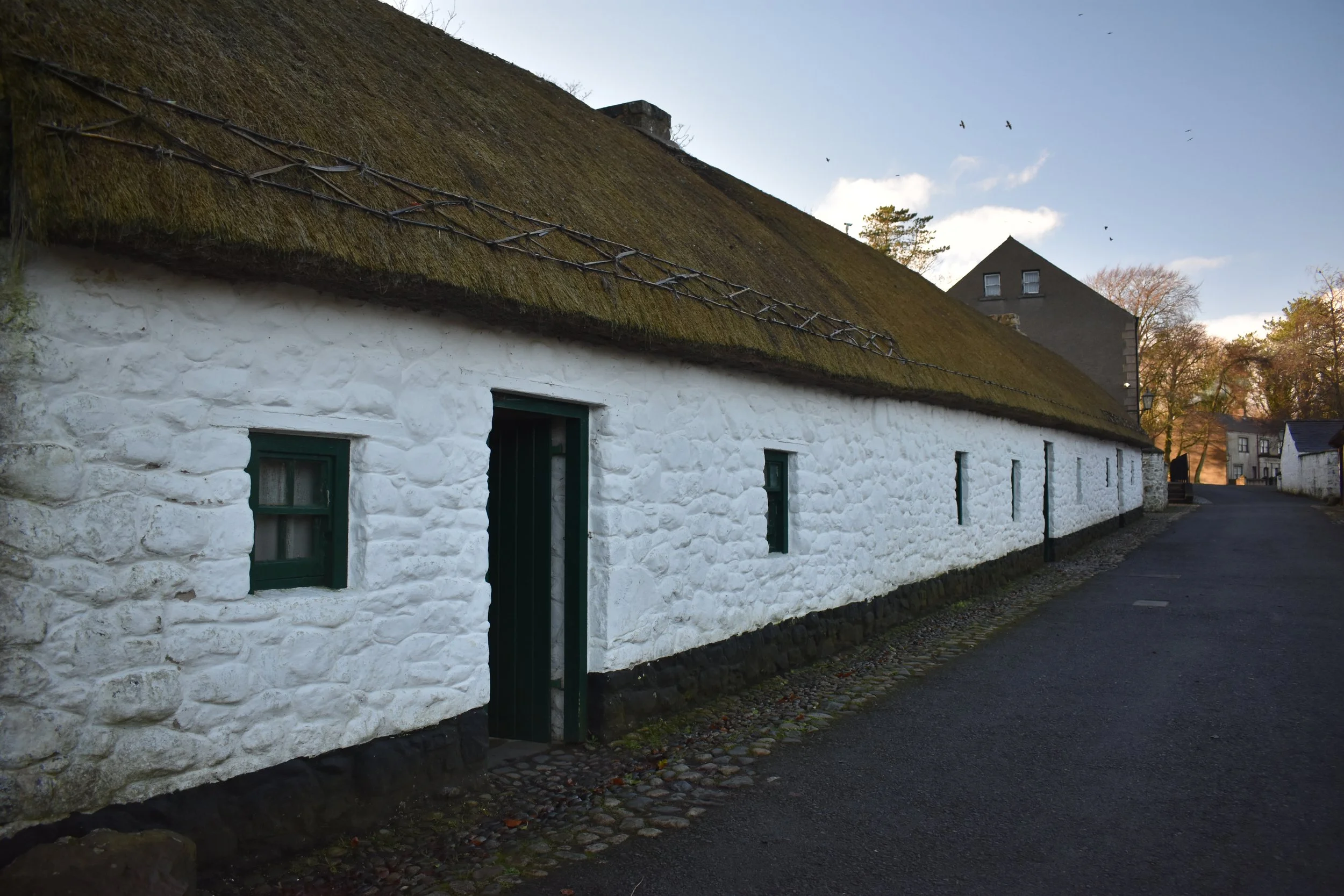
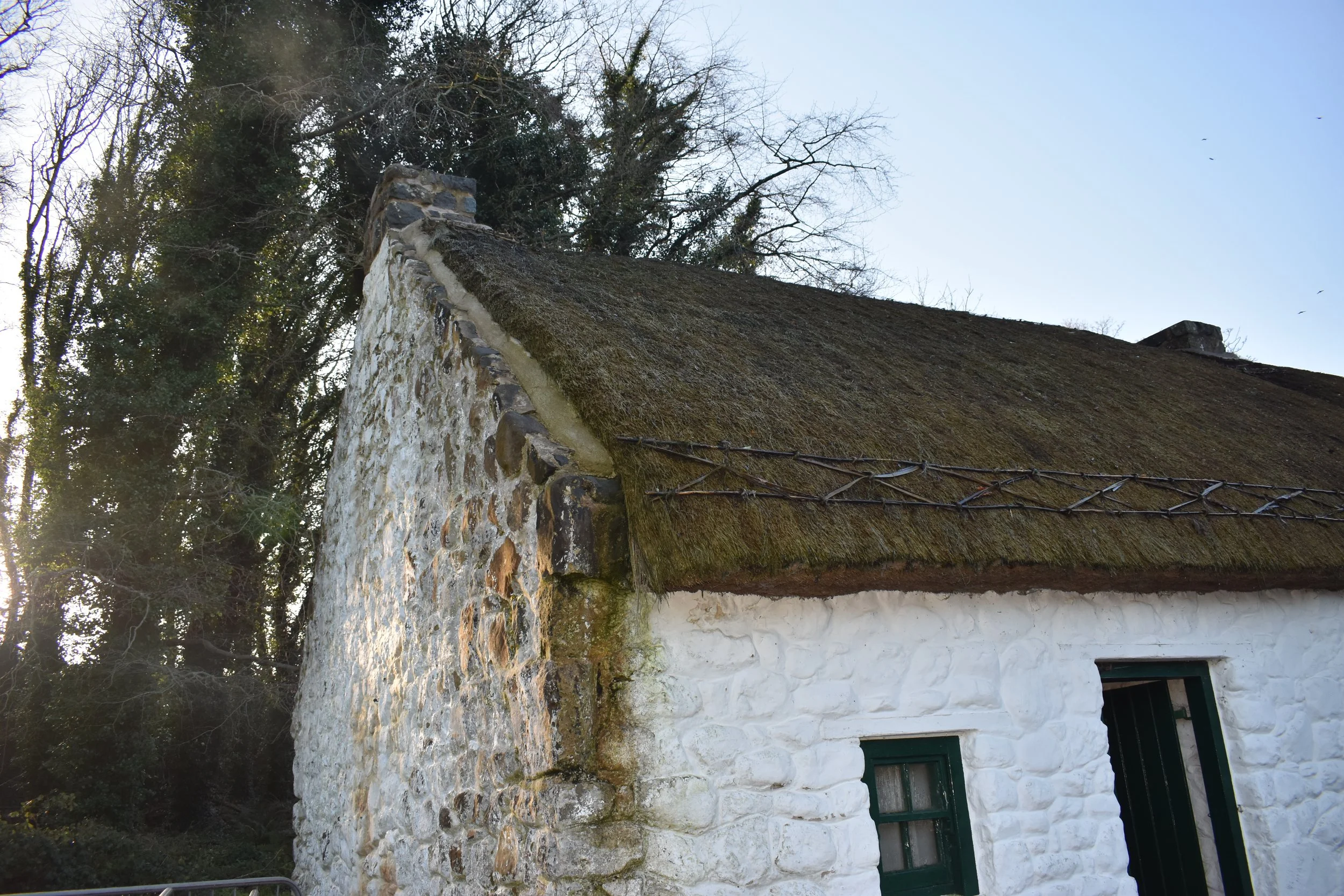
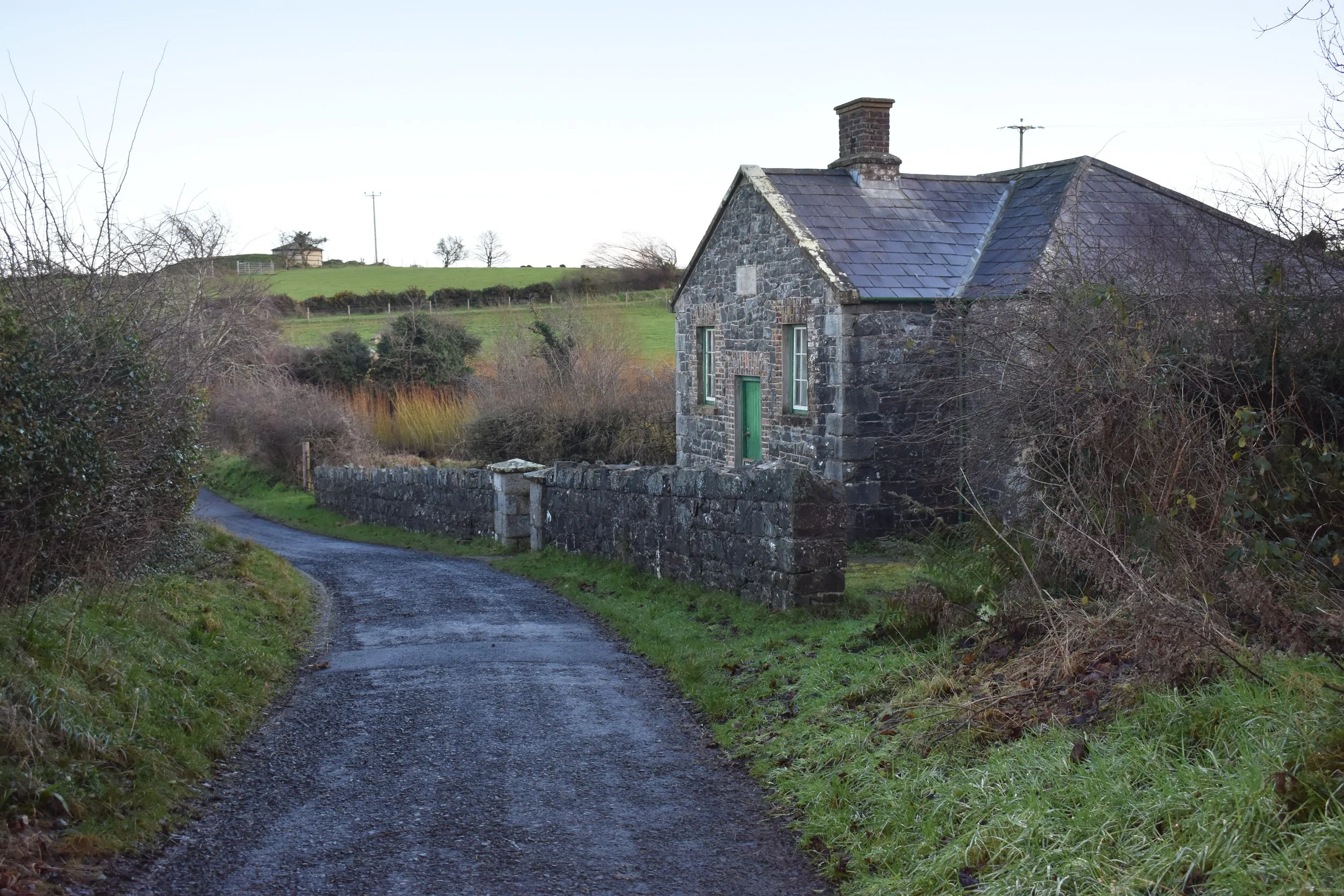
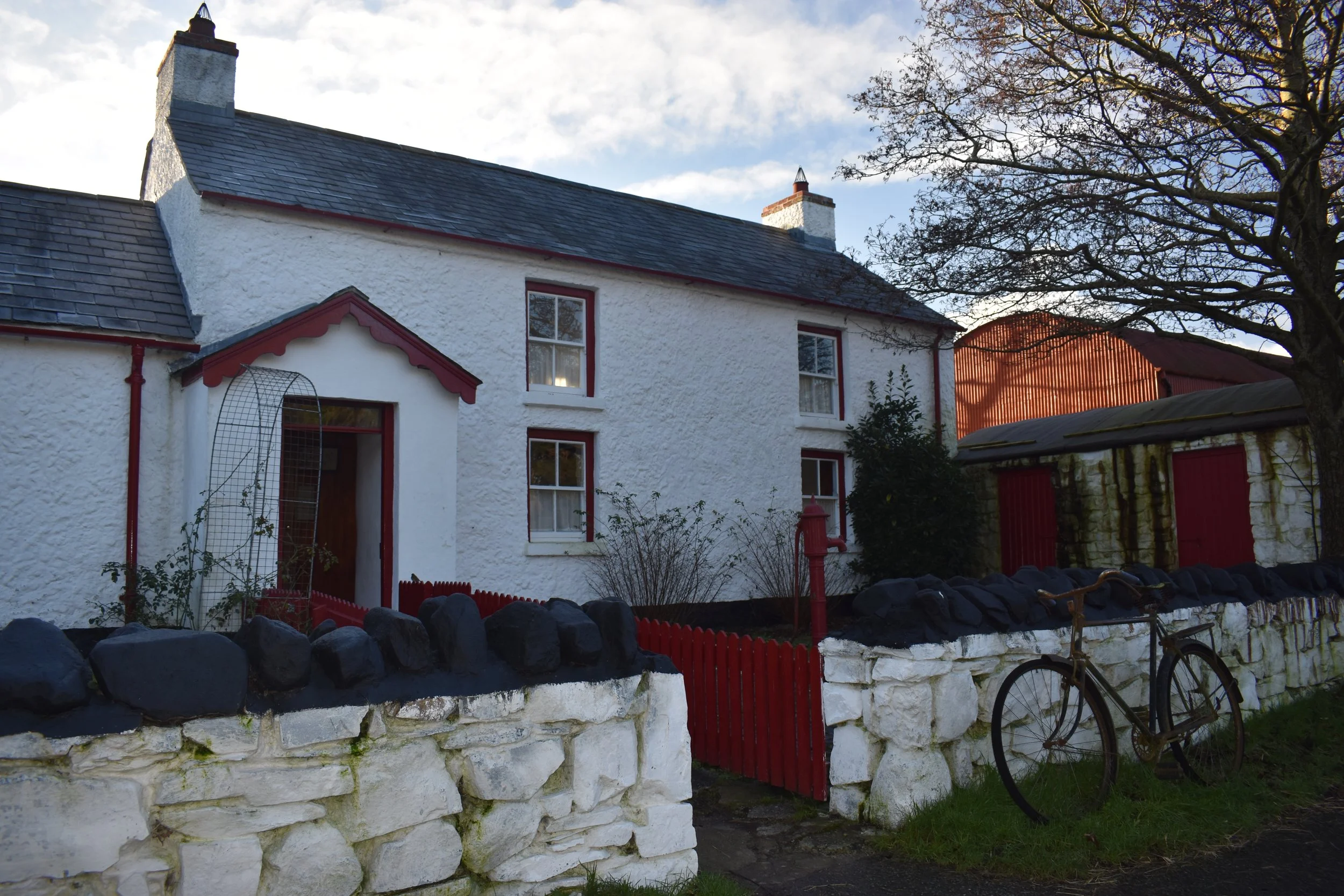
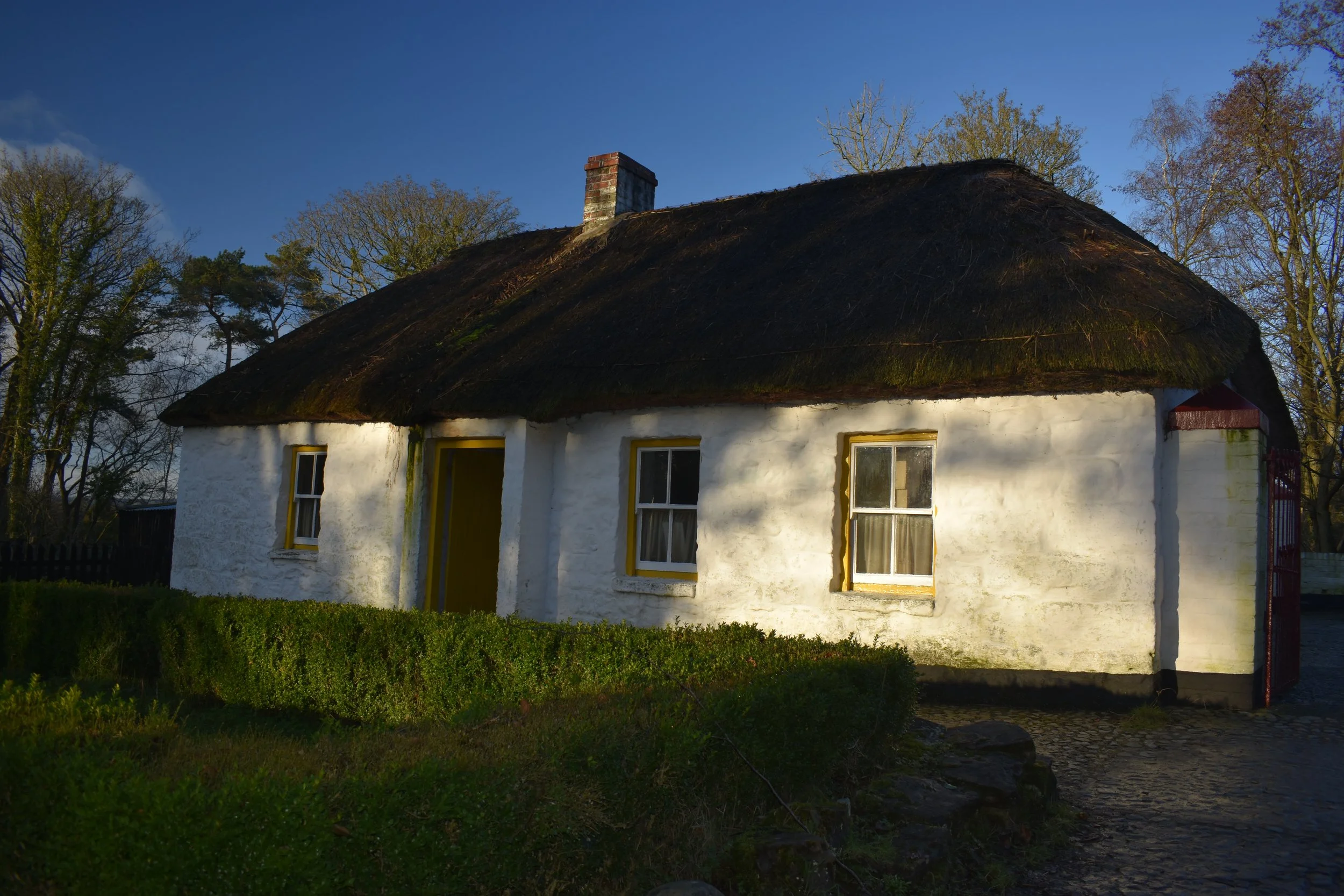
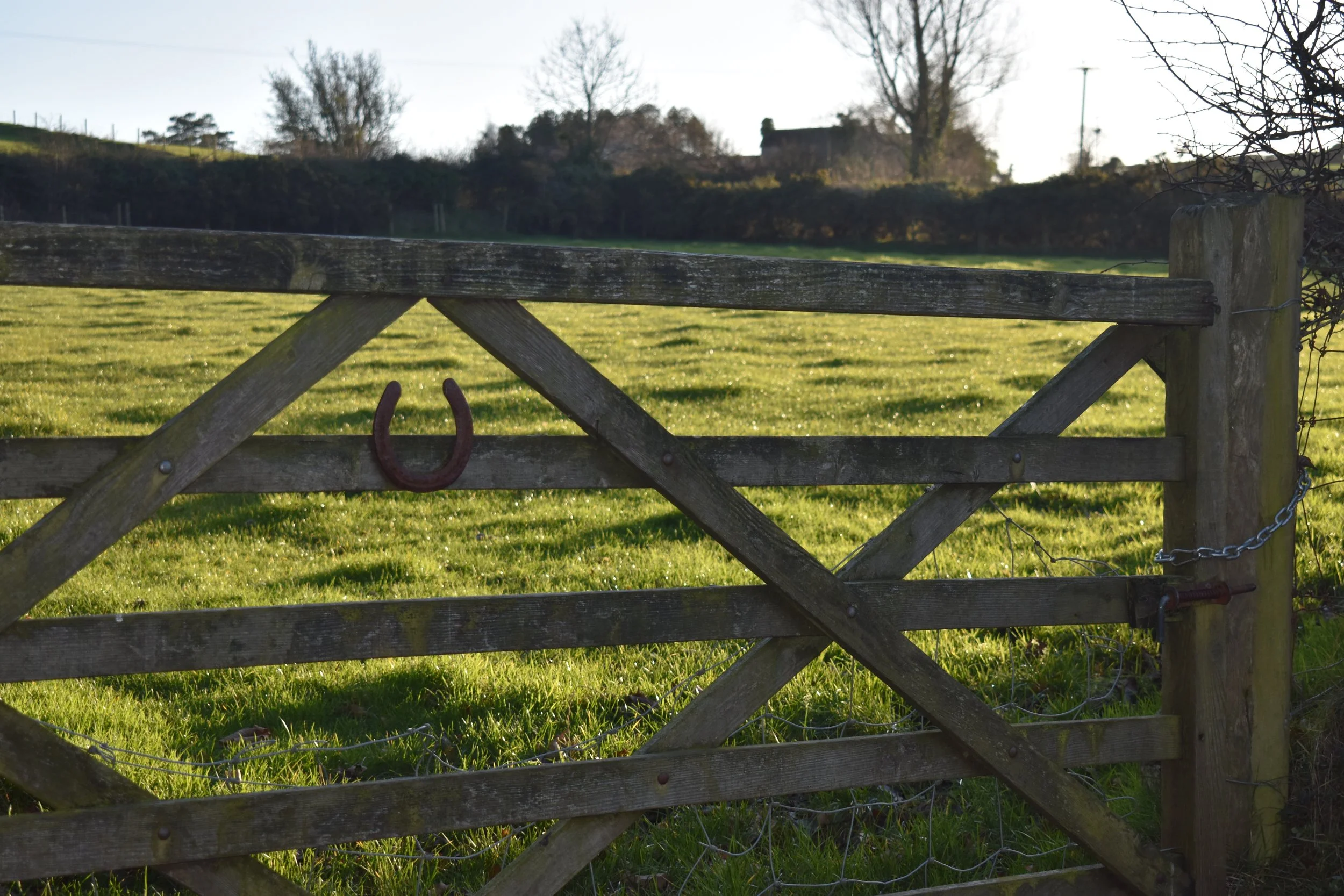
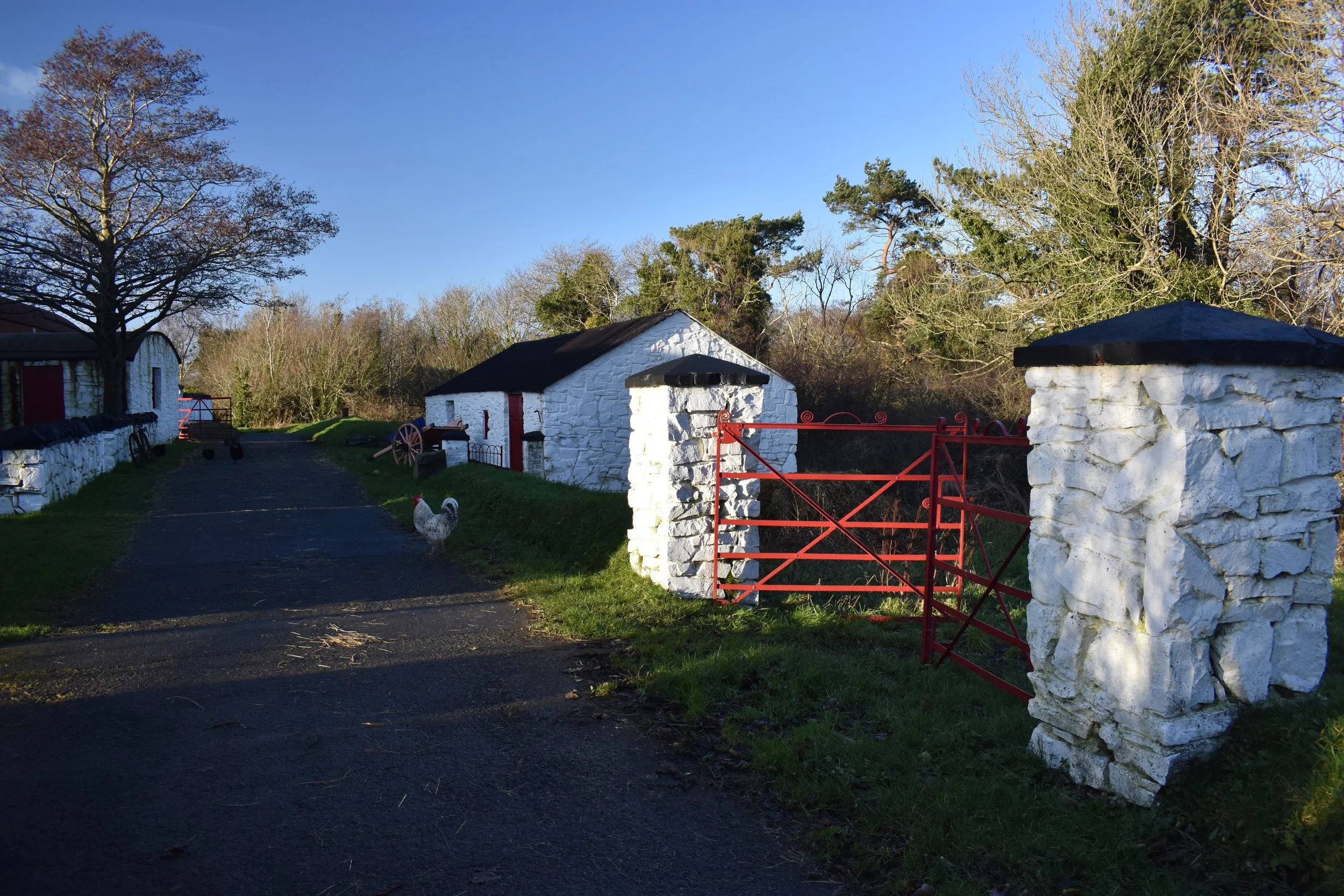
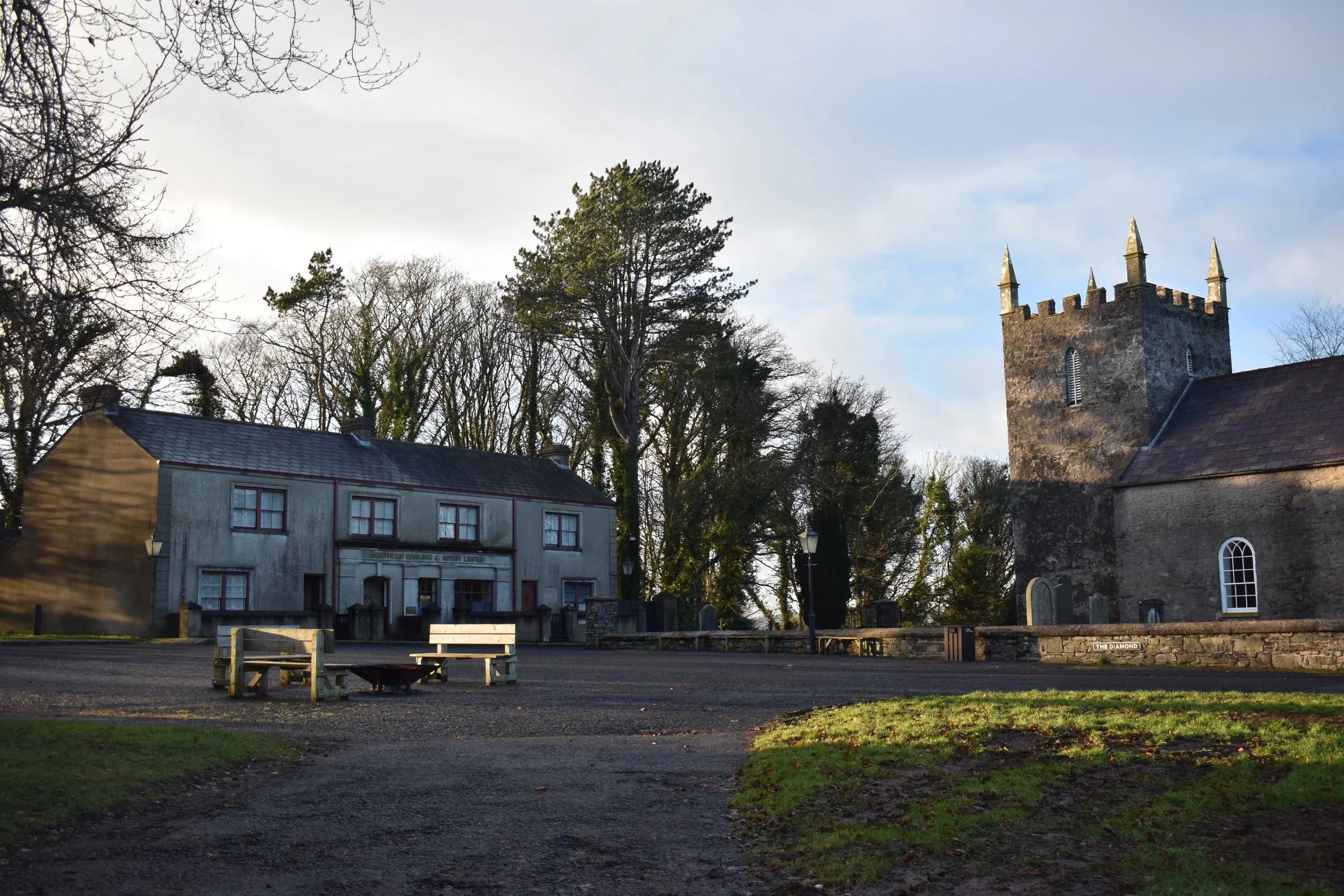
The Ulster Folk Museum was a bit of a drive away for us, about 25 minutes from our hotel, but it was well worth the trip. Opened in 1964, this is a unique living museum. There are buildings from various areas of the Ulster region that have either been replicated or moved to the museum and reconstructed to preserve a rural way of life that was disappearing in the face of industrialization and urbanization. So what they’ve done is essentially recreated a town from the early 20th century with the surrounding farms. The town section of the museum preserves laborers’ dwellings, a carpenter’s, a bike repair shop, a bank, a picture house (movie theater), and a corner general store, among other buildings. You can also walk outside the town to the basket maker and fishermen’s houses, a weaver’s house, a school, a meeting house, and multiple working farms with farmhouses. The houses felt strangely dwelled-in, with fires burning low in the fireplaces, and we met a few “actors” in period dress who gave us some history about the location, but I can imagine there are more workers during the summer months.
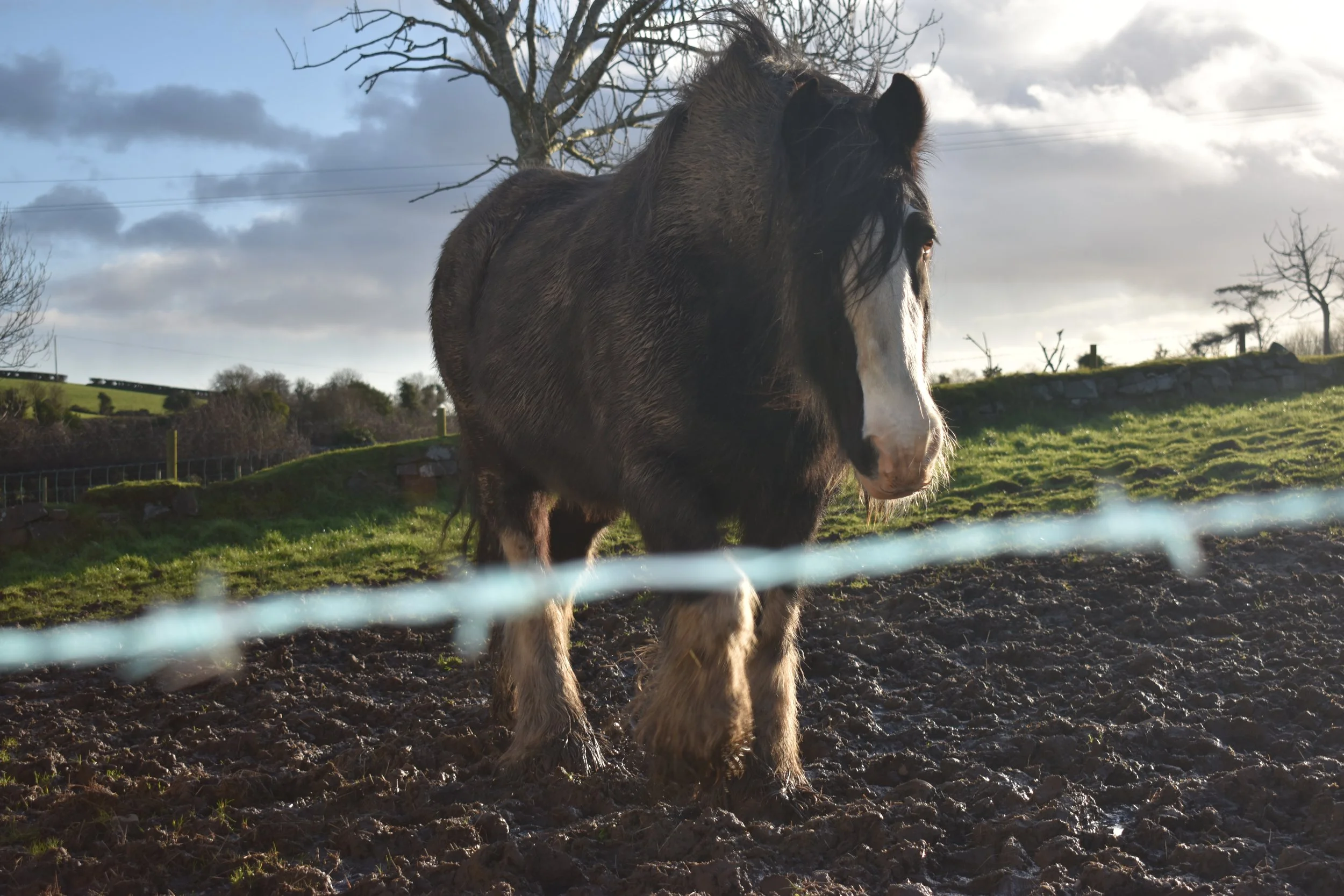
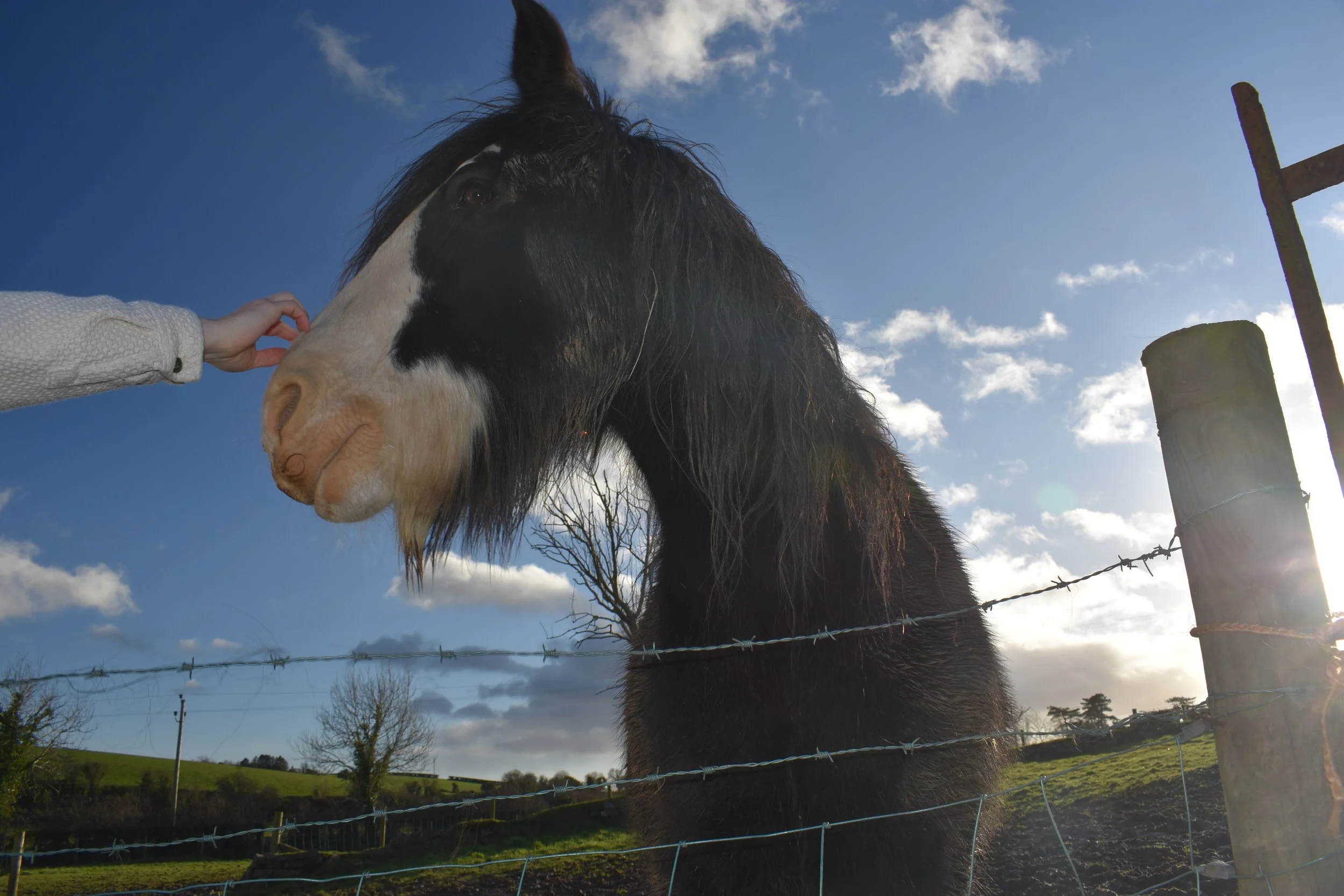
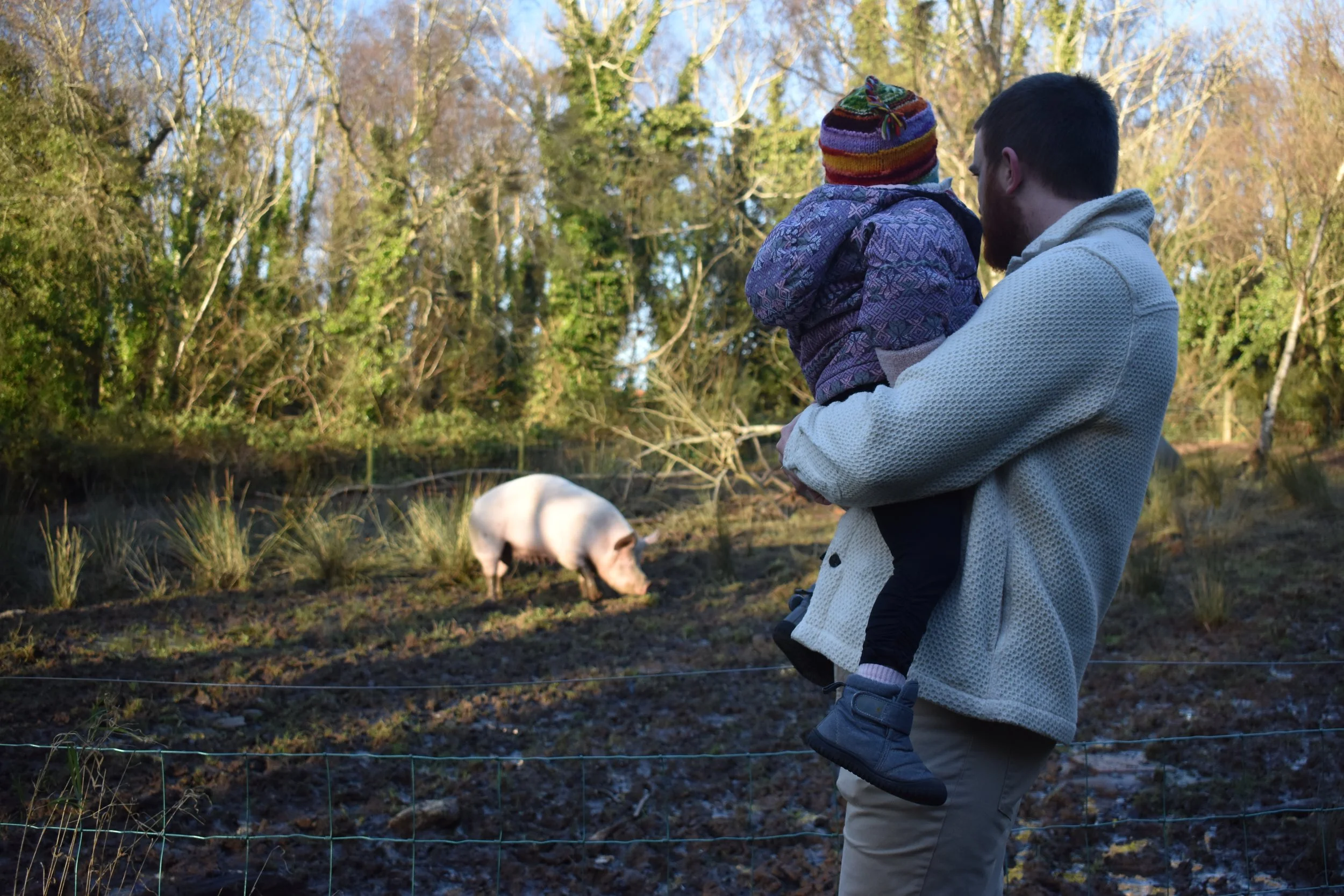
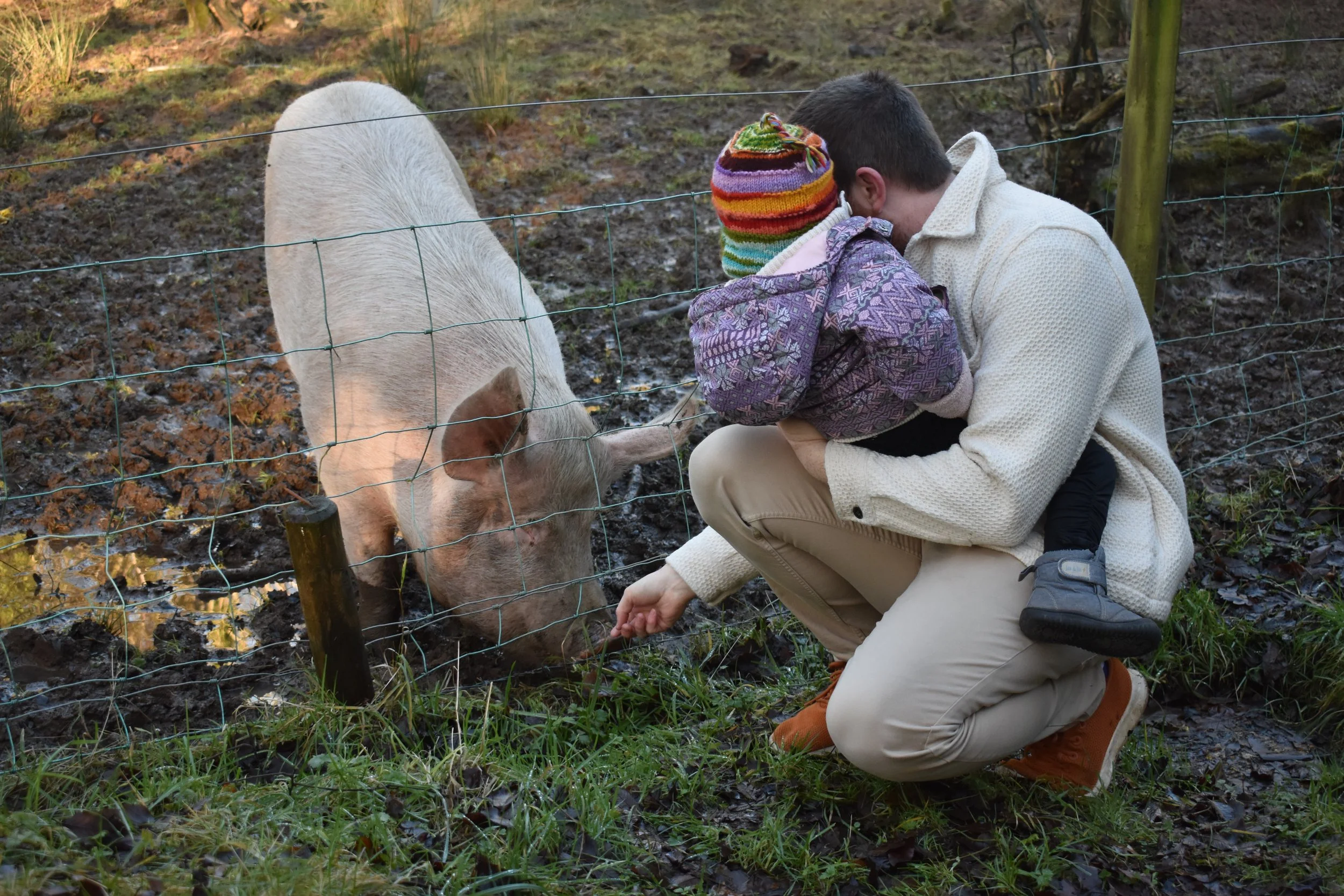
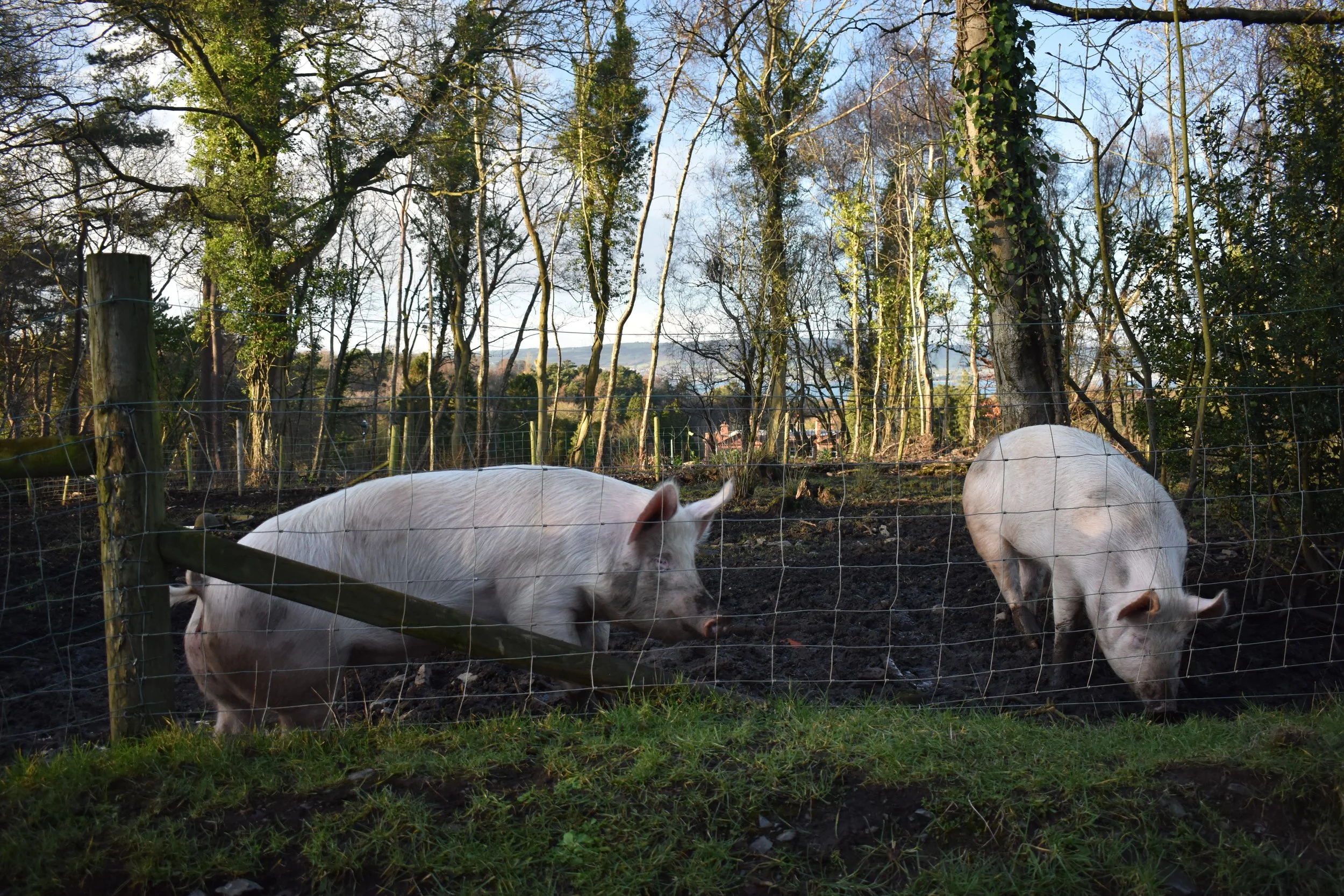
Normally, this would be Flora’s dream: to run around near-empty streets and explore cool buildings, seeing farm animals like horses, donkeys, pigs, sheep, and chickens. But she was really getting hit by whatever bug she’d picked up, ate two bites of a gingerbread cookie for lunch, then demanded to be carried for the rest of the visit, occasionally raising her head to point out animals, before taking a second nap in Ryan’s arms. We still had a good time, and I really enjoyed being immersed in a 20th-century rural Irish world. And for a trip where we were spending a lot of time in museums, it was refreshing to experience history in a different way.
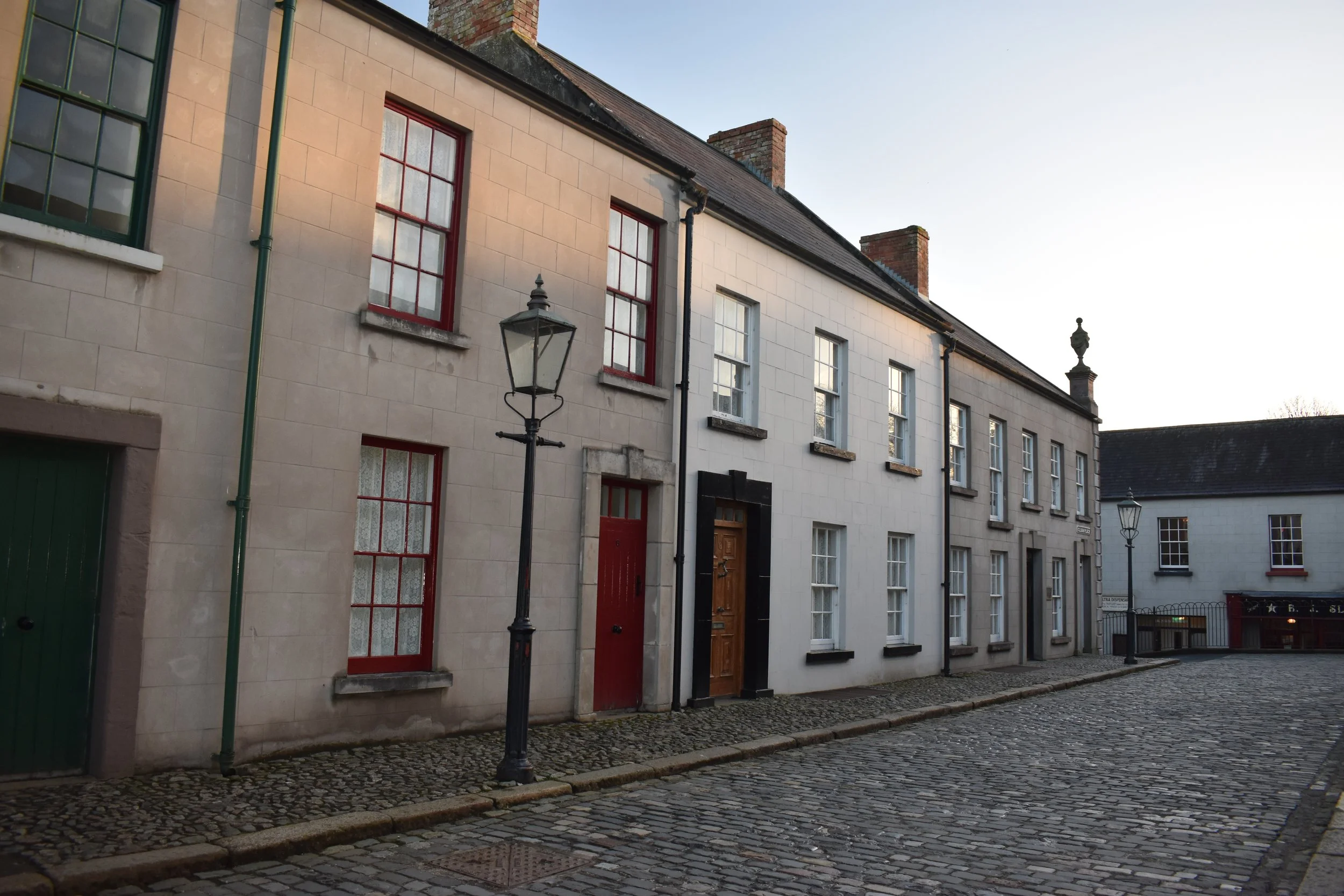
Now, the rest of that day was a wash—which is just one of the trade-offs when you’re traveling with young kids. You have to be flexible and ditch the jam-packed itineraries. Had Flora been feeling better, I think we could have gotten an earlier start, then done the Ulster, Ulster Folk, and the Titanic Museums all that day, since the Titanic Museum doesn’t close until 5 pm. However, we just called it, stopping by Boots for some ibuprofen and going back to the hotel for a chill evening of cuddling and hoping Flora’s slight fever didn’t become something worse.
Day 8: Carrickfergus Castle & Home
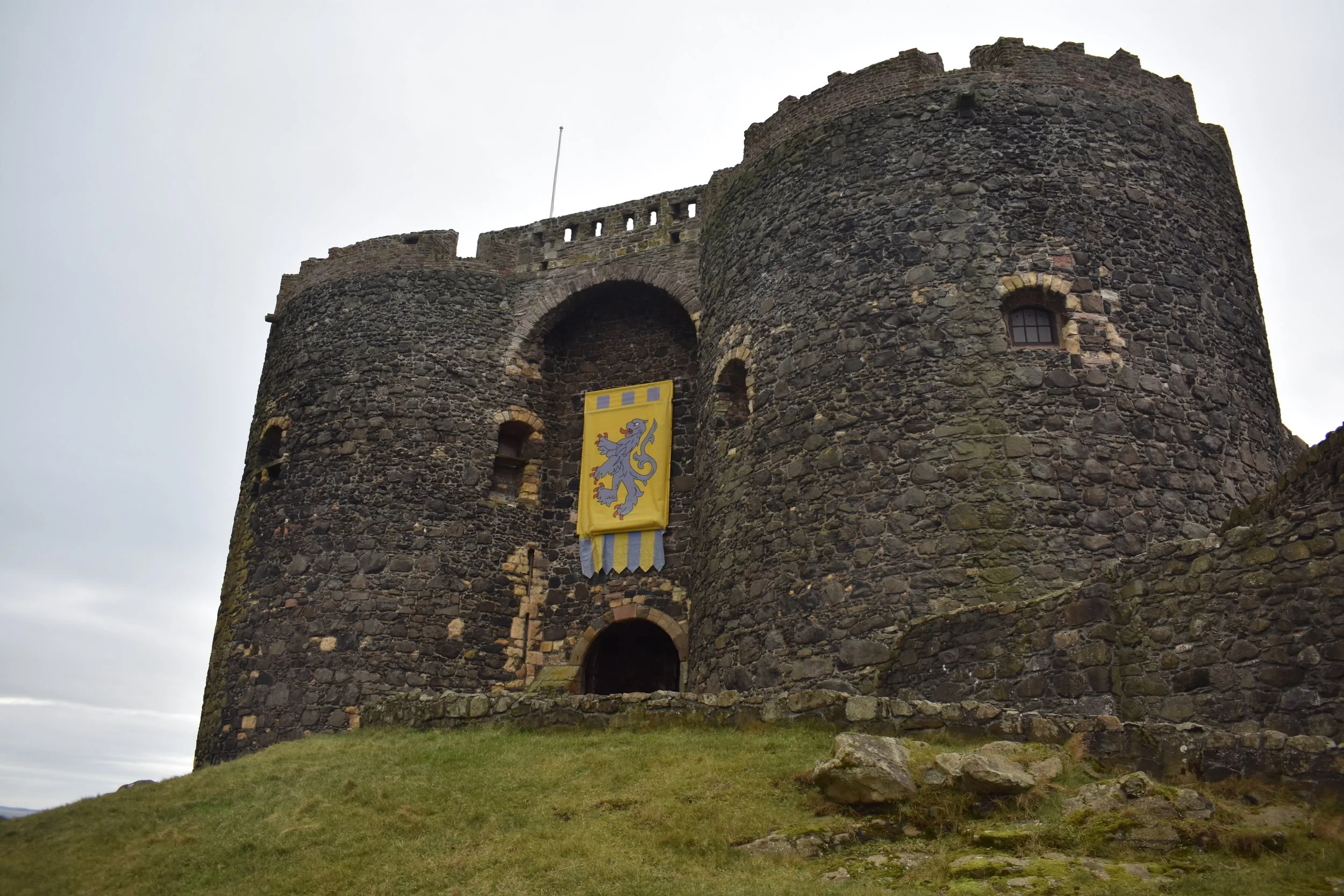
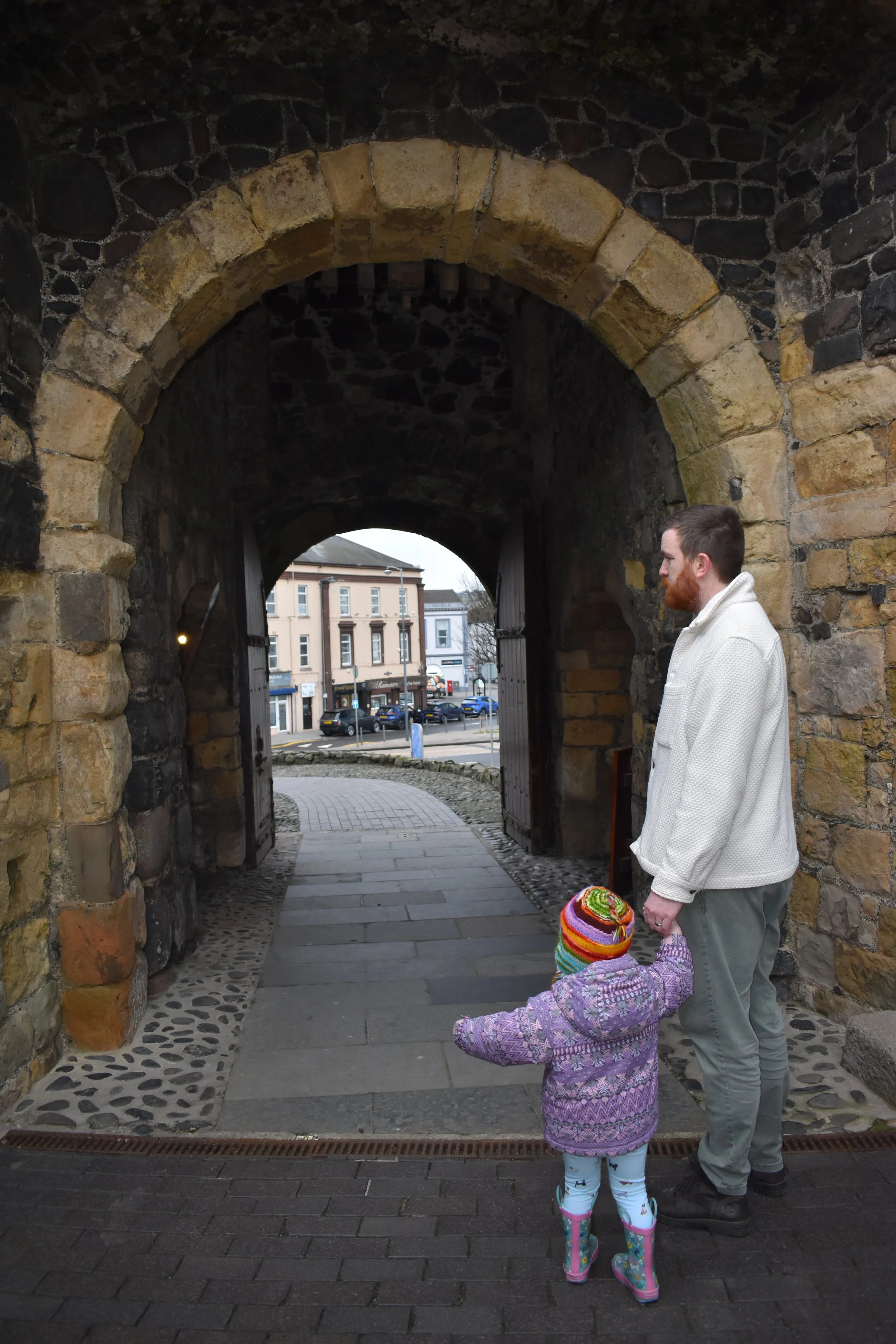
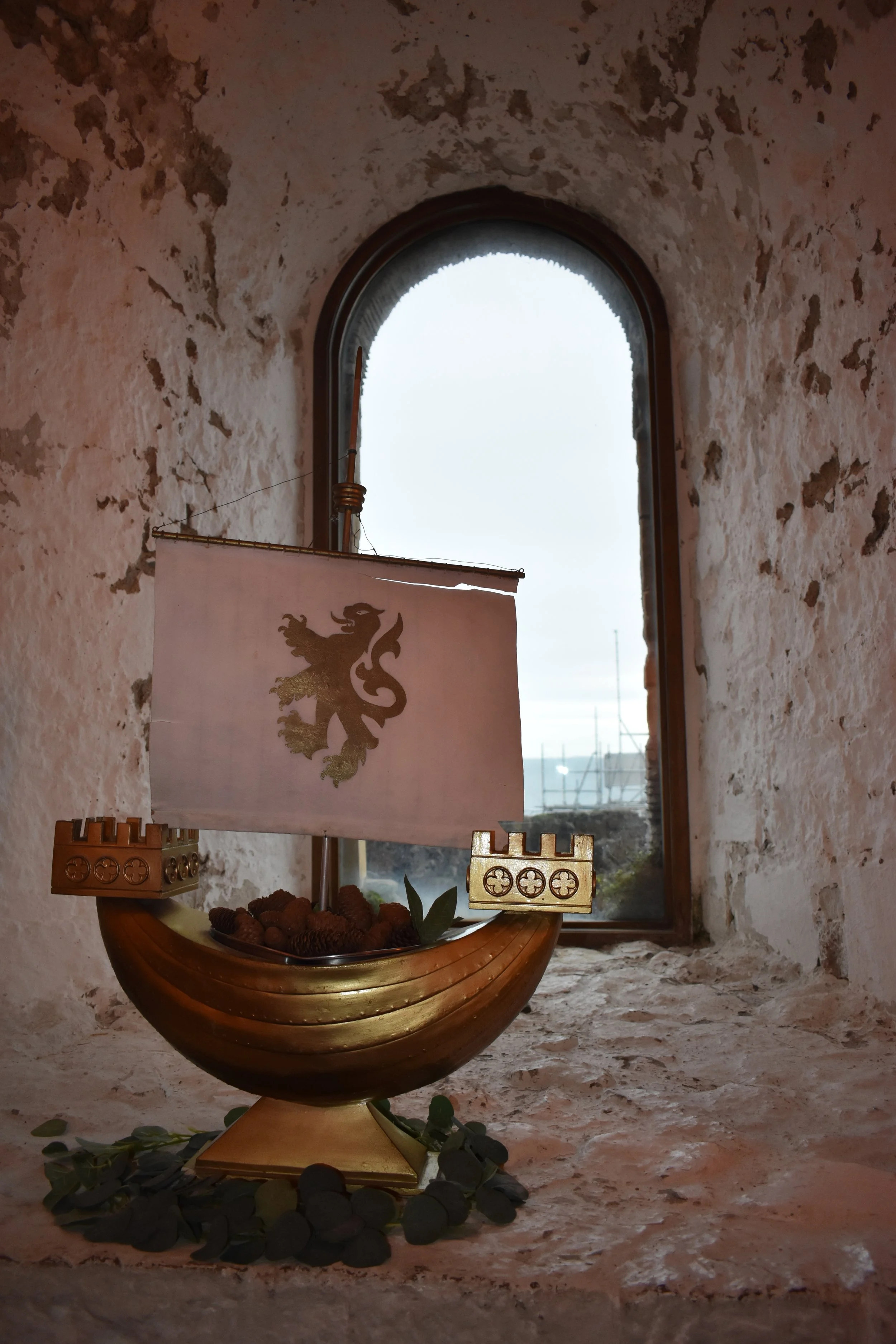
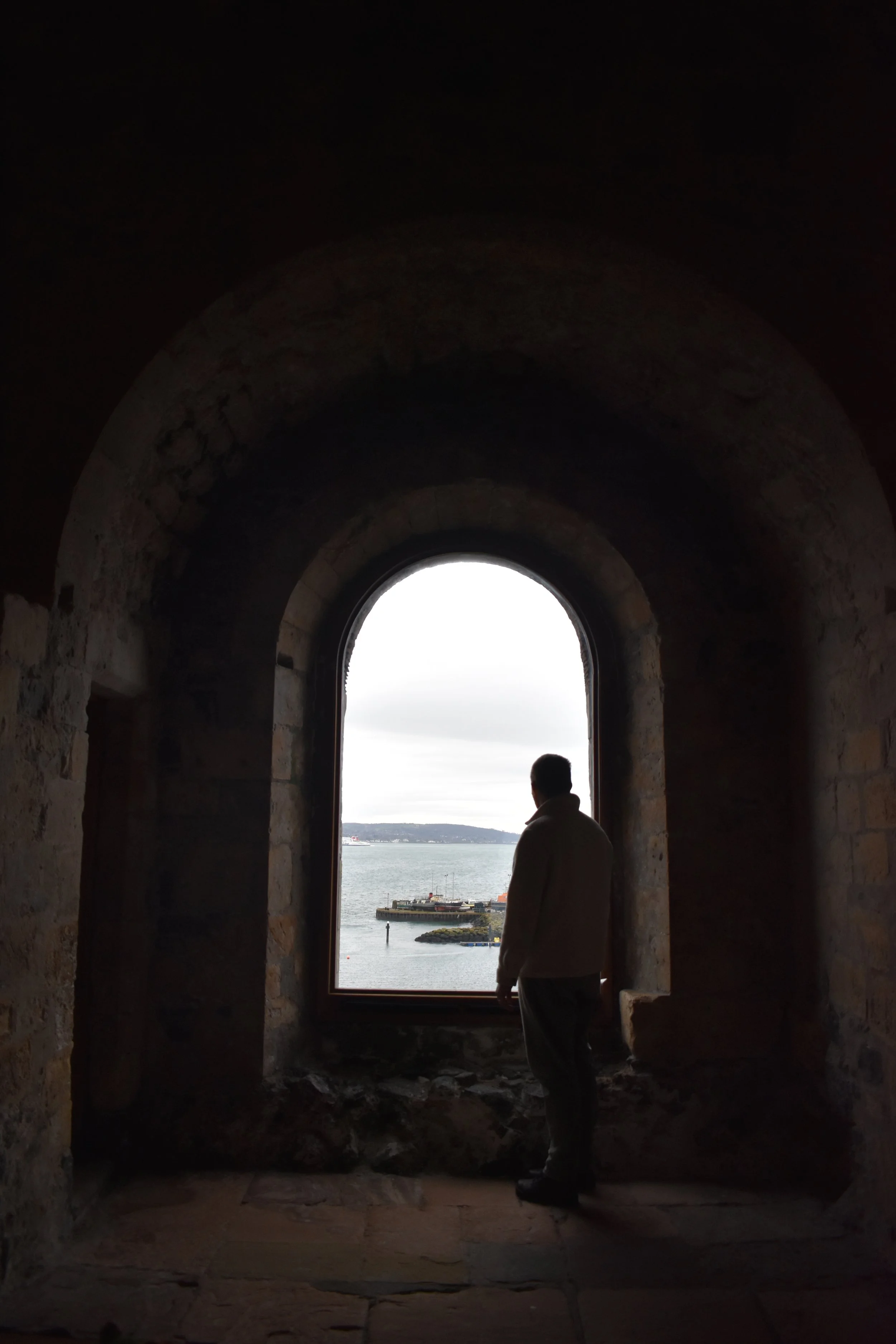
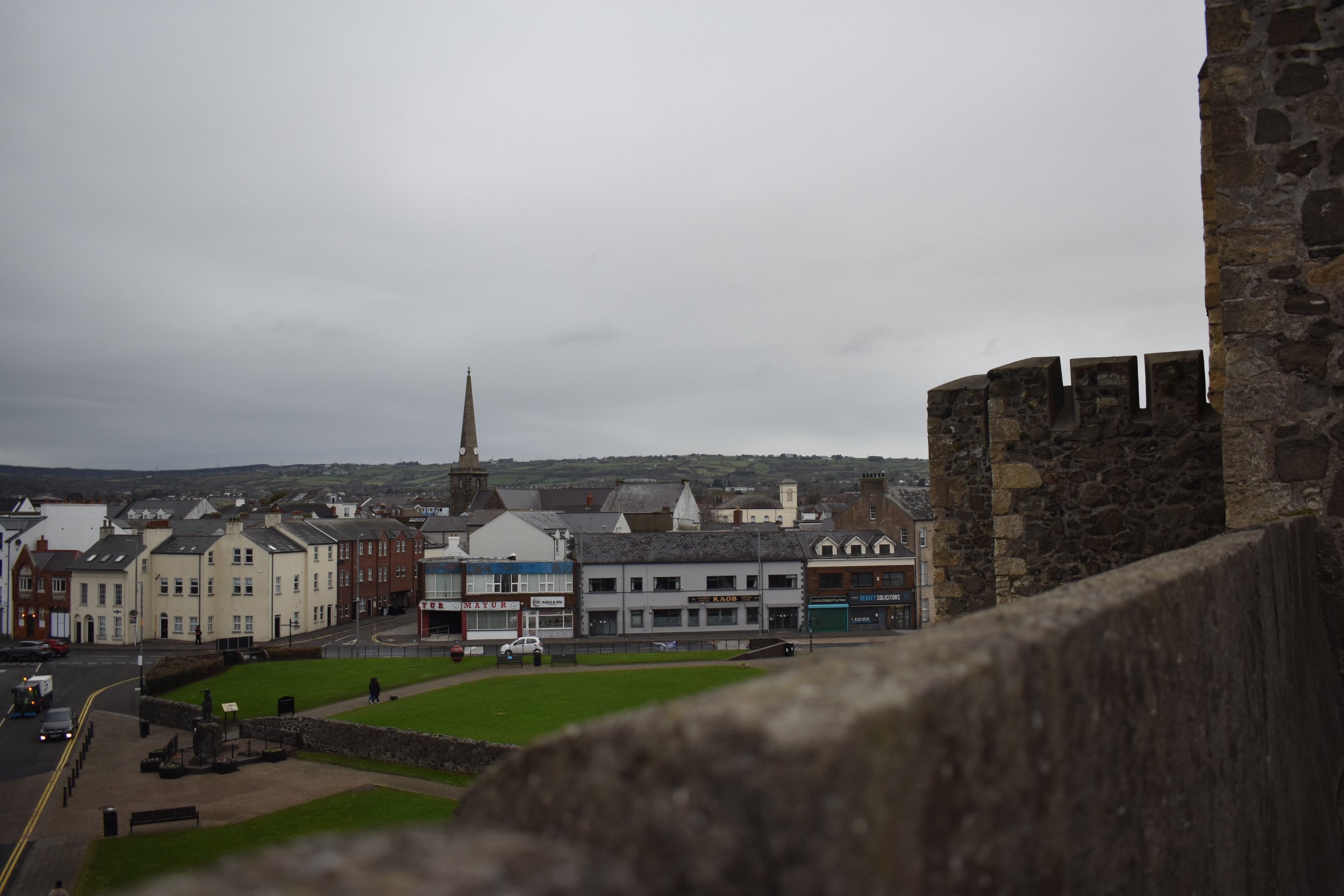
Carrickfergus Castle ($8 per adult, Children under 5 free)
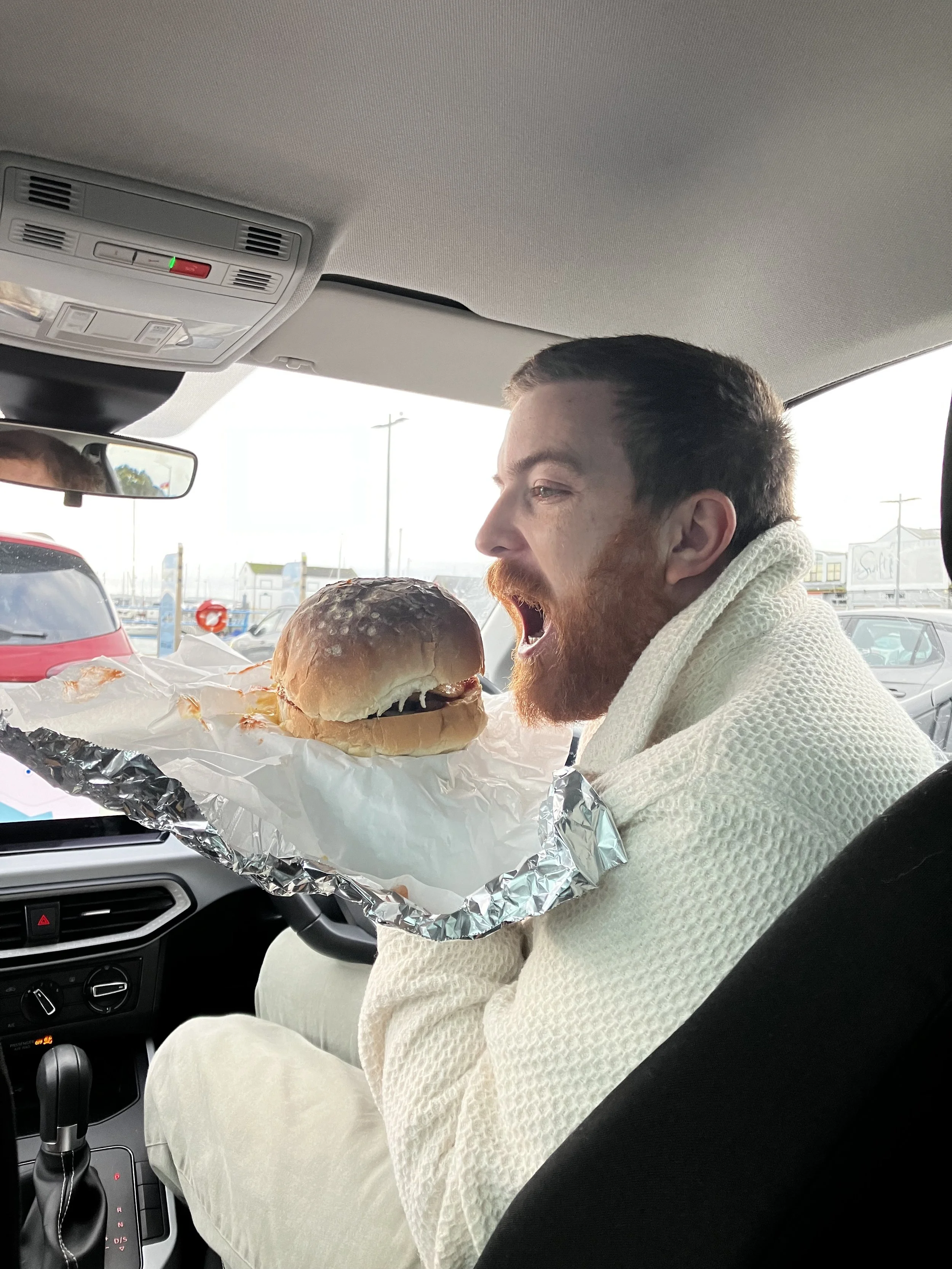
After packing up our luggage and grabbing a quick breakfast at Creed Coffee (where Ryan got the biggest bap we’d ever seen), we stopped at Carrickfergus Castle before our drive back to the Dublin Airport. Flora was, with the help of a good night’s sleep and ibuprofen, feeling much better than the previous day.
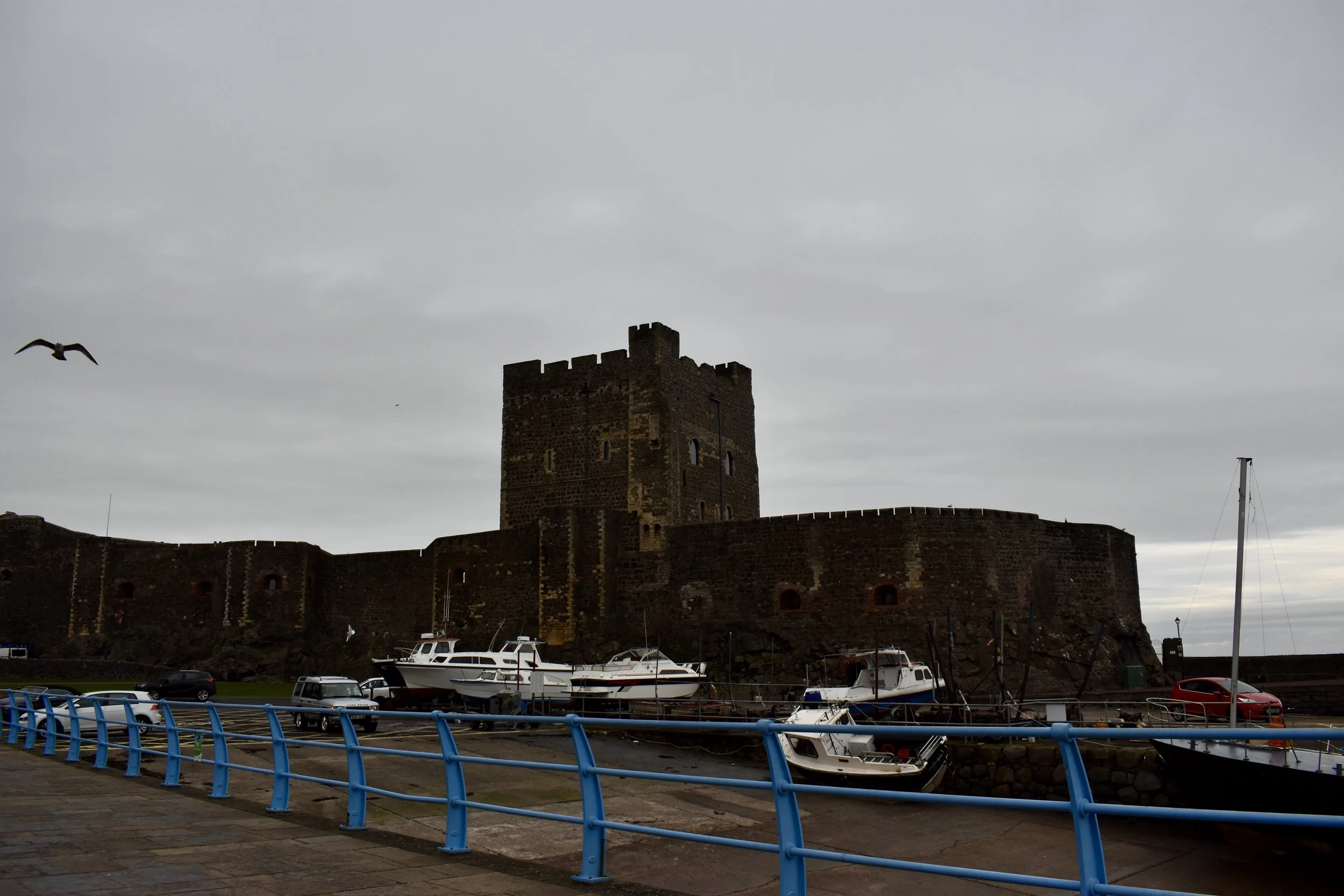
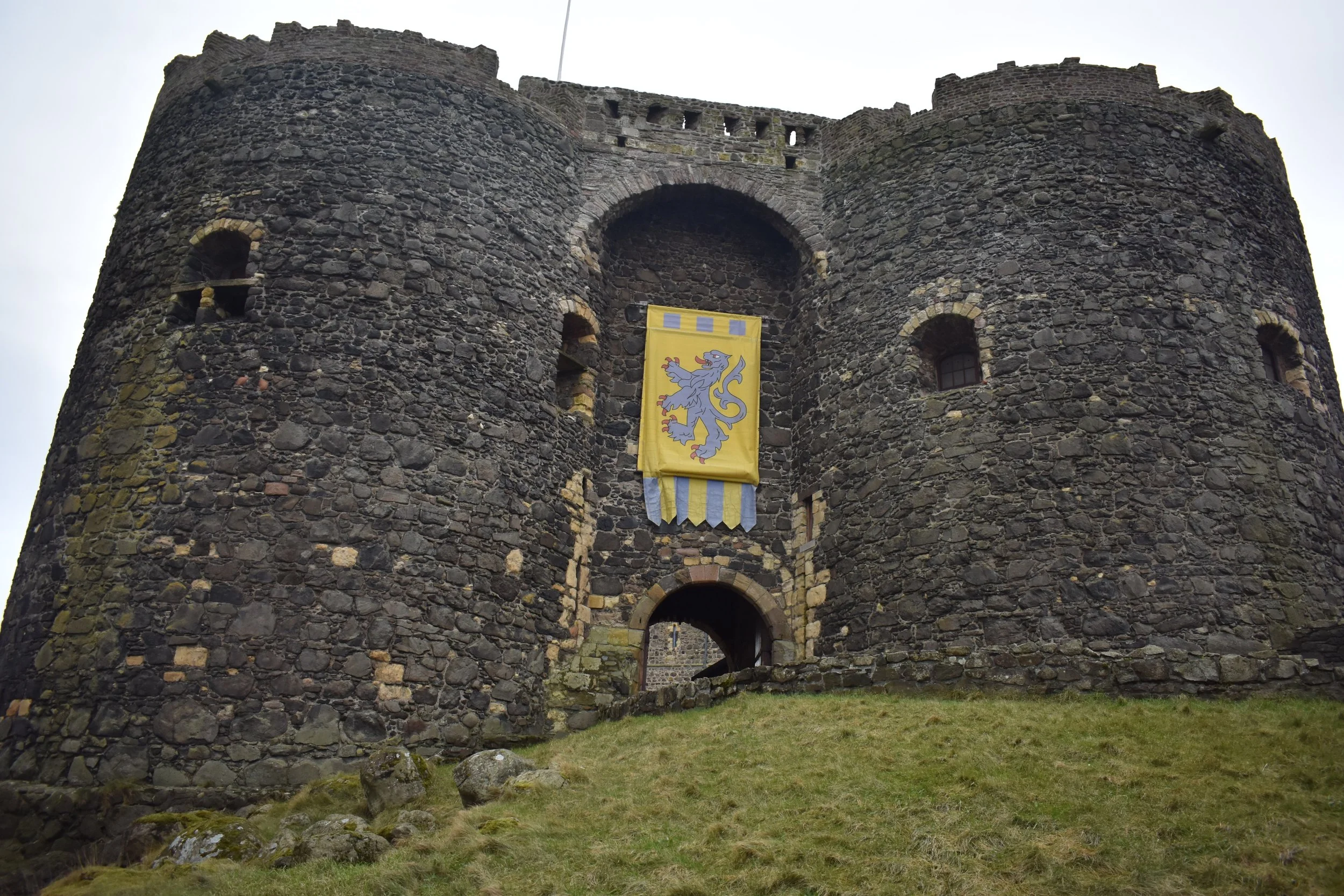
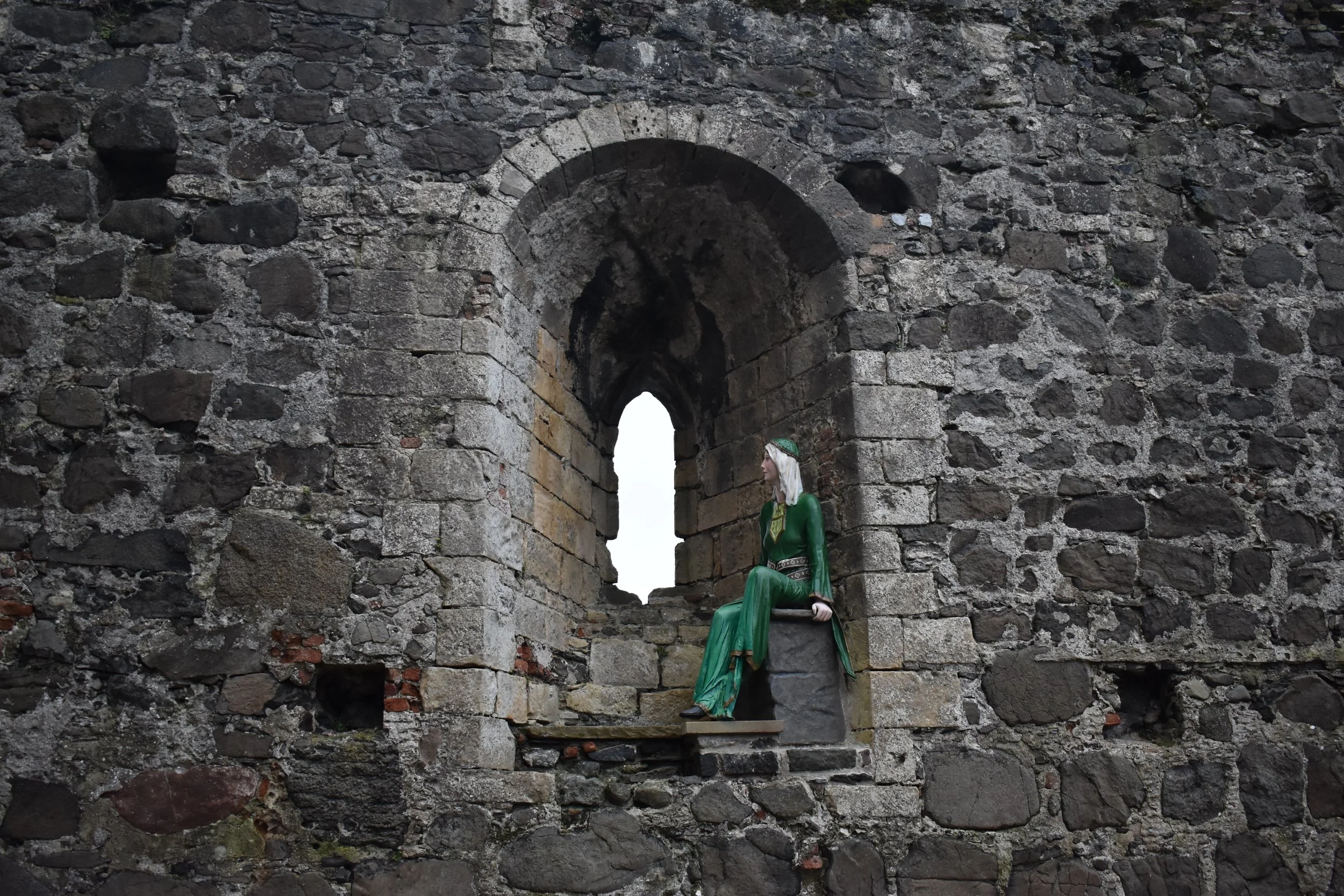
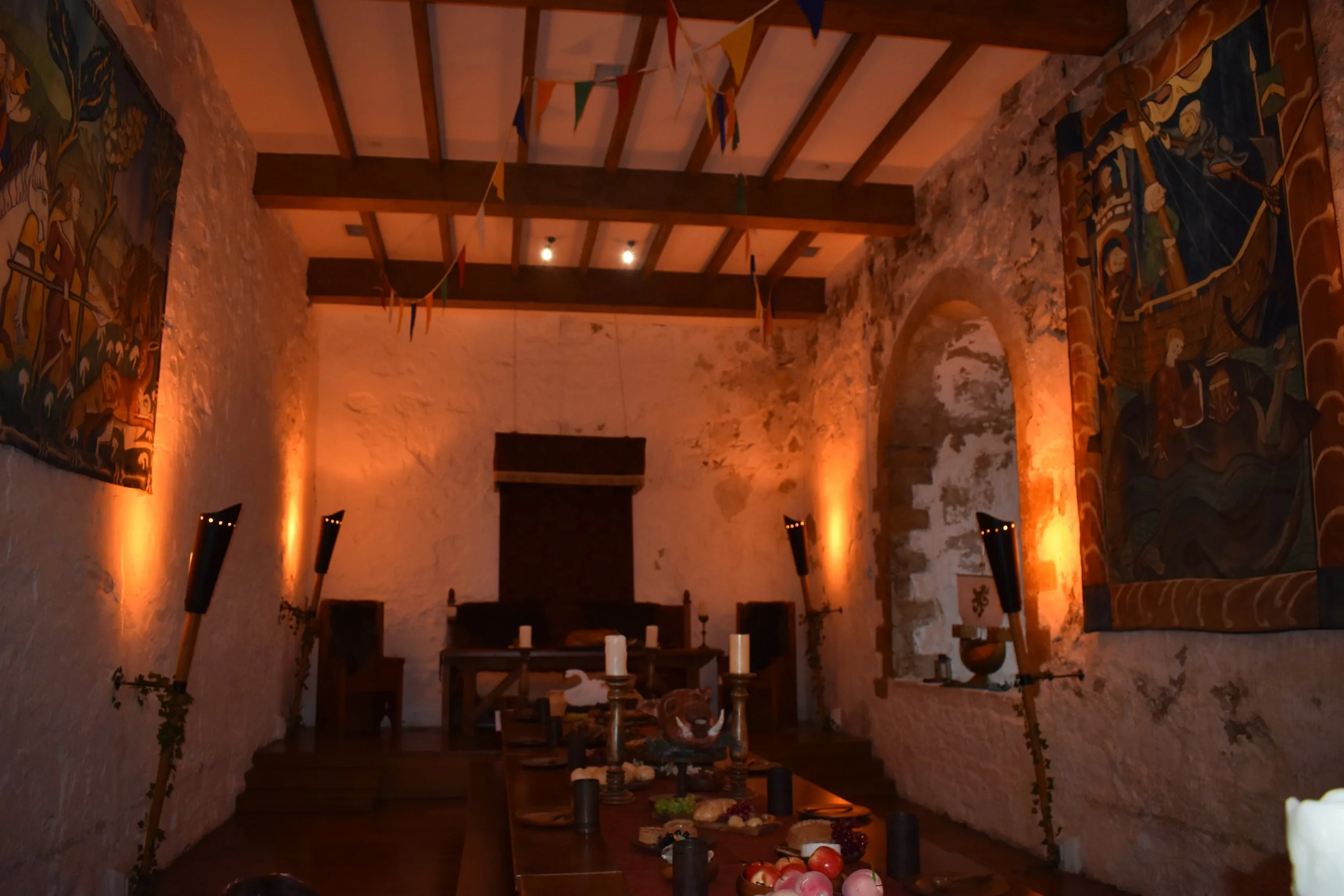
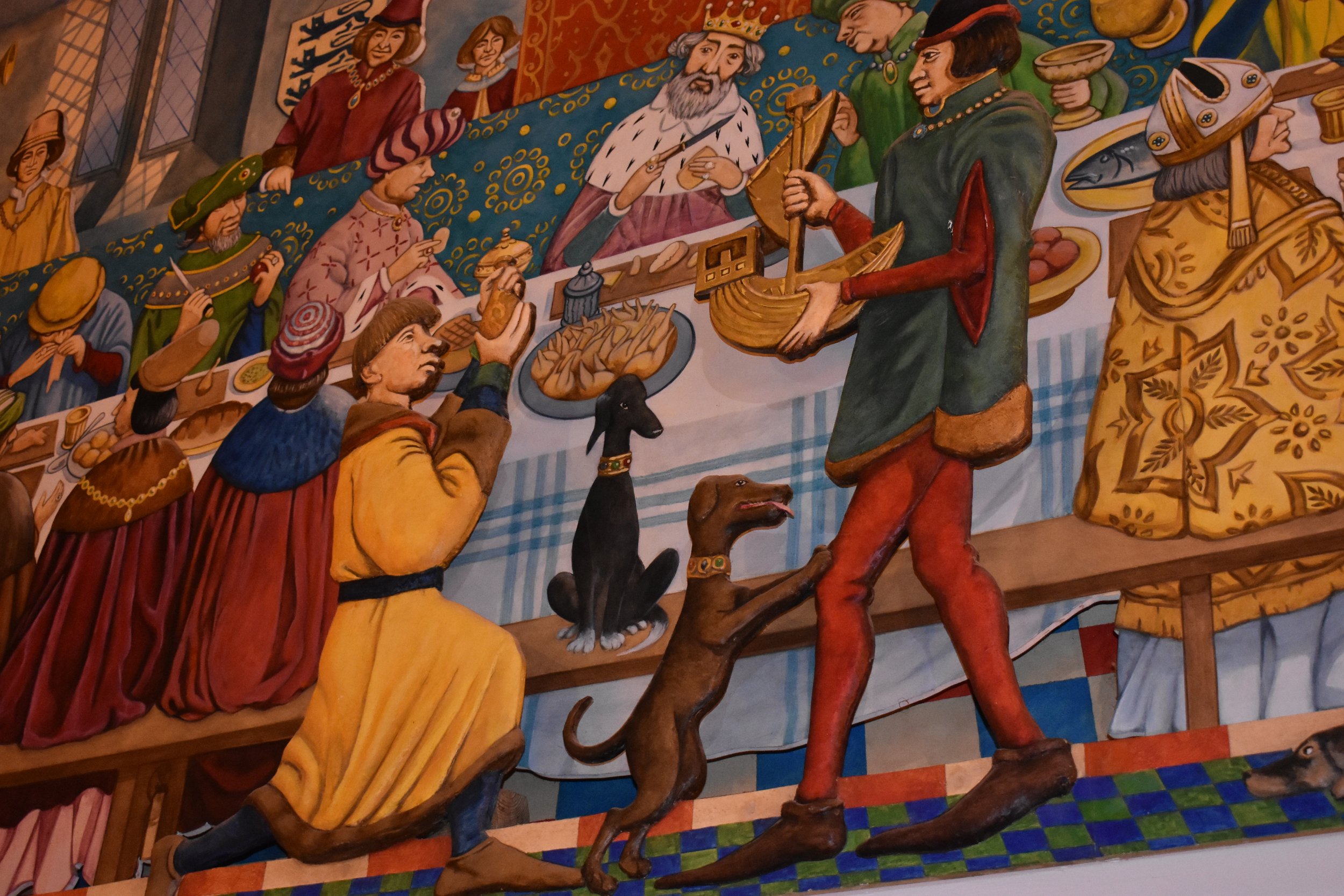
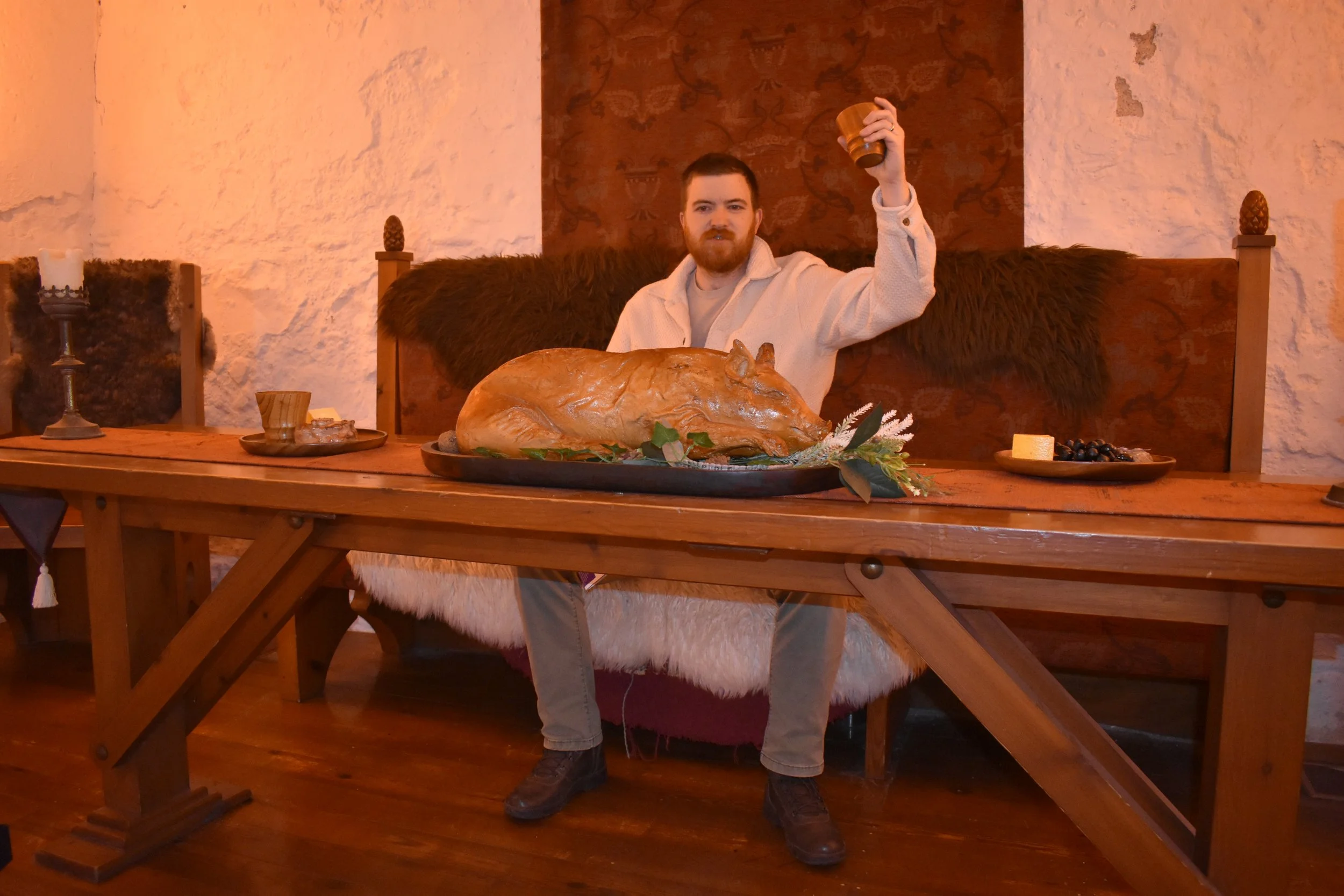
Carrickfergus is a Norman castle, like Malahide, about 20 minutes north of Belfast. It was built by the Anglo-Norman knight John de Courcy in 1177. In 1210, the English King John laid siege to it, and it fell under control of the English crown, becoming an important military and administrative stronghold. It was garrisoned continuously for about 750 years until 1928 when it became a national monument. Now, many of its original Norman features have been restored, and we enjoyed journeying through its history, including a medieval banquet hall (complete with roast pig). This was a wonderful final stop, and very doable in a short morning, before we made our way back to the airport and boarded our flight back to the States.
I hope you enjoyed reading about our adventures! If you have any questions, feel free to leave them below. And go here to read about more of my travels.